


-
Ukraine War Peace Negotiations remain stalled as geopolitical tensions rise between Washington, Kyiv, and Moscow.
-
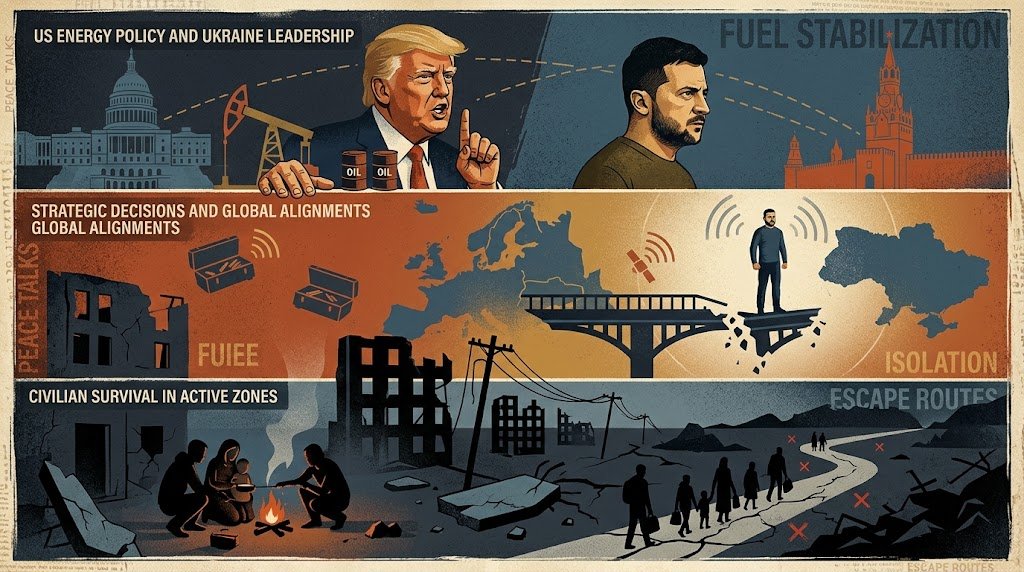
President Trump called for Volodymyr Zelensky to be replaced and demanded an immediate end to Ukrainian drone strikes on Russian oil refineries to stabilize global fuel prices.
-
Critics argue that Zelensky’s reluctance to make territorial compromises has stalled potential ceasefire deals, leading toward potential international isolation.
-
Caught in the crossfire, Ukrainian civilians in front-line areas face extreme hardship without electricity or adequate food while risking their lives to escape dangerous combat zones.
President Donald Trump’s recent call for Ukraine to elect a new leader and immediately cease drone strikes on Russian oil refineries marks a dramatic and controversial pivot in international foreign policy dynamics. Central to these demands is an urgent effort by Washington to manage domestic and global energy inflation, which has been severely exacerbated by wider regional conflicts in the Middle East.
By entering into an agreement with Russian President Vladimir Putin to restore Russian diesel supplies into global markets, the U.S. administration aims to lower fuel costs for American consumers, logistics providers, and agricultural workers.
However, Ukraine’s long-range drone attacks against Russian energy and refining infrastructure directly counter this economic strategy. Trump’s frustration stems from his perspective that ongoing refinery strikes impede international fuel stabilization efforts and complicate broader diplomatic overtures.
Consequently, Trump suggested that replacing Volodymyr Zelensky with a leader more open to pragmatic diplomatic compromises could help break the political impasse with Moscow and pave the way for sustainable peace talks.
This public clash has deeply strained relations between Kyiv and Washington, threatening to undermine nearly two years of European diplomatic efforts aimed at maintaining robust security backing for Ukraine.
Political Decisions, Stubbornness, and the Risk of Isolation
The ongoing debate surrounding diplomatic strategy highlights the complex and often brutal political dilemmas facing Ukrainian leadership. Critics contend that a firm refusal to negotiate on Kremlin terms—such as surrendering uncaptured areas of the eastern Donbas region—has repeatedly stalled diplomatic progress.
Trump Calls On Ukraine to Stop Hitting Russian Refineries—and Replace Zelensky
By maintaining aggressive asymmetric strikes and rejecting broader peace proposals crafted by international intermediaries, observers warn that Kyiv risks alienating critical Western allies whose financial and intelligence support remains vital.
As foreign military assistance fluctuates and political support in Western capitals wavers, Ukraine faces the growing risk of diplomatic isolation. Continuing a stance focused strictly on maximum military goals without exploring intermediate ceasefires could further strain national infrastructure, placing unsustainable burdens on the country’s long-term economic stability.
Critics argue that unyielding strategic stubbornness threatens to push a once-bustling, vibrant European nation toward severe structural decline, effectively setting back its economic development by decades.
The Humanitarian Toll on Front-Line Communities
Beyond the high-stakes geopolitical debates and shifting political alignments, front-line populations face an unprecedented and devastating humanitarian crisis, as vividly witnessed in contested southern regions like Oleshky. Residents remaining behind in active combat zones endure living conditions completely stripped of modern basic necessities:
-
Severe Food Shortages: With volunteer supply lines completely severed by landmines and impassable roadways, trapped civilians must survive on small home-grown garden vegetables, wild weed soups, and scavenged non-perishables from abandoned, bombed-out buildings.
-
Complete Blackouts and Infrastructure Loss: Prolonged artillery shelling and the destruction of local power grids leave entire towns entirely without electricity, clean running water, or natural gas heating, forcing elderly residents to cook over open outdoor fires in brutal conditions.
-
Perilous Traversal and Escape Risks: Attempting to flee combat zones requires traversing heavily mined roads littered with unexploded ordnance, active drone surveillance patrols, and civilian corpses, putting escaping lives at extreme risk.
-
Strained Emergency Care: Local medical facilities operate without essential medicines or supplies, forcing doctors to perform emergency operations and amputations under harrowing circumstances while temporary morgues overflow.
Driven by sheer desperation, many residents brave immense dangers on foot, bicycle, or motorcycle to reach safety, often leaving behind frail family members who are simply unable to undertake the perilous journey across the frontlines.
The unfolding crisis demonstrates that resolving the underlying political stalemate is not merely a matter of geopolitical realignment, but an urgent imperative for human survival.