



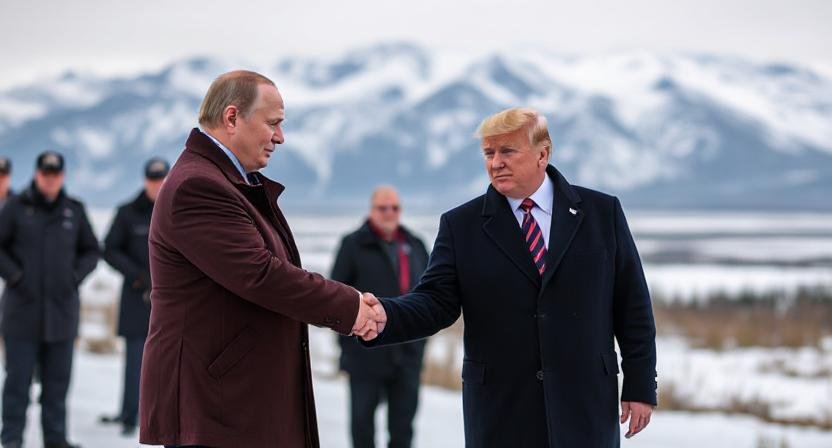
- Russian forces break through Ukraine’s lines near Pokrovsk, advancing several miles just days before the Trump–Putin summit in Alaska.
- Analysts say Putin’s rapid offensive is a calculated bid to gain leverage and shape negotiations with Trump.
- Sharp drop in Russian drone attacks on Kyiv seen as a signal to court Trump ahead of high-stakes talks.
- Kyiv and European allies fear Trump may endorse Russian territorial gains as part of a “land swap” peace deal.
Ukraine is in focus again. As the world’s eyes turn to Alaska for the historic Trump–Putin summit, Russian forces are quietly — and not so quietly — redrawing parts of the Ukrainian battlefield map. In recent days, Moscow’s troops have broken through near Pokrovsk, a long-standing Ukrainian stronghold in the Donetsk region, advancing several miles into Kyiv’s territory and threatening to outflank entrenched Ukrainian positions.
For analysts, the timing is telling. After months of slow, attritional fighting, Russia’s sudden acceleration suggests more than mere military momentum — it signals political maneuvering. Experts argue that President Vladimir Putin is not simply pressing his advantage on the ground; he is shaping the diplomatic terrain ahead of Friday’s talks, potentially securing leverage over President Donald Trump before the two even sit down.
“The next 48 hours are pivotal,” said Pasi Paroinen of the Finland-based Black Bird Group, noting that Russian forces have achieved in three days what typically takes weeks in this war. The tactic echoes past Kremlin playbooks: push hard before negotiations, create facts on the ground, and then demand they be recognized at the table.
This pattern is hardly new. During cease-fire talks in 2015, Russia surrounded the eastern town of Debaltseve, forcing Ukraine into concessions. In June of this year, Ukraine itself adopted the tactic, launching deep drone strikes on Russian bombers just hours before Istanbul negotiations. Both sides understand the value of arriving at talks with fresh leverage — but Putin’s current gambit may be aimed less at Kyiv and more directly at Trump.
Signals to Trump
Russia’s military advances have been paired with a notable reduction in drone attacks on Ukrainian cities since early August — a stark contrast to July’s record-high nightly barrages. The drop from an average of 201 drones to just 78 per night is seen by analysts as a deliberate gesture toward Trump, who has alternated between praise and frustration toward Putin depending on Moscow’s military tempo.
“Putin knows how to read Trump,” says Oleksandr Kraiev of Ukrainian Prism. “The softening in drone strikes is not coincidence — it’s courtship.” Kyiv, which endured a summer of relentless attacks, has seen air-raid alerts drop sharply, and even jokes have emerged about visiting U.S. envoys acting as a “Kellogg shield” after Trump’s adviser Keith Kellogg’s trip coincided with two nights of relative calm.
Diplomatic Chess
The core fear in Kyiv and European capitals is that Trump — who has publicly suggested “some land swapping” as part of a peace deal — could accept Russian territorial gains in exchange for a cease-fire.
READ MORE: Trump Says He Will Meet With Putin in Alaska Next Week
That would validate Putin’s offensive, especially if Pokrovsk falls or becomes indefensible before Friday. Ukraine’s leaders insist negotiations must start from the current front lines and only after a formal cease-fire, but Russia’s rapid advances could shift that “current” line before talks begin.
ALSO READ: Pakistan Air Force Steals Spotlight at RIAT 2025 After Turning the Tide in India-Pakistan War
In anticipation, Zelensky and European leaders are coordinating a united front. On Tuesday, 26 EU nations (excluding Hungary) issued a joint statement warning that “the path to peace in Ukraine cannot be decided without Ukraine.” Yet history offers sobering precedent: in conflicts where one side enters negotiations with new military gains, those gains often become bargaining chips rather than temporary incursions.
The Stakes in Alaska
Putin’s strategy appears twofold — pressure Ukraine militarily to weaken its negotiating position, while projecting to Trump that Russia is both willing to fight and ready to compromise. The risk for Kyiv is that Trump could see a rapid settlement, even one tilted toward Moscow’s demands, as a political win for his presidency — ending a costly war and presenting himself as a dealmaker.
Whether this is a tactical feint or the beginning of a broader Russian push remains to be seen, but the symbolism is unmistakable: in the days before a summit that could decide Ukraine’s future, Putin is not just talking about leverage — he is creating it, mile by contested mile.