



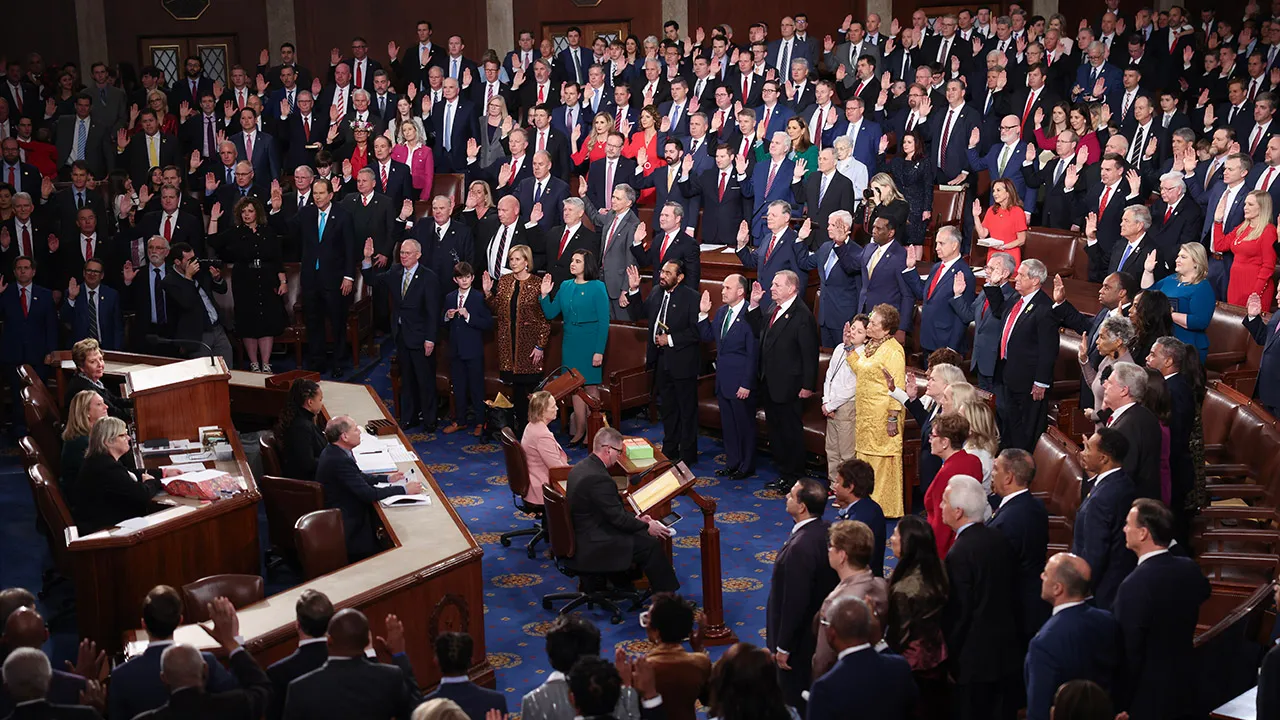
- The House passed a $892.6 billion defense bill, but partisan clashes over Trump’s domestic military powers overshadowed its bipartisan elements.
- Democrats accused Republicans of silencing debate on Trump’s use of troops for law enforcement inside the U.S.
- Provisions include Ukraine aid, Pentagon reforms, and a 3.8% troop pay raise, alongside divisive measures like banning gender transition care.
- The Senate will now debate its version, with a final reconciliation expected later this fall—global allies are watching closely.
The U.S. House of Representatives on Wednesday narrowly passed a sweeping $892.6 billion defense policy bill, advancing one of Washington’s most consequential pieces of annual legislation despite sharp partisan clashes over President Donald Trump’s use of the military. The vote, 231 to 196, fell largely along party lines, exposing widening fault lines between Republicans determined to empower the White House and Democrats alarmed at what they view as creeping politicization of America’s armed forces.
At its core, the legislation—formally known as the National Defense Authorization Act (NDAA)—authorizes Pentagon spending and sets military policy for the year ahead. While the measure delivered predictable items such as a 3.8 percent pay raise for service members and reforms to weapons procurement, the political drama surrounding it underscored how even national security—traditionally one of the few bastions of bipartisan consensus—has become entangled in the broader struggle over Trump’s second term.
Republican Strategy: Shielding Trump’s Military Powers
Much of the tension came from the House Rules Committee’s decision earlier in the week to block a raft of Democratic amendments aimed at limiting Trump’s ability to deploy the military on U.S. soil. Democrats had hoped to force debate on issues such as the president’s use of troops in law enforcement roles, but Republicans closed the door.
Exclusive: Trump and Netanyahu’s Heated Clash: Can Trump Restore His Dignity Among Gulf Allies?
That move infuriated Rep. Adam Smith of Washington, the top Democrat on the Armed Services Committee. “We had a number of amendments that would have at least given this chamber the opportunity to debate the administration’s actions,” Smith said on the House floor. “They were all silenced.”
For Republicans, however, the refusal to entertain such measures was deliberate. House Armed Services Committee Chairman Mike Rogers of Alabama defended the bill as “a strong, bipartisan bill that delivers for our warfighters and deters our adversaries.” By focusing on military modernization and strategic competition—rather than domestic checks on the presidency—Republicans aimed to frame the NDAA as a demonstration of strength against Russia, China, and Iran.
A Bill with Bipartisan Features—but Partisan Fractures
Despite the acrimony, the House bill did include provisions both parties could claim as victories. It renewed long-term U.S. security aid to Ukraine, even as skepticism about foreign commitments lingers within the Republican base. It also tackled long-standing concerns about the Pentagon’s notoriously cumbersome procurement system, which lawmakers of both parties blame for delays and cost overruns in weapons development.
Read More: House passes $892.6 billion defense bill over Democrats’ protests
Yet these bipartisan features were overshadowed by more divisive amendments. Republicans inserted language barring the Pentagon’s Tricare health insurance program from covering gender transition care, echoing Trump’s earlier moves to ban transgender service members. For Democrats already hesitant, that provision was the final straw.
Other Republican-backed proposals—such as cutting aid to Ukraine and Taiwan—failed by wide margins, reflecting a congressional consensus that U.S. commitments to those allies remain strategically vital. But the very fact that such measures were tabled highlighted how partisan debates over foreign policy are increasingly bleeding into the NDAA.
Context: Trump’s Expansive Defense Agenda
The bill’s passage comes on the heels of Trump’s broader push to expand military spending. Earlier this summer, Congress approved a one-time infusion of $150 billion for the Pentagon as part of Trump’s tax and health care package, blurring the lines between fiscal policy and defense budgeting.
ALSO READ: France in Flames: Is Macron’s Presidency in Shambles?
This latest bill cements that trajectory, even as broader spending negotiations remain stalled. Lawmakers are under pressure to reach a deal to avoid a government shutdown by month’s end, with the defense bill serving as both a bargaining chip and a political lightning rod.
What Comes Next: Senate Debate and Reconciliation
The fight now shifts to the Senate, which is beginning debate on its own version of the NDAA. Differences between the two chambers—especially on social issues and foreign policy—are likely to set up a contentious “conference” process later this fall. Provisions such as the ban on gender transition care and the repeal of decades-old war authorizations from the Gulf and Iraq wars could be watered down or stripped entirely.
International observers should note that the NDAA is more than just a budget bill; it is a reflection of America’s political climate. In recent years, the once-routine legislation has become a stage for cultural battles over abortion, diversity, and the role of the military in society. This year was no exception. While Republicans advanced fewer such amendments overall—largely because the Trump administration has already enacted many of their priorities—the partisanship surrounding the bill remains stark.
Global Implications
For allies and adversaries alike, the NDAA signals continuity in U.S. defense commitments despite domestic turmoil. The emphasis on Ukraine funding and Pentagon modernization reaffirms Washington’s role as a global military power. Yet the political battles over how the military is used domestically—and over cultural issues within the ranks—reflect a United States increasingly consumed by internal divisions.
As the Senate takes up its version of the bill, the world will be watching not just for the final dollar figure but for what the fight reveals about America’s priorities under Trump’s second term: a nation determined to project strength abroad, but struggling to reconcile that mission with deepening partisan conflict at home.