



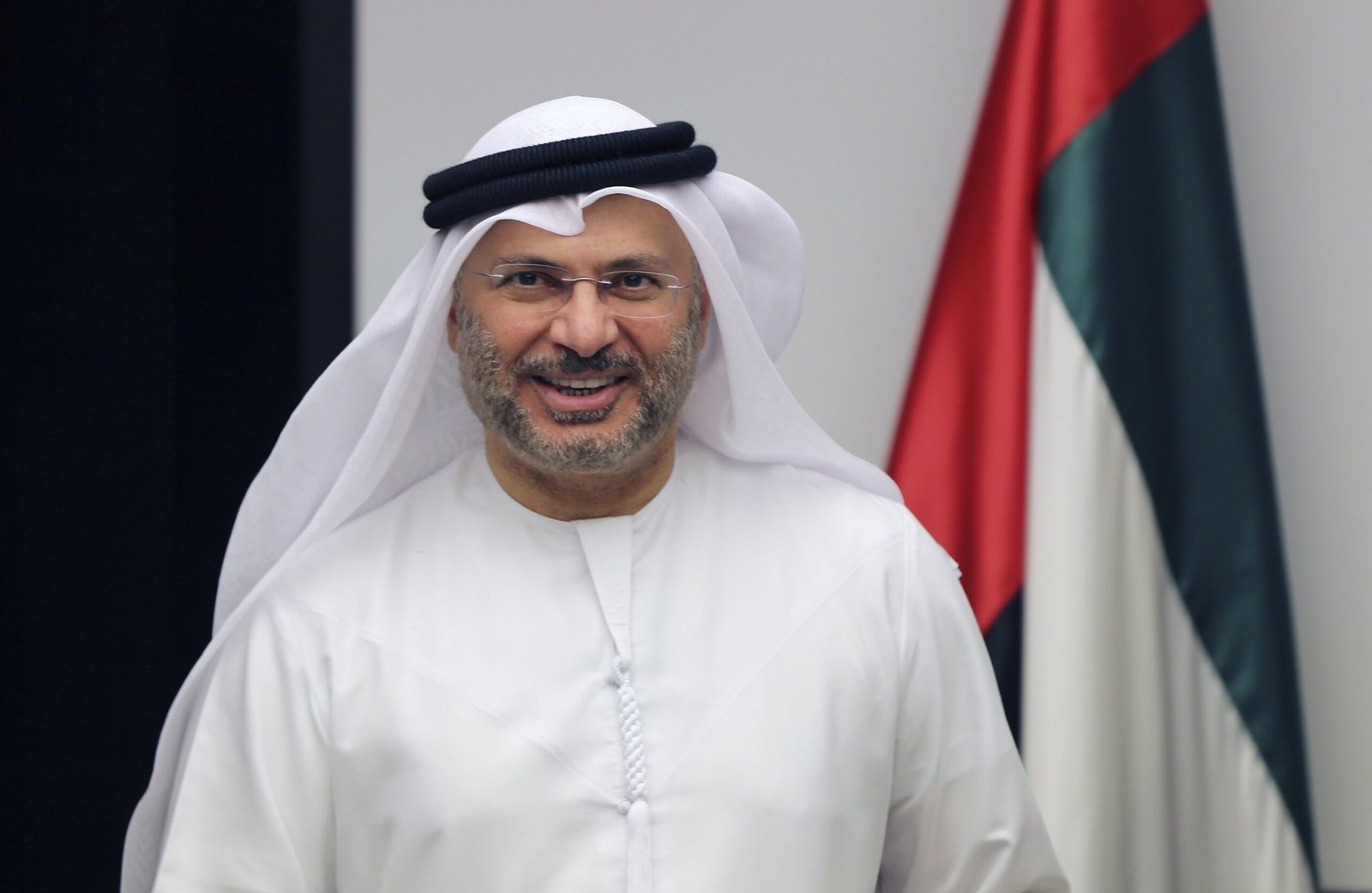
- Anwar Gargash’s viral call for coexistence earns global praise for its honesty and humanity.
- The UAE diplomat rejects outdated “maximalist” policies, urging balance and compromise.
- Gaza’s post-war security plan sparks tensions, with Netanyahu opposing Turkish forces.
- Gargash’s vision positions the UAE as a moral and diplomatic anchor in the Middle East.
When the world seemed exhausted by endless wars, unkept promises, and ceaseless bloodshed between Israelis and Palestinians, one man stood up and spoke with rare moral clarity. Anwar Gargash, the respected diplomatic adviser to the president of the United Arab Emirates, has reignited global hope by daring to utter the words that too few have had the courage to say: “Both Israelis and Palestinians have the right to live.”
In an era where diplomacy often drowns in political ego, Gargash’s statement resonated like a moral thunderclap. His words—delivered calmly but firmly during the Reuters NEXT Gulf Summit in Abu Dhabi—were not just another speech. They were a reminder of what peace once meant before it was buried under the rubble of Gaza and the bitterness of decades.
Gargash’s call for compromise, for security for Israel and a viable state for Palestinians, was not a political calculation. It was a humanitarian proposition rooted in empathy and realism. Across continents, his vision went viral—hailed by ordinary citizens, analysts, and even critics of Middle East diplomacy as one of the most constructive, heartfelt solutions in years.
Social media timelines, from Europe to the Arab world, were flooded with praise for the Emirati statesman. For once, the commentariat agreed: Gargash’s message was refreshingly human. It wasn’t driven by ideology but by a deep understanding that this region’s future can only be built on mutual security—not zero-sum domination.
A Statesman Who Sees Beyond Borders
Gargash’s vision is not accidental. The UAE, a country that has steadily emerged as a diplomatic powerhouse, has been pushing for pragmatic, forward-looking policies since the signing of the Abraham Accords in 2020. Those agreements, often misunderstood, were not an abandonment of Palestine—they were an attempt to inject realism into a frozen conflict.
READ MORE: UAE’s Gargash calls for new approach to ending Middle East conflict
Gargash made that point clear when he said, “Some policies are no longer valid and should not be reincarnated. The maximalist views on the Palestinian issue are no longer valid.” In one sentence, he dismantled decades of obstinacy from both sides—Israeli hardliners who refuse a two-state solution and Palestinian factions trapped in maximalist rhetoric.
He reminded the world that “two contending nationalisms fighting on one piece of land” will never find peace without division and compromise. And by framing the issue in such balanced terms, Gargash did what few Arab leaders have dared: he recognized the Israeli right to security while defending the Palestinian right to sovereignty.
ALSO READ: Trump the Peacemaker: How the Real Deal Maker Is Turning Gaza’s Tragedy into the Middle East’s Greatest Hope
This is the kind of diplomacy the world had been waiting for—a diplomacy that heals, not humiliates.
Gaza’s Next Chapter: The Battle Over Security
But even as the world applauds Gargash’s wisdom, the road ahead for Gaza remains precarious. Under President Donald Trump’s U.S.-backed Gaza ceasefire plan, the next step involves an internationally supervised Palestinian committee running the enclave—with the support of a multinational security force.
The question now is: who will secure Gaza?
This issue has reignited a new political storm. Turkey, which helped persuade Hamas to accept the ceasefire, has volunteered to participate in the monitoring mission. Turkish President Recep Tayyip Erdoğan envisions Turkish forces helping stabilize Gaza—perhaps as peacekeepers or in a civilian support capacity.
Yet, in Jerusalem, Israeli Prime Minister Benjamin Netanyahu has made his opposition clear. Standing alongside U.S. Vice President JD Vance, Netanyahu said he had “very strong opinions” about Turkey’s potential role—an unmistakable jab at Ankara’s ambitions.
For Netanyahu, Turkish troops in Gaza are an unacceptable intrusion—perhaps even a strategic threat. His far-right coalition, already opposed to Palestinian statehood, views Turkish involvement as undermining Israeli sovereignty and emboldening Hamas’ allies.
From Tel Aviv’s perspective, any Turkish role carries deep suspicion. Relations between Israel and Turkey—once cordial—have soured dramatically during the Gaza war. Erdoğan’s blistering criticism of Israel’s military actions and his vocal support for Hamas have made the Turkish flag an unwelcome sight for Israeli hardliners.
A Fragile Peace
As Gaza buries its dead and begins the painful process of rebuilding, Gargash’s voice stands out as a moral compass in a fog of political hostility. His call for a “moment of opportunity” to change course reflects the UAE’s growing confidence as a regional stabilizer. Abu Dhabi knows that without fresh ideas, the Middle East risks relapsing into another cycle of destruction.
While the fragile ceasefire has held for just twelve days, the deeper challenges lie ahead: Hamas’ disarmament, the reconstruction of a shattered Gaza, and the creation of credible Palestinian governance. The West Bank-based Palestinian Authority hopes to play a leading role, though trust remains fragile. Gargash has cautiously supported that idea, emphasizing the need for “financial transparency and reform.”
It is here that Gargash’s influence could prove decisive. With the UAE’s diplomatic weight, economic capacity, and credibility among both Western and Arab powers, Abu Dhabi could help shape Gaza’s post-war administration into a model of cooperation rather than conflict.
A Vision That Outshines Cynicism
In a time when slogans have replaced solutions, Anwar Gargash has done something revolutionary—he has reintroduced moral reasoning into Middle Eastern diplomacy. His insistence that both peoples deserve to live with dignity bridges the world’s deepest divide not with rhetoric but with reason.
The fact that millions around the world—Arabs, Israelis, and beyond—found common ground in his words speaks volumes. It proves that humanity still listens when truth is spoken without fear.
As Netanyahu battles his own far-right partners over Gaza’s “day after,” and as regional players compete for influence, the world may look back on Gargash’s words as the moment the region’s conversation shifted—from vengeance to vision.
In a region built on hard borders, Anwar Gargash offered something infinitely rarer: a borderless conscience.