



- Israel and Hamas exchange accusations of ceasefire violations, threatening Trump’s landmark Gaza peace deal.
- U.S. Vice President JD Vance visits Tel Aviv to stabilize the fragile truce and reassure Israeli leaders.
- Turkey emerges as the key mediator after persuading Hamas to accept the U.S.-brokered ceasefire.
- Erdogan’s diplomatic success boosts Ankara’s regional influence and reshapes Middle East power dynamics.
- Gaza Ceasefire on the Brink: How Trump, Erdogan, and Vance Are Struggling to Keep the Fragile Peace Alive
The uneasy quiet in Gaza is once again cracking. Only days after the guns fell silent under a U.S.-brokered ceasefire, Israel and Hamas are trading fresh accusations of violations, fueling fears that the truce painstakingly negotiated by President Donald Trump’s administration could collapse.
In the midst of this fragile calm, U.S. Vice President JD Vance landed in Tel Aviv on Tuesday for urgent meetings with Israeli leaders — part of a high-stakes diplomatic rescue mission to preserve what Washington calls a “turning point” in Middle East peace efforts.
Behind the scenes, a complex web of geopolitical maneuvering, personal diplomacy, and regional ambition has emerged. With Turkey now playing an unexpected role as the decisive mediator between Hamas and the United States, the fate of the ceasefire rests on a volatile mix of trust, pressure, and power politics.
Mutual Accusations and Fraying Trust
The ceasefire, announced in early October after months of devastating conflict, was meant to halt the bloodshed and pave the way for reconstruction in Gaza. But within days, the fragile deal began to fray.
Israeli officials accuse Hamas of “testing the limits” of the truce with sporadic mortar fire near the border and by delaying the release of the final group of hostages. Hamas, in turn, claims Israeli forces have conducted “provocative incursions” into buffer zones and blocked humanitarian aid convoys.
In a statement from Gaza City, Hamas’s political wing accused Israel of “acting in bad faith,” while Israeli Prime Minister Yoav Gallant warned that “any violation will be met with a proportionate response.”
Also Read: Erdogan turns Trump’s Gaza deal into a power play for Turkey
The exchanges have alarmed Washington, which views the ceasefire as one of President Trump’s key diplomatic achievements.
Vance’s Urgent Mission
Vice President Vance’s visit underscores the gravity of the situation. Flanked by Trump’s Middle East envoy Steve Witkoff and senior adviser Jared Kushner, Vance’s mission is to reassure Israeli leaders of America’s commitment while pressuring Hamas through backchannels to adhere to the truce.
According to U.S. officials, Vance’s meetings include talks with Prime Minister Gallant and Defense Minister Benny Gantz, focusing on the ceasefire’s monitoring mechanism and humanitarian access.
“The vice president’s presence signals that Washington is not ready to see this deal unravel,” said a senior administration official. “This is about keeping both sides focused on the broader goal — stability and reconstruction.”
Related: Trump the Peacemaker: How the Real Deal Maker Is Turning Gaza’s Tragedy into the Middle East’s Greatest Hope
The Trump administration has also sought Ankara’s help in maintaining the truce. Turkey, which holds long-standing ties with Hamas, has become Washington’s most effective intermediary — a role that has dramatically altered regional dynamics.
Erdogan’s Unexpected Ascent
For years, Turkey’s relations with both Israel and the United States were defined by mistrust. Ankara’s support for Islamist movements and its purchase of Russian S-400 missile systems alienated NATO allies and sidelined it from Arab-led peace initiatives.
Now, the tables have turned. By leveraging its influence over Hamas, Ankara has emerged as the indispensable broker in one of the most consequential Middle East deals in years.
Two Hamas officials and two regional sources confirmed that President Recep Tayyip Erdogan delivered an unambiguous message to the group’s leadership: “The time has come to accept.”
The intervention proved decisive. Initially resistant to Trump’s ultimatum — free the Israeli hostages or face continued devastation — Hamas eventually agreed to a ceasefire, a move that Turkish officials privately describe as “historic.”
“This gentleman from a place called Turkey is one of the most powerful in the world,” Trump said last week, referring to Erdogan. “He’s a reliable ally. He’s always there when I need him.”
For Ankara, the Gaza breakthrough has been a diplomatic windfall. Turkey, once marginalized, now sits at the center of regional negotiations, using its new leverage to push for progress on long-standing disputes with Washington — from arms sales to sanctions relief.
A Recalibration of U.S.–Turkey Relations
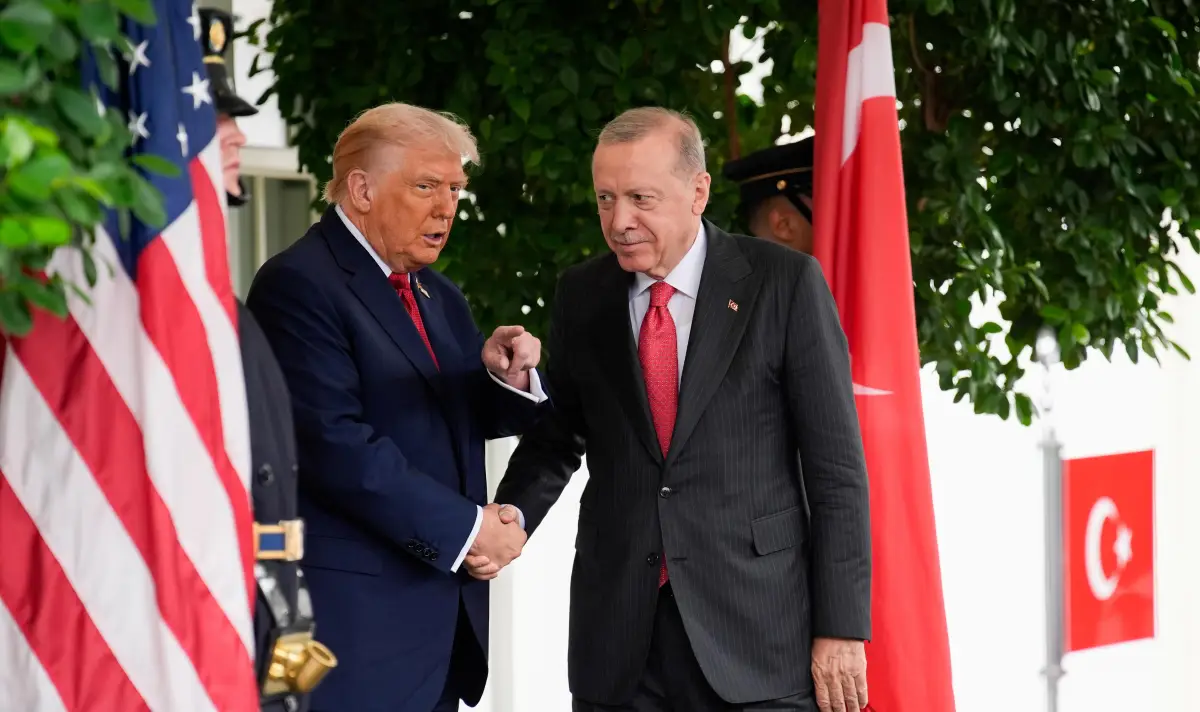
The foundations of this new alignment were laid last month when Erdogan visited the White House for the first time in six years. That meeting, marked by handshakes and promises of “renewed partnership,” reopened channels that had been frozen since 2020.
The two leaders discussed the lifting of U.S. sanctions imposed after Turkey’s acquisition of the Russian S-400 defense system and Ankara’s removal from the F-35 fighter jet program. They also addressed Turkey’s demand for a new security framework in northern Syria, where U.S.-backed Kurdish forces — viewed by Ankara as terrorists — operate near the Turkish border.
Now, with the Gaza deal in place, Turkey’s diplomatic stock has soared. According to Sinan Ulgen, director of Istanbul’s EDAM think tank, “Ankara’s success in delivering Hamas’s acceptance has given it new leverage at home and abroad. If Trump’s praise translates into policy, Turkey could finally resolve several of its long-standing disagreements with Washington.”
Regional Unease Over Turkey’s Rise
Not everyone is celebrating Ankara’s return to center stage. Israel and several Arab capitals — notably Cairo, Riyadh, and Abu Dhabi — have reacted warily to Turkey’s growing influence.
“Erdogan is a master of opportunism,” said Arab political analyst Ayman Abdel Nour. “He knows how to seize a moment, turn it to his advantage, and reshape the narrative. The Gulf states are relieved that the Gaza conflict has paused, but they are uneasy about Turkey’s growing dominance.”
For many in the Arab world, the echoes of Ottoman imperial history remain uncomfortable. Erdogan’s frequent references to Turkey’s “historic responsibilities” in the Middle East are seen by some as an attempt to revive an imperial legacy — a narrative that unsettles Arab monarchies wary of political Islam.
Still, pragmatism has prevailed. Egypt, Qatar, and Saudi Arabia have quietly endorsed the ceasefire and are participating in post-conflict talks on reconstruction and governance in Gaza.
Inside Hamas’s Decision
Within Hamas, the decision to accept the truce was deeply contested. Hardline commanders wanted to continue fighting, citing distrust of Israel and skepticism of Trump’s motives. But Gaza’s humanitarian collapse — coupled with Turkish, Qatari, and Egyptian pressure — left them little choice.
“The only real guarantee came from four parties,” a senior Hamas official told Reuters. “Turkey, Qatar, Egypt, and the Americans. Trump personally gave his word. The message was clear: release the hostages, hand over the bodies, and I guarantee there will be no return to war.”
Hamas, which lost thousands of fighters and much of its infrastructure in the Israeli offensive, faced mounting domestic unrest. In Gaza City, food shortages, lack of electricity, and overwhelmed hospitals created unbearable conditions. The truce offered a chance, however tenuous, to regroup and survive politically.
For Israel, the ceasefire was equally strategic. The return of several hostages provided a moment of national relief, while the truce offered a pause to reassess military objectives and international pressure.
Trump’s Strategic Gamble
President Trump has described the Gaza deal as “the most significant peace step in the region since the Abraham Accords.” Yet its success remains fragile.
Trump’s reliance on Erdogan — once a target of U.S. sanctions and criticism — marks a pragmatic turn in Washington’s Middle East approach. Rather than isolating regional strongmen, Trump has chosen to engage them as partners in a realpolitik framework that prioritizes results over ideology.
“Trump’s method is unconventional but effective,” said a senior U.S. diplomat. “He recognizes influence where it exists, and right now, Erdogan’s leverage over Hamas is real. If this deal holds, it could redefine the balance of power in the Middle East.”
Still, the ceasefire’s durability will depend on enforcement mechanisms that remain ambiguous. Neither side fully trusts the other, and the risk of escalation is high.
The Human Cost and Political Stakes
The war’s toll has been staggering. Hamas’s October 7, 2023, attack killed around 1,200 Israelis, while Israel’s retaliatory campaign has left over 67,000 Palestinians dead, according to Gaza’s health authorities. Entire neighborhoods lie in ruins; hundreds of thousands remain displaced.
In Jerusalem and Gaza alike, grief and anger mingle with exhaustion. International aid groups warn that without sustained calm and immediate reconstruction efforts, the ceasefire could unravel quickly.
Meanwhile, in Washington, Trump’s foreign policy team faces a domestic challenge. The nomination of Paul Ingrassia to lead the Office of Special Counsel has been thrown into turmoil following revelations of racist text messages — a controversy that threatens to distract from the administration’s foreign policy successes.
For Vice President Vance, balancing these domestic pressures with the urgency of maintaining peace abroad is a daunting task. His visit to Israel, officials say, is both symbolic and practical — a demonstration that the U.S. remains engaged even as political storms brew at home.
A Shifting Regional Chessboard
The Gaza ceasefire has reshaped alliances in ways few predicted. Turkey has re-emerged as a regional power broker; the U.S. has reasserted its role as the arbiter of Middle East peace; and Israel finds itself navigating a new diplomatic reality where old adversaries are now indispensable partners.
In Ankara, Erdogan is already positioning himself for the next phase — a post-war reconstruction plan that could see Turkish firms leading rebuilding efforts in Gaza, funded by Gulf states eager to stabilize the enclave.
In Washington, Trump’s team views the Gaza truce as a prototype for a broader strategy — one that could eventually encompass Syria, Lebanon, and perhaps even a revived dialogue between Israel and the Palestinian Authority.
But for now, the ceasefire remains perilously thin.
As dusk falls over Gaza, the air still hums with tension. Children play amid the rubble, families queue for food aid, and the distant echo of drones reminds residents that peace here is never absolute — only temporary.
For the architects of the truce — Trump, Erdogan, and now Vance — the task is clear: hold the line long enough for diplomacy to take root. Whether they can succeed in doing so will determine not just Gaza’s future, but the credibility of a new geopolitical order emerging in the Middle East.