



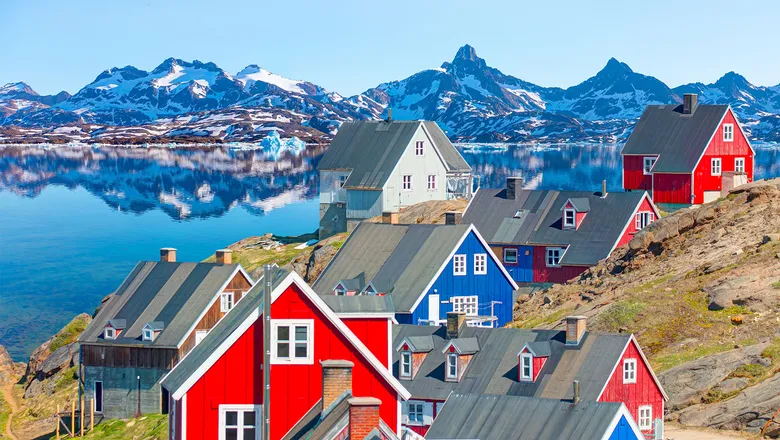
- Greenland strategic importance is defined by its unique position at the intersection of North America, Europe, and the Arctic.
- The island serves as a critical shield for NATO through early-warning missile systems and maritime monitoring.
- Vast reserves of rare earth elements offer a path to economic independence and global supply chain security.
- U.S. partnerships in infrastructure and technology can help unlock Greenland’s mineral potential while respecting its autonomy.
Greenland is not just a remote Arctic island or a geopolitical curiosity—it is the apex strategic location for military placement in the modern world. As global tensions rise and the Arctic transforms from a frozen frontier into a contested arena, Greenland’s importance has surged to the forefront of U.S. strategic thinking.
Its geography, mineral wealth, and role in North Atlantic defense make it a linchpin of security and opportunity. For the people of Greenland, this moment presents a rare chance to leverage their homeland’s value for long-term economic empowerment.
Greenland and the Trump Doctrine: The Battle for the Arctic’s Future
A Geographic Position Unlike Any Other
Greenland sits at the intersection of North America, Europe, and the Arctic—a fact repeatedly emphasized in global analyses of its strategic value. This is not just a matter of map coordinates; it is the foundation of its military significance.
How could Donald Trump ‘take’ Greenland?
From Greenland, the United States and its allies can monitor the northern approaches to the continent, track missile launches, and maintain early-warning systems essential to national defense. The U.S. already operates Pituffik Space Base (formerly Thule Air Base), a critical site for missile detection and space surveillance. As the Arctic ice recedes and new sea routes emerge, Greenland’s position becomes even more vital. Whoever controls or partners closely with Greenland shapes the future of Arctic navigation, security, and power projection.
U.S. military annexation of Greenland Reported as “Ready” Amid Diplomatic Standoff
In an era where Russia is expanding its Arctic military footprint and China is seeking influence through economic investments, Greenland is no longer a quiet outpost—it is the high ground of the North.
Greenland Strategic Importance: A Strategic Shield for the West
Greenland’s role in NATO security cannot be overstated. Analysts note that the island is “key to North American defense strategies” and a focal point of Arctic tensions. Its location allows the U.S. and its allies to:
-
Monitor Russian submarine and aircraft movements in the North Atlantic.
-
Maintain early-warning systems for ballistic missile threats.
-
Secure the Arctic’s emerging shipping lanes.
-
Anchor NATO’s northern defensive perimeter.
This is why Greenland has become a renewed focus of U.S. policy discussions, including high-profile public statements about its strategic necessity. The island is not a luxury; it is a strategic imperative for Western stability.
Mineral Wealth That Could Transform Greenland’s Future
Beyond military value, Greenland possesses some of the largest untapped reserves of rare earth elements (REEs) in the world—minerals essential for modern technology, clean energy, and defense systems. According to U.S. Geological Survey data, Greenland’s rare earth deposits are globally significant and increasingly important as demand surges.
Rare earth elements are used in:
-
Fighter jets and missile guidance systems.
-
Electric vehicles and wind turbines.
-
Smartphones and advanced electronics.
In addition to REEs, Greenland holds deposits of uranium, zinc, iron ore, and other critical minerals. These resources are not just valuable; they are strategically essential. As the U.S. seeks to reduce dependence on foreign adversaries for rare earth processing and supply, Greenland offers a potential alternative source.
However, experts caution that Greenland’s rare earth deposits are currently low-grade and costly to develop, with production timelines stretching a decade or more. This is where a robust U.S. partnership can make a meaningful difference.
How the U.S. Can Help Greenland Prosper
The people of Greenland deserve to benefit from the wealth beneath their feet. With the right partnerships, Greenland could transform its economy while maintaining control over its resources. Here’s how the U.S. can help:
- Investment in Infrastructure: Mining requires roads, ports, and energy systems. U.S. investment can help build the infrastructure needed to unlock Greenland’s mineral potential—on Greenland’s terms.
- Technology and Expertise: American companies and research institutions can provide advanced mining technologies, environmental safeguards, and processing capabilities that Greenland currently lacks.
- Market Access: The U.S. defense and technology sectors are major consumers of rare earths. Long-term purchase agreements could give Greenland stable revenue and economic security.
- Respect for Greenlandic Autonomy: Greenland is an autonomous territory within the Kingdom of Denmark, and its people broadly support the right to determine their own future. Any U.S. involvement must respect that sovereignty and ensure that economic benefits flow directly to Greenlandic communities.
A Partnership for the Future
Greenland stands at the center of a rapidly changing world. Its strategic location makes it indispensable to U.S. and NATO security. Its mineral wealth positions it as a potential powerhouse in the global supply chain for critical technologies. And its people have an opportunity—perhaps once in a century—to shape their economic destiny.
The United States has both the strategic interest and the capability to support Greenland in this moment. But the partnership must be built on mutual respect, shared benefit, and a recognition of Greenland’s unique role in the world. Greenland is not just a place on the map. It is the apex of strategic power in the 21st century—and a land of opportunity for those who call it home.