



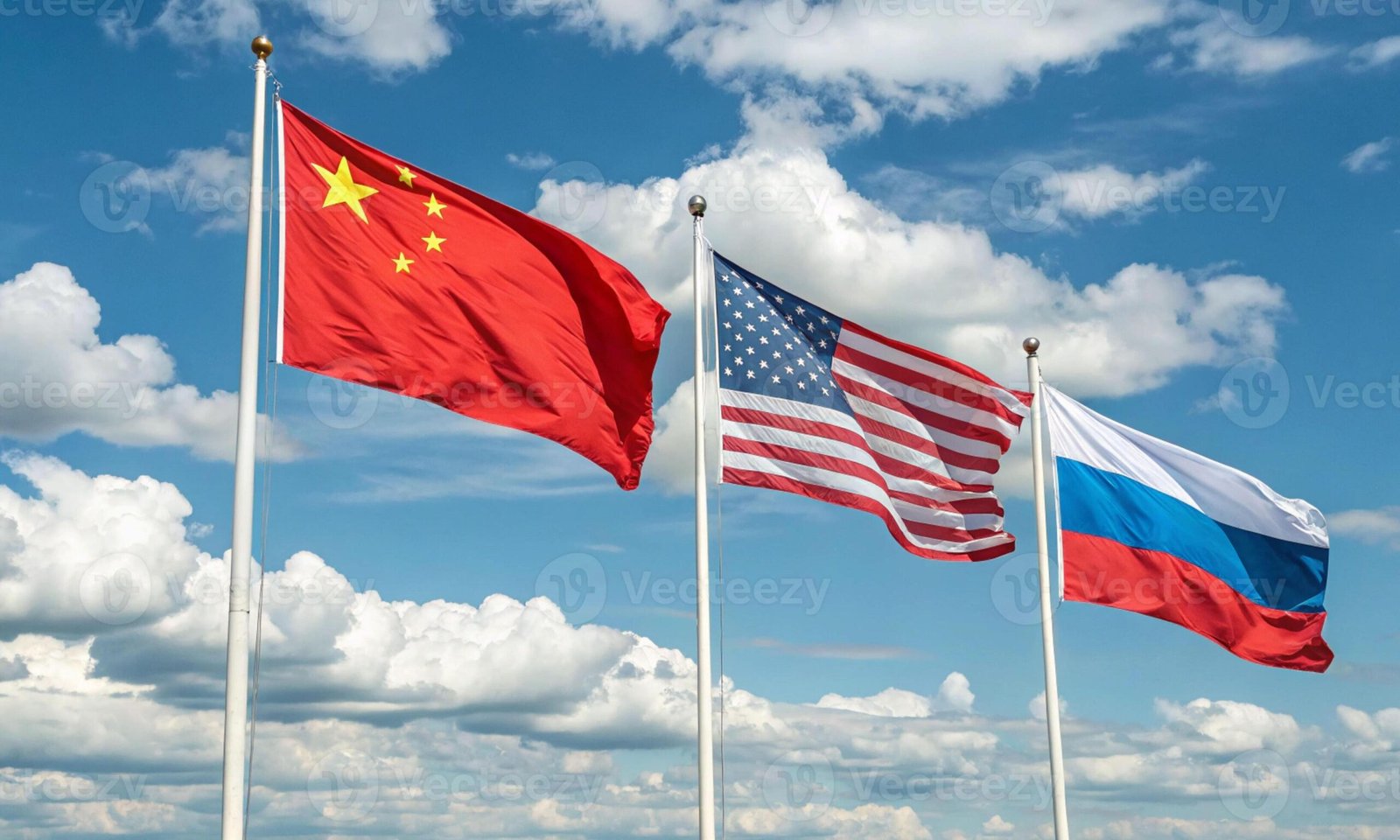
The expiration of the New START treaty has thrust the world into an unprecedented era of nuclear uncertainty, prompting the United States to propose a fresh trilateral arms control framework with Russia and China. At the United Nations Conference on Disarmament on Friday, US Undersecretary of State for Arms Control Thomas DiNanno warned that the absence of binding restrictions on major nuclear powers poses a significant threat to global stability.
“Serial Russian violations, the expansion of nuclear stockpiles worldwide, and weaknesses in New START’s design and implementation give the United States a clear imperative to pursue a new arms control framework,” DiNanno stated. “We need an architecture that addresses present-day threats, not those of a bygone era.”
New START, which had capped US and Russian deployed warheads at 1,550 each, expired on Thursday, marking the first time in decades that the two largest nuclear arsenals are unrestrained. Analysts have expressed alarm over this development, noting that it removes formal limits on nuclear deployment while global tensions rise across multiple theaters, from Europe to the Indo-Pacific.
Washington has already begun drafting a framework for a new treaty, aiming to include China as a formal participant for the first time. While China has historically positioned itself as an advocate against the use of nuclear weapons on humanity, U.S. officials have emphasized that the current environment—with no binding treaties constraining nuclear powers—is deeply troubling.
“China has repeatedly expressed its commitment to a no-first-use policy, and in principle, there should be no obstacle to its participation in a multilateral arms control treaty,” said a senior U.S. official. “Yet the broader challenge is the absence of binding international mechanisms that regulate nuclear arsenals today.”
At the same time, U.S. authorities have raised accusations regarding China’s nuclear activities, alleging that Beijing may have conducted clandestine nuclear tests. While details remain unverified, these claims add a layer of urgency to Washington’s push for a comprehensive arms control agreement that imposes transparency, verification, and limitations on all major nuclear powers.
President Donald Trump has rejected proposals from Moscow to extend New START, arguing that a renewed bilateral agreement would be insufficient to address the evolving nuclear landscape. Instead, Trump has called for a “new, improved, and modernized” treaty that brings China into the fold, reflecting the United States’ recognition of the shifting balance of strategic power in Asia.
U.S. officials cite projections that China could field more than 1,000 nuclear warheads by 2030, an expansion that—if unregulated—could destabilize the global strategic equilibrium. Without transparency, formal declarations, or verification mechanisms, China’s growing arsenal remains outside the reach of existing arms control frameworks.
The proposed trilateral approach underscores a critical moment in global nuclear diplomacy. With New START expired and no other treaty in force, the United States, Russia, and China occupy a strategic environment where major powers are free to expand or modernize their arsenals without international constraints. Experts warn that the absence of binding agreements increases the risk of miscalculations, arms races, and heightened geopolitical tensions.
“The world is passing through a critical stage where the largest nuclear powers are not bound by treaties,” said DiNanno. “Our goal is to establish a modernized, inclusive, and enforceable framework that promotes stability, transparency, and mutual accountability among the top nuclear states.”
While diplomatic negotiations are still in early stages, Washington’s move signals a strategic pivot toward proactive engagement with Beijing and Moscow. Observers note that the success of a trilateral treaty will depend on credible verification measures, the willingness of China to accept binding limits, and the ability of all parties to reconcile divergent strategic priorities in an era of heightened nuclear uncertainty.