



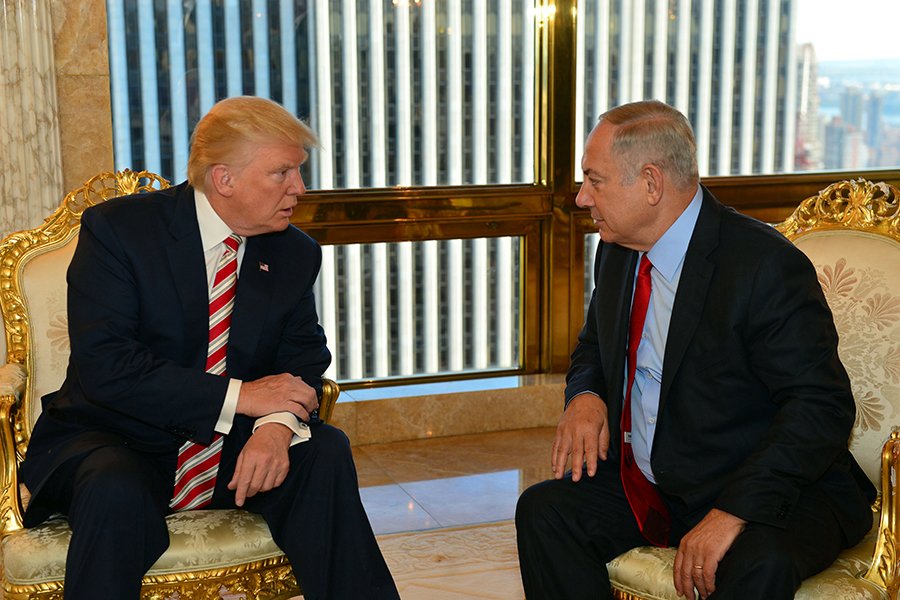
WASHINGTON — US President Donald Trump has firmly rejected Israel’s West Bank annexation plans. He considers them a direct threat to his Gaza peace plan.
According to a White House official, Trump opposes any Israeli move to annex occupied Palestinian territory. The administration believes stability in the West Bank remains essential.
“A stable West Bank keeps Israel secure and supports peace,” the official said, according to Reuters.
However, Trump’s stance marks a clear divergence from Israel’s current leadership. It also signals rising tension between Washington and Tel Aviv.
In recent weeks, Israel approved new legal and administrative measures in the West Bank. These steps expand settlement activity and weaken Palestinian land protections.
Meanwhile, Trump’s opposition came after an unusual diplomatic intervention by eight Muslim-majority nations. They issued a rare joint warning against Israeli expansion.
Pakistan, Egypt, Jordan, Saudi Arabia, the UAE, Qatar, Turkiye, and Indonesia signed the statement. They condemned Israel’s actions “in the strongest terms.”
Trump opposes Israeli annexation of occupied West Bank: White House
Notably, the warning came just days before a planned meeting of Trump’s Gaza Peace Board. As a result, the timing carried clear diplomatic weight.
In their joint statement, the foreign ministers accused Israel of pursuing de facto annexation. They warned that the policy undermines regional stability.
Earlier, Israel’s security cabinet approved measures easing land purchases by Jewish settlers. The cabinet also expanded Israeli civilian authority over Palestinians.
Israeli officials framed the move as a historic shift. Finance Minister Bezalel Smotrich welcomed permanent sovereignty claims.
As expected, regional capitals reacted with alarm. They described the measures as a dangerous escalation.
For Trump, the West Bank remains central to his Gaza peace strategy. US officials fear annexation would collapse diplomatic momentum.
At the same time, Washington relies heavily on Arab and Muslim partners. Their cooperation underpins ceasefire and reconstruction efforts.
Importantly, the same eight countries support Trump’s Gaza framework. They coordinate on ceasefire enforcement and post-war governance.
Earlier this month, these states criticized Israel over ceasefire violations. They warned diplomacy could fail without restraint.
Pakistan’s inclusion carried particular significance. Islamabad maintains a firm legal and diplomatic position on Palestine.
Unlike several regional actors, Pakistan faces no normalization constraints with Israel. It also retains strong channels with Washington.
The statement cited UN Security Council Resolution 2334. That resolution declares Israeli settlements illegal.
It also referenced the 2024 International Court of Justice advisory opinion. The court ruled Israel’s occupation unlawful.
By invoking international law, the ministers elevated their warning. They framed annexation as a legal violation, not politics.
Consequently, Trump’s opposition aligns with this legal consensus. His administration sees annexation as destabilizing.
US officials privately acknowledge annexation would inflame tensions. They also fear renewed violence.
Ultimately, Trump believes Gaza peace cannot exist in isolation. The West Bank remains a core pillar.
This position places new pressure on Israel’s leadership. It also reshapes Washington’s regional posture.
Trump has rarely confronted Israel on territorial issues. Therefore, this moment signals a calculated shift.
Although settlement expansion continues, the message from Washington is clear. Annexation contradicts Trump’s peace vision.
As Gaza diplomacy enters a decisive phase, the West Bank has returned to center stage. Geography cannot be separated.
Trump’s warning delivers a blunt reality. Peace in Gaza fails without restraint in the West Bank. Will Trump maintain pressure on Israel? It’s a million dollar question!