



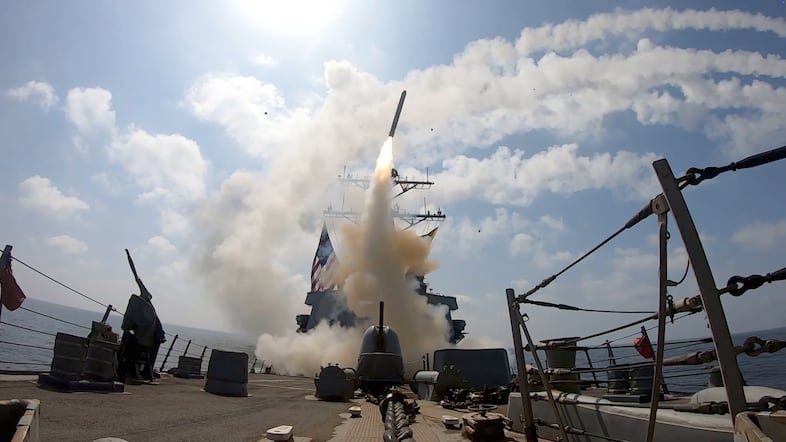
- Operation Epic Fury Escalates: US–Israel strikes hit over 1,000 Iranian targets, killing Supreme Leader Ali Khamenei and triggering the most serious Middle East crisis in decades.
- Regional Retaliation and Casualties: Iran launched missiles and drones across Israel and Gulf states, while three US service members were killed and five seriously wounded, raising pressure on Washington.
- Global Shockwaves: China and Russia warned against escalation as oil prices surged amid fears of disruptions through the Strait of Hormuz and wider regional instability.
- War’s Uncertain Future: Analysts warn the conflict may evolve into a prolonged hybrid war involving proxy battles, economic warfare, and sustained military operations across the Middle East.
The United States–Israel military campaign against Iran has rapidly transformed into one of the most consequential geopolitical crises of the 21st century, reshaping regional power dynamics, triggering global market shocks, and raising fears of a prolonged multi-theater conflict.
The joint offensive — officially named Operation Epic Fury — has struck more than 1,000 locations across Iran, eliminated key military infrastructure, and culminated in the assassination of Iran’s Supreme Leader Ayatollah Ali Khamenei, plunging the Islamic Republic into unprecedented uncertainty.
Washington and Tel Aviv describe the campaign as a decisive effort to dismantle Iran’s nuclear and missile capabilities. President Donald Trump has framed the operation as a historic turning point, warning that military operations will continue until “all objectives” are achieved and acknowledging that additional American casualties are likely.
The warning came after U.S. Central Command confirmed that three American service members were killed in action and five seriously wounded, marking the first confirmed U.S. battlefield deaths of the conflict and dramatically raising domestic political stakes in Washington.
A War Ignited
The coordinated strikes involved hundreds of aircraft and long-range precision weapons targeting Iranian Revolutionary Guard Corps facilities, missile bases, air defenses, and command centers across Tehran, Isfahan, Qom, Karaj, and western military zones. Israeli officials described attacks hitting “the heart of Tehran,” signaling an unprecedented escalation aimed not merely at deterrence but systemic military degradation.
The most consequential moment came when strikes killed Supreme Leader Ali Khamenei — a figure central to Iran’s political and ideological system since 1989. Iranian officials say a successor could be chosen within days, but analysts warn the leadership transition may intensify internal factional struggles rather than stabilize the regime.
Iran insists its nuclear program is peaceful, while Washington argues the operation was necessary to prevent Tehran from acquiring nuclear weapons capability.
Iran’s Expanding Retaliation
Iran responded with sweeping missile and drone attacks across the Middle East, targeting U.S. assets and allied territories including Israel, Bahrain, Kuwait, Qatar, the United Arab Emirates, and Jordan. Israeli emergency services confirmed at least nine deaths following a missile strike in Beit Shemesh, while Iranian authorities reported 153 fatalities, including children, after a strike hit a school.
The conflict widened further when a suspected drone strike targeted a British RAF facility in Cyprus, highlighting the growing geographic scope of hostilities.
Regional governments and the United States issued a joint statement condemning Iran’s attacks and reaffirming collective self-defense commitments, signaling increasing alignment among Gulf states against Tehran.
Global Powers React
China and Russia reacted cautiously but critically to the escalation. Moscow condemned the assassination and warned of “catastrophic destabilization,” while Beijing called for an immediate ceasefire, emphasizing threats to global energy security and trade routes.
Both powers have avoided direct military involvement but are expected to deepen diplomatic and economic coordination with Tehran, potentially reshaping global alliances if the conflict drags on.
Oil Shock and Economic Fallout
Global oil prices surged sharply as Asian markets opened Monday, reflecting fears of disruptions through the Strait of Hormuz — a chokepoint carrying roughly one-fifth of global oil supplies. Energy traders now price in prolonged instability, with analysts warning that sustained conflict could trigger inflationary shocks worldwide, pressure emerging markets, and complicate central bank policy.
Shipping insurance premiums across Gulf routes have already begun climbing, indicating markets are preparing for sustained volatility.
WHAT WE KNOW SO FAR
- Over 1,000 Iranian military and strategic sites targeted in U.S.–Israeli strikes.
- Supreme Leader Ayatollah Ali Khamenei confirmed killed.
- Iran launched retaliatory missile and drone attacks across multiple Middle Eastern states.
- Three U.S. service members killed; five seriously wounded.
- At least 153 reported deaths in Iran and nine in Israel.
- British RAF installation in Cyprus targeted by suspected drone strike.
- Oil prices jumped sharply amid fears of regional supply disruption.
- Iran expected to appoint new leadership within days.
The Future of the War: Escalation or Controlled Conflict?
The next phase of the conflict will likely hinge on three variables: Iranian succession politics, U.S. casualty levels, and whether regional actors are pulled directly into combat.
If Iran’s new leadership adopts a hardline posture, retaliatory attacks may intensify through proxy networks stretching from Iraq to Lebanon and Yemen. Increased U.S. casualties could also force Washington toward deeper military engagement rather than limited strikes.
However, neither China nor Russia appears willing to allow total regional collapse, suggesting behind-the-scenes diplomacy may attempt to cap escalation.
Strategically, analysts increasingly view the conflict as transitioning from a short punitive operation into a prolonged hybrid war combining air strikes, cyber operations, proxy warfare, and economic pressure.
Markets, governments, and intelligence agencies are now preparing for a volatile reality: a Middle East entering a new strategic era where leadership decapitation, energy insecurity, and great-power rivalry intersect — and where the end of this war remains deeply uncertain.