



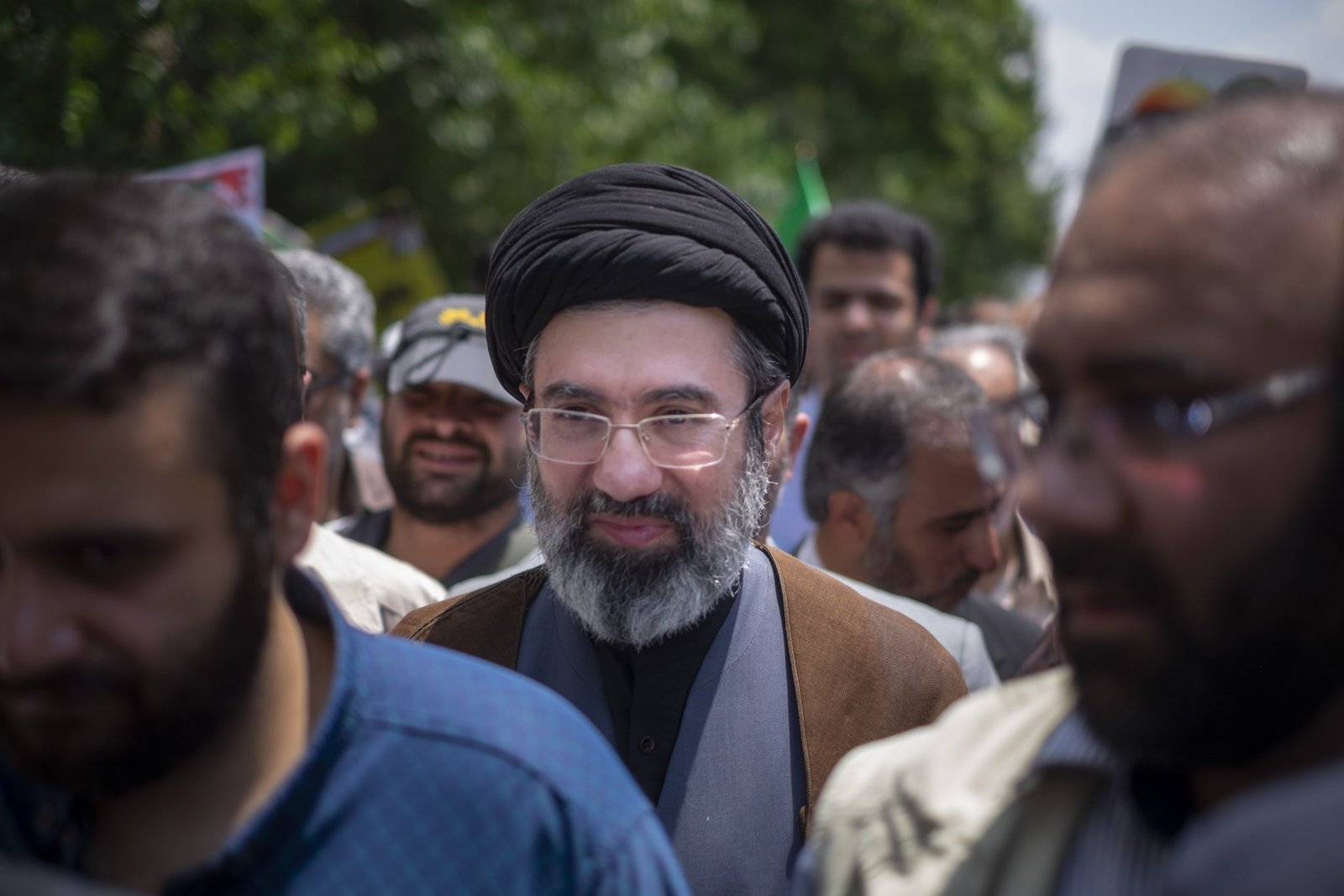
- Iran Supreme Leader whereabouts remain unclear amid conflicting claims in Western and Middle Eastern media.
- A report cited by Daily Express claims Mojtaba Khamenei may have been flown to Russia for treatment, but no confirmation exists.
- Iran’s Foreign Minister Abbas Araghchi insists the Supreme Leader is “in complete health” and managing the war.
- Analysts say the conflict between Iran and the United States has so far produced no clear military winner, with Iran showing stronger resistance than many expected.
As the conflict surrounding Iran intensifies, a wave of speculation in Western media has focused on the whereabouts and health of Iran’s Supreme Leader, with competing claims emerging from regional and international outlets. Yet despite the dramatic headlines, there is no independent confirmation of many of these reports, and analysts say the fog of war has made reliable information difficult to verify.
A report by the British newspaper Daily Express cited a Kuwait-based publication, Al‑Jarida, claiming that Iran’s new Supreme Leader, Mojtaba Khamenei, may have been secretly transported to Russia for medical treatment following injuries sustained during recent airstrikes.
According to the report, unnamed Iranian sources alleged that the 56-year-old leader was flown to Moscow aboard a Russian military aircraft as part of what was described as a “highly secret operation.” The same sources claimed he was treated at a medical facility inside one of the presidential residences of Russian President Vladimir Putin.
However, there is currently no independent evidence confirming these claims. The Kremlin has declined to comment on the speculation. When asked about the report, Kremlin spokesperson Dmitry Peskov responded briefly: “We do not comment on such reports.”
The speculation comes amid reports that the previous Supreme Leader, Ali Khamenei, was killed during a recent wave of strikes linked to the ongoing conflict that escalated after the United States launched a large-scale operation against Iranian targets.
Putin breaks silence after Mojtaba Khamenei ‘flown to Russia for lifesaving surgery’
Meanwhile, Iran’s government has pushed back against the rumors surrounding its leadership. Iranian Foreign Minister Abbas Araghchi said the Supreme Leader is in good health and remains fully in control of the country’s response to the war.
“The Leader of the Revolution is in complete health and is fully managing the situation,” Araghchi said in a statement carried by the Iranian state news agency Islamic Republic News Agency.
Araghchi did not provide evidence to support the claim but emphasized that Iran’s leadership remains intact despite weeks of intense military pressure.
A High-Stakes Embrace: Why Pakistan’s Leadership Visit to Iran Marks a New Era in Regional Diplomacy
The issue of the Supreme Leader’s whereabouts has become one of the most closely watched questions of the war. Western officials acknowledge that the Iranian leadership has likely moved to secure undisclosed locations as part of wartime security protocols, making verification nearly impossible.
Adding to the uncertainty, U.S. President Donald Trump said in an interview with NBC News that he was unsure whether the Iranian leader was alive.
“I don’t know if he’s even alive. So far, nobody’s been able to show him,” Trump said.
Military analysts say such statements are part of the information battles that often accompany modern conflicts. Rumors about leadership health or location can be used to test reactions, create confusion, or force adversaries to reveal sensitive information.
Some regional commentators have suggested that stories about the Supreme Leader’s evacuation may be part of a broader psychological campaign designed to provoke Iranian officials into exposing the leader’s location.
At the same time, the wider war itself remains unresolved. Despite the scale of U.S. and allied military operations, Iran has continued to demonstrate significant resilience. Iranian missile strikes and regional operations have targeted American military installations and strategic assets across the Middle East.
Iranian officials insist that their military operations have focused exclusively on U.S. bases and interests in the region and that no civilian areas in neighboring countries have been deliberately targeted.
“The operations are directed against American military assets,” Araghchi said, adding that Tehran is prepared to cooperate with regional countries to investigate the recent strikes and clarify the nature of the targets.
Meanwhile, unconfirmed reports circulating in international media have also claimed that Iranian missile threats forced the U.S. aircraft carrier USS Abraham Lincoln to adjust its deployment in the region.
While the U.S. Navy has not publicly confirmed the details of these claims, the speculation has fueled debate about the evolving balance of power in the conflict.
For now, analysts caution against drawing definitive conclusions. Despite weeks of strikes, counter-strikes, and escalating rhetoric, there is still no clear military or political victor in the conflict.
“Iran’s ability to continue operating despite sustained pressure has surprised many observers,” said one regional security analyst. “At the same time, the United States still holds overwhelming conventional military capabilities.”
In other words, the war has entered a phase defined less by decisive victories and more by uncertainty, information warfare, and competing narratives.
Until credible evidence emerges regarding the Supreme Leader’s condition or location, the reports circulating across Western and Middle Eastern media will likely remain just that — speculation in the fog of war.