



- Israel-Iran ceasefire collapse: The fragile April agreement completely disintegrated over the past 72 hours following heavy direct missile exchanges and airstrikes between the two nations.
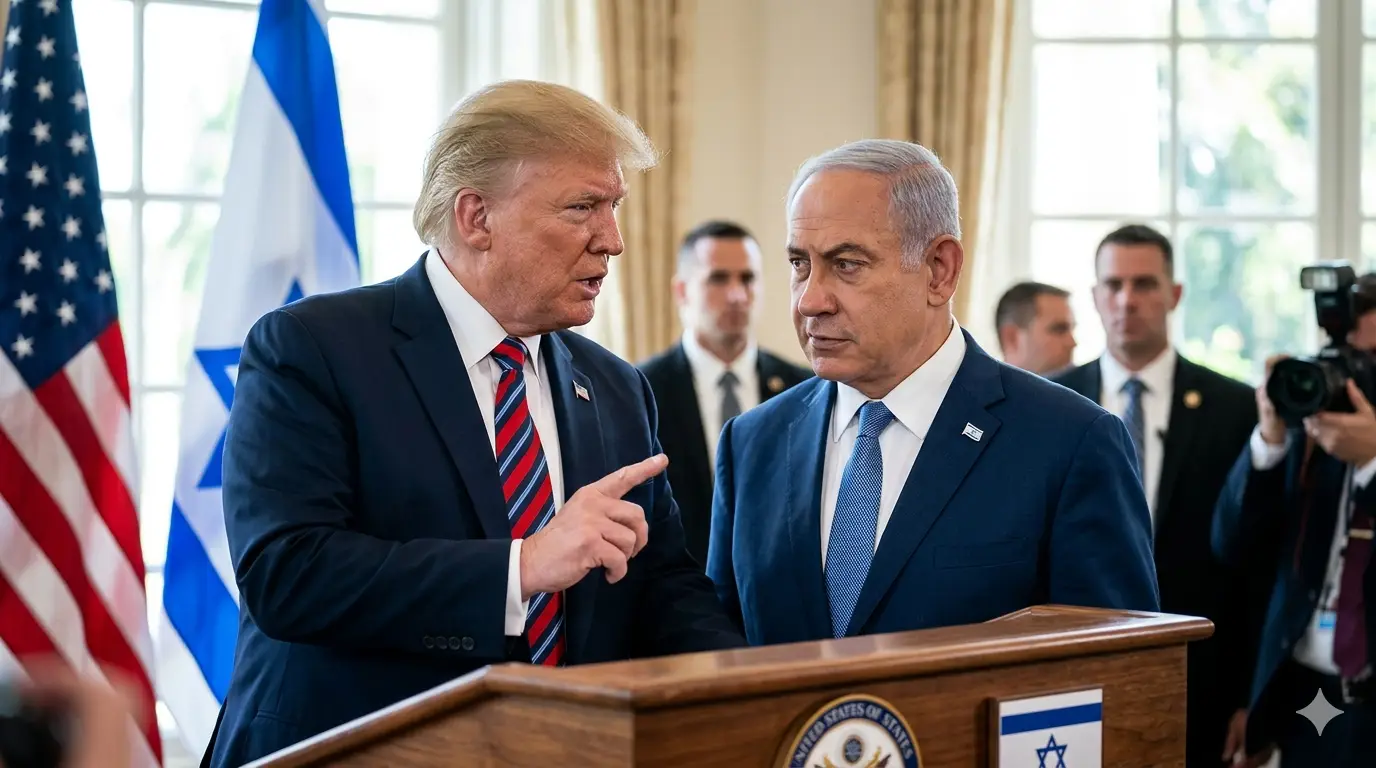
- Trump-Netanyahu Rift: An explosive, expletive-filled phone call highlights growing frustration in Washington over unilateral Israeli operations that threaten U.S.-Iran diplomatic backchannels.
- Strategic Divergence: While the Trump administration actively pushes for immediate regional de-escalation, Netanyahu’s war cabinet continues to prioritize aggressive defense maneuvers against Iran and Hezbollah infrastructure.
- A Region on the Brink: The loss of structural enforcement mechanisms and asymmetric expectations have thrown the Middle East back into an unmanaged, dangerous state-to-state confrontation loop.
The latest exchange of strikes between Israel and Iran marks the clearest collapse yet of the fragile April ceasefire—an agreement already limping under the weight of mistrust, proxy violence, and political brinkmanship. What unfolded over the past 72 hours was not a sudden eruption but the culmination of a monthlong deterioration, driven by competing strategic priorities and a widening rift between Washington and Jerusalem.
The result is a regional landscape sliding back toward open conflict, with President Trump increasingly furious at an Israeli leadership he believes is undermining U.S. strategy.
The Escalation: How the Fuse Was Lit
The immediate trigger was Iran’s decision to fire a volley of missiles toward Israel, a move Tehran framed as retaliation for a series of Israeli operations in Lebanon and Syria. But the deeper story begins earlier: Israel had intensified its campaign against Hezbollah positions in southern Lebanon, including strikes that killed several Lebanese officers. Iran, already accusing the U.S. of violating the ceasefire through support for Israeli operations, saw these attacks as a direct challenge.
Israel responded to Iran’s missile barrage with airstrikes deep inside Iranian territory—hitting sites in Tehran, Isfahan, Tabriz, and Karaj. These were not symbolic warning shots. They were deliberate, highvisibility strikes designed to signal that Israel would not be deterred by diplomatic pressure, U.S. caution, or Iranian threats.
The ceasefire, already riddled with violations, effectively collapsed the moment Israel crossed into Iranian airspace. What had been a tense but managed standoff became a direct statetostate confrontation.
Why the Ceasefire Failed
The April ceasefire was always more of a political fiction than a durable agreement. Iran believed the U.S. was quietly enabling Israeli operations. Israel believed Iran was using the ceasefire to reposition assets in Lebanon and Syria. Both sides accused the other of “bad faith,” and both were right.
Three structural failures doomed the deal:
- Asymmetric expectations— Iran wanted a freeze on Israeli regional operations; Israel wanted a freeze on Iranian missile activity and proxy mobilization. Neither happened.
- Lack of enforcement— No mechanism existed to verify compliance or punish violations.
- Divergent U.S.–Israeli priorities— Washington wanted deescalation to protect diplomatic channels with Tehran; Israel wanted freedom of action against Hezbollah and Iranian infrastructure.
The ceasefire didn’t break this week. It simply stopped pretending to exist.
The Trump–Netanyahu Rift: A Crisis in Plain Sight
President Trump has spent the past week urging Israel to avoid actions that could derail U.S.–Iran negotiations. Instead, Netanyahu has escalated at every turn.
This is not a subtle disagreement. It is a strategic collision.
Trump’s frustration has been building since Israel’s earlier strikes on Iranian oil infrastructure—attacks that sent global crude prices surging and blindsided the White House. The nowpublic, expletivefilled phone call between Trump and Netanyahu was the clearest sign yet that the alliance is under strain. Trump warned that further escalation in Lebanon or Iran would isolate Israel and sabotage U.S. diplomacy. Netanyahu pressed ahead anyway.
This latest exchange of strikes will almost certainly deepen the rift. From Trump’s perspective, Israel is acting unilaterally, jeopardizing U.S. interests, and ignoring direct requests from Washington. From Netanyahu’s perspective, Israel cannot afford to let Iran or Hezbollah dictate the tempo of conflict.
The political atmospherics are unmistakable: the U.S.–Israel relationship is entering one of its most contentious phases in years.
Netanyahu’s Calculus: Defiance as Strategy
Netanyahu appears to have made a deliberate choice: prioritize Israel’s immediate security objectives over U.S. diplomatic timelines. His government believes Iran is testing boundaries, Hezbollah is emboldened, and hesitation would invite greater danger.
Cooperation with Washington is now secondary to operational freedom.
This posture carries risks. Israel is increasingly isolated diplomatically, and its military actions are drawing condemnation from Gulf states that had previously aligned with U.S. pressure on Iran. But Netanyahu is betting that decisive action will shape the battlefield more effectively than negotiations.
In that sense, the strikes inside Iran were not just retaliation—they were a declaration of independence from U.S. strategic preferences.
What Comes Next
The region is now in a dangerous feedback loop: Iran retaliates for Israeli actions; Israel retaliates for Iranian actions; the U.S. tries to slow the cycle but lacks leverage over a Netanyahu government determined to act on its own terms.
The next phase will hinge on three questions:
- Will Iran escalate beyond symbolic retaliation?
- Will Israel continue striking inside Iran despite U.S. objections?
- Will Trump impose consequences—diplomatic or military—if Israel continues to defy Washington?
What is clear is that the ceasefire is gone, the diplomatic track is damaged, and the U.S.–Israel relationship is under unprecedented strain.
This is the week the conflict reignited—and the week Washington realized Netanyahu may no longer be a cooperative partner in its regional strategy.