



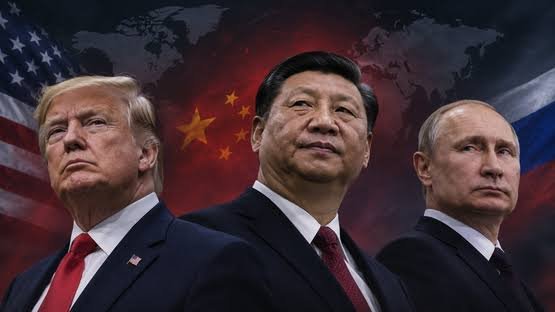
Shenzhen Trilateral Summit is uder the limelight.
Fresh faces, tailored suits, and genuine smiles marked the diplomatic prelude on Thursday as U.S. President Donald Trump, Russian President Vladimir Putin, and Chinese President Xi Jinping prepared for an unprecedented trilateral meeting in Shenzhen.
Set against the gleaming skyline and cultural vitality of southern China’s innovation hub, the summit has sparked intense global speculation: can a meeting in such a dynamic, scenic city produce a breakthrough that matches its surroundings?
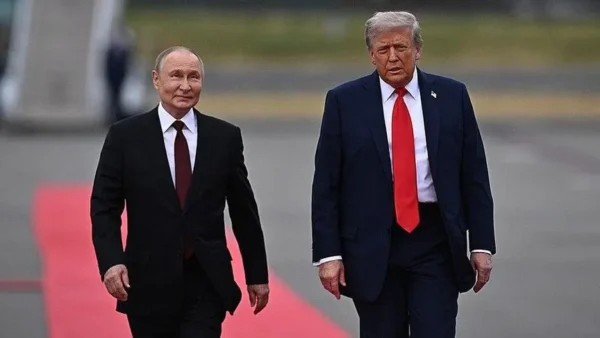
For observers tracking high-stakes diplomacy, it is a million-dollar question. Earlier in the morning, Trump and Putin held a bilateral meeting that insiders described as cordial and upbeat, with Trump pouring praise on Putin’s leadership and strength. Yet even after talks unfolded in a pleasant atmosphere, officials cautioned that an immediate breakthrough on the war in Ukraine was not expected.
Optics, Optimism, and High Stakes in Shenzhen
The setting itself carries symbolic weight. Shenzhen—long celebrated as a showcase of modern enterprise, coastal beauty, and cultural energy—offers a striking backdrop for three leaders who command the world’s largest nuclear arsenals and shape global power balances.
Inside Putin’s Shenzhen Playbook: What Russia Really Wants From Trump
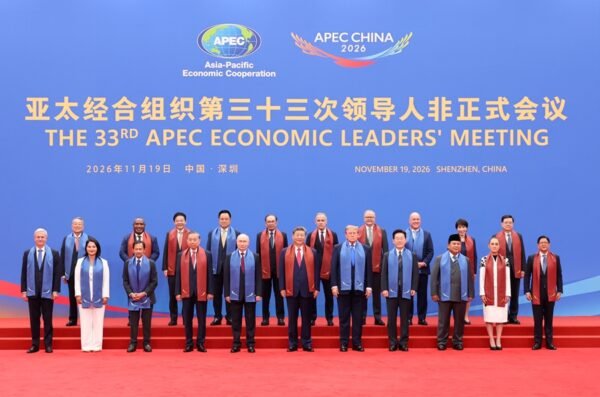
Around the sidelines of the broader Asia-Pacific Economic Cooperation gathering, diplomats noted the polished appearances, tailored suits, and warm, genuine smiles on display as leaders moved between bilateral engagements and ceremonial moments.
For Putin, simply sitting at the trilateral table alongside Xi and Trump represents a major diplomatic milestone after years of Western isolation following Russia’s 2022 full-scale invasion of Ukraine.
READ NEXT: Three Agendas, One Table: Trump, Xi and Putin Prepare for Historic China Summit
Addressing business leaders ahead of the talks, Putin argued that sanctions pressure had failed and framed the trilateral gathering as an opportunity for dialogue over confrontation.
READ MORE: Historic three-way talks between Trump, Xi and Putin underway
For Trump, the meeting is a chance to test personal chemistry and project dealmaking momentum on multiple fronts at once, while Xi—hosting in his country’s flagship tech metropolis—seeks to project calm stewardship and regional stability.
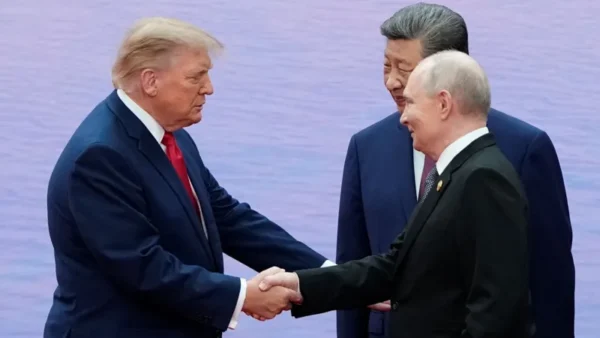
Whether that optimism translates into concrete agreements remains uncertain. Unlike traditional summits built around months of pre-negotiated communiqués, Thursday’s gathering features a wide-ranging, loosely structured set of priorities where unscripted moments and shifting dynamics are central to the drama.
Five Key Issues on the Trilateral Agenda
Diplomatic briefings and official statements point to five major issues dominating attention around the Shenzhen talks:
-
Nuclear Non-Proliferation and Arms Control: Flagged by the White House as a primary focus, discussions center on strategic weapons and future arms control frameworks following the expiration of prior U.S.-Russia nuclear agreements. Washington has pushed for broader accountability, while Beijing has resisted binding limits given its smaller stockpile relative to Washington and Moscow, and Moscow has sought to factor third-country arsenals into the equation.
-
The Russia-Ukraine War: Trump has signaled he intends to raise the conflict, even as diplomatic sources temper expectations of a rapid settlement. European capitals and Kyiv remain deeply wary of any arrangement or territorial pressure discussed without Ukrainian or European representation at the table, raising concerns about a “Yalta-style” dynamic over European security.
-
The Conflict in Iran: Leaders are expected to address the wider crisis involving Iran, with Washington pressing Beijing and Moscow on their diplomatic and economic ties to Tehran. At the same time, major powers share practical incentives to keep shipping lanes such as the Strait of Hormuz stable and prevent further regional escalation.
-
Trade, Technology, and Microprocessors: Friction over tariffs, supply chains, critical minerals, and export controls on advanced AI chips and microprocessors—including high-profile debates surrounding firms like Nvidia—remains a core fault line between the United States and China, underscored by the very choice of Shenzhen as host city.
-
Global Security and “Spheres of Influence”: Broader debates over multipolarity, sovereignty, and strategic stability run through the summit, fueling debate over whether the three powers are redefining global rules or simply managing rival interests in real time.
A Turning Point or a Moment of Optics?
Even if formal accords prove elusive, the symbolism of Trump, Putin, and Xi sharing the same diplomatic stage in Shenzhen is already reshaping perceptions across capitals from Washington and Brussels to Kyiv, Moscow, and Beijing. For allies watching closely, the central tension lies between surface-level warmth—the tailored suits, fresh faces, and genuine smiles—and deep, unresolved conflicts over security, sovereignty, and economic power.
In a city built on reinvention, world leaders are testing whether high-level personal engagement can ease entrenched rivalries or merely spotlight how wide the divides remain.