



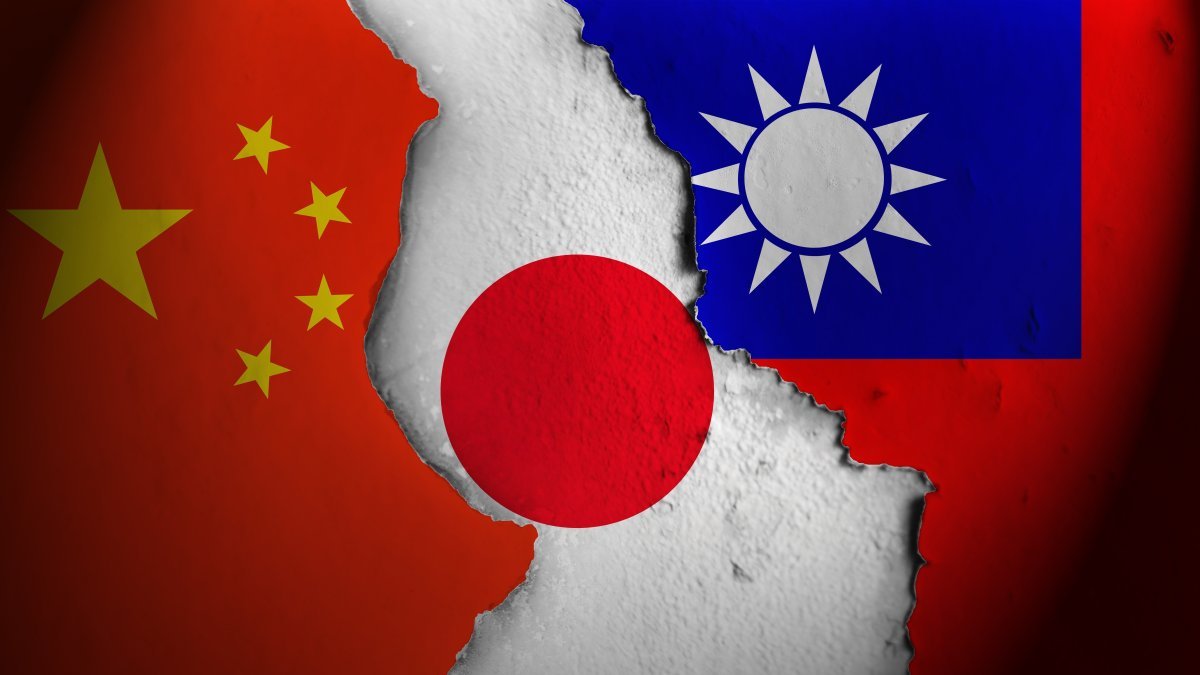
- China–Japan tensions under Sanae Takaichi intensified at the November 2026 Shenzhen APEC summit, where Beijing downgraded her arrival reception and avoided a formal bilateral meeting with Xi Jinping.
- Disagreements over Taiwan remain the core flashpoint, with Beijing demanding Tokyo retract earlier remarks on potential intervention while Prime Minister Takaichi cites the 1972 joint communiqué and keeps communication channels open.
- Japan is accelerating its military buildup toward 2% of GDP—including upgraded Type-12 missiles, unmanned coastal defense systems, and closer security ties with Washington and Manila—ahead of its December 2026 security strategy revision.
SHENZHEN & TOKYO — November 21, 2026 — As world leaders pack up from the 33rd APEC Economic Leaders’ Meeting in Shenzhen, the diplomatic chill between Beijing and Tokyo remains one of Northeast Asia’s sharpest fault lines. Japanese Prime Minister Sanae Takaichi’s first visit to China since taking office in October 2025 unfolded against a backdrop of overt protocol slights, simmering disputes over Taiwan, and an accelerated Japanese military buildup that is reshaping security calculations across the Indo-Pacific.
While leaders from other economies arrived in Shenzhen to marching bands, floral welcomes, and high-level reception committees, Takaichi was greeted on the tarmac by a former ambassador—a deliberate downgrade widely read in Tokyo and Beijing as a reflection of China’s anger over her hawkish posture. Across the summit, Chinese President Xi Jinping held historic trilateral talks with U.S. President Donald Trump and Russian President Vladimir Putin, yet offered Takaichi only brief, passing handshakes rather than a formal bilateral meeting.
Taiwan: The Core Flashpoint and Shifting Rhetoric
At the center of the friction is Taiwan, a self-governing democracy that Beijing claims as a breakaway province subject to eventual unification, by force if necessary. For decades, bilateral ties were anchored in diplomatic ambiguity and four foundational documents starting with the 1972 Japan–China Joint Communiqué, in which Tokyo recognized the government of the People’s Republic of China as China’s sole legal government while maintaining unofficial ties with Taipei.
READ MORE: Not “Yalta 2.0”: What the Xi–Trump–Putin Summit Means for Asia and the Global South
Earlier Japanese leaders typically walked a careful tightrope. Former Prime Minister Shinzo Abe famously declared in 2021 that a “Taiwan emergency is a Japanese emergency,” a phrase that rattled Beijing while stopping short of binding operational commitments. Subsequent administrations under Fumio Kishida and Shigeru Ishiba sought to pair deterrence and alliance upgrades with periodic diplomatic stabilization in Beijing.
Takaichi, a longtime conservative figure and prominent voice on national security, pushed the envelope further. Having suggested a year ago that Japan could potentially intervene militarily if Beijing moved to seize Taiwan by force, she has refused to walk those remarks back despite intense pressure from Beijing. Following the Shenzhen gathering, Chinese Foreign Ministry spokesman Guo Jiakun reiterated that Tokyo’s most urgent task is to “correct its wrong words and actions on the Taiwan issue,” accusing Japan of failing to adopt a rational view of history and China.
READ NEXT: Trump touts meeting with Xi and Putin but offers little results
Takaichi, for her part, insisted in Shenzhen that Japan’s formal policy under the 1972 communiqué remains unchanged while emphasizing the necessity of keeping communication channels open precisely because serious disagreements exist. In Moscow-Tokyo ties, too, friction persists: Takaichi held her first face-to-face meeting with Putin since taking office amid strained relations marked by the detention of a Japanese journalist in Russia on espionage allegations and the seizure of assets belonging to a Japanese tobacco company.
Defense Spending, Missile Reserves, and Regional Alignments
Beijing’s diplomatic pushback has been accompanied by economic friction—including trade restrictions and travel warnings discouraging Chinese citizens from visiting Japan—as well as heightened maritime and air activity around contested waters and airspace. Rather than deterring Tokyo, those pressures have accelerated Japan’s departure from post-war military restraint.
Under Takaichi’s administration, Japan moved up its target of spending 2% of GDP on defense to March 2026, putting defense outlays on a historic trajectory. The Defense Ministry’s budget push—approaching roughly ¥8.9 trillion (around $56 billion to $58 billion, within a draft initial state budget of $783 billion)—prioritizes long-range standoff capabilities, unmanned systems, artificial intelligence, and cyber resilience. Key programs include upgraded Type-12 surface-to-ship missiles with extended strike ranges, long-endurance surveillance drones to monitor airspace violations, and a multilayered coastal defense architecture known as the “Shield” system integrating aerial, surface, and underwater unmanned platforms.
Defense cooperation with Washington has deepened in tandem. Reports of U.S. efforts to draw on Japanese missile stockpiles and plans to establish missile production capacity in Japan underscore how tightly integrated Japanese defense logistics have become with U.S. Indo-Pacific deterrence. At the same time, Tokyo is expanding security partnerships beyond the bilateral alliance—most notably with the Philippines, where joint pledges oppose unilateral attempts to alter the regional status quo, alongside Quad coordination and multinational exercises focused on Japan’s southwestern islands near Taiwan.
Strategic Analysis: Domestic Politics and Alliance Dynamics
Analysts note a striking divergence between how Beijing and Tokyo read the political fallout of the Shenzhen frost. Beijing appears to calculate that public embarrassment, targeted economic pressure, and diplomatic isolation will force concessions or raise the domestic political cost of confrontation for Takaichi.
Yet political observers in Japan warn of a countervailing effect: a visibly cold reception in China, paired with rising domestic wariness toward foreign actors, can rally conservative voters around a leader perceived as standing firm against external pressure. At the same time, Tokyo faces a delicate balancing act with Washington. While Takaichi moved quickly after Shenzhen to hold a roughly 20-minute phone call with Trump to reaffirm alliance solidarity and Indo-Pacific security coordination, she also noted policy differences—such as diverging views on the International Criminal Court—and watched closely as big-power summits in Shenzhen and regional diplomacy in Manila tested how middle powers and treaty allies navigate great-power bargaining.
Future Perspective: What Comes Next
Looking ahead to the end of 2026 and into 2027, three developments will shape whether the China–Japan chill deepens into a prolonged structural freeze or stabilizes into managed rivalry:
-
Revision of Japan’s Three Security Documents: Tokyo is slated to unveil an accelerated update to its National Security Strategy, National Defense Strategy, and Defense Buildup Program around December 2026—years ahead of their original schedule—likely expanding provisions on economic security, domestic defense industrial surge capacity, cyber defense, and equipment transfers.
-
Crisis Management vs. Deterrence: With military modernization advancing on both sides and flashpoints multiplying around the Taiwan Strait, the East China Sea, and the South China Sea, the absence of high-level political trust makes accidental escalation more dangerous, even as crisis-communication mechanisms remain essential.
-
Economic Interdependence Under Strain: Despite political hostility and selective restrictions, deep supply-chain ties mean neither Beijing nor Tokyo can easily sever economic links without paying a steep price—leaving trade, critical minerals, and tourism as ongoing levers of pressure rather than clean off-ramps.