



- Trump, Shahbaz Sharif, and Field Marshal Asim Munir set a new tone for U.S.–Pakistan relations.
- U.S. Chargé d’Affaires Natalie Baker strengthens trade and security ties during Karachi visit.
- U.S. investment expands in textiles, minerals, technology, and ports—boosting jobs in Pakistan.
- Naval cooperation and corporate social responsibility showcase multidimensional partnership.
A day after U.S. President Donald Trump’s excellent meeting with Prime Minister Shahbaz Sharif in the presence of Field Marshal Asim Munir, the architect of today’s modern U.S.–Pakistan relationship, the pleasant outcomes of this renewed engagement became visible across Pakistan. In Karachi, U.S. Chargé d’Affaires Natalie Baker’s series of high-profile meetings demonstrated that the spirit of Washington-Islamabad cooperation has moved beyond polite diplomacy into tangible economic, security, and strategic deliverables.
It is no exaggeration to say that Pakistan today enjoys one of the most balanced, dignified, and forward-looking equations with the United States in decades. This achievement is owed largely to Field Marshal Asim Munir, whose quiet but firm leadership has recalibrated the contours of bilateral ties. He has reminded the world—and particularly Washington—that Pakistan is not merely a partner of convenience but a partner of consequence.
The Trump–Sharif–Munir meeting was historic in both tone and content. For years, Pakistan has sought recognition in Washington not just as a security ally but as an economic partner, a country capable of contributing to regional stability, maritime security, and global trade flows. Trump’s reassurances, coupled with Munir’s strategic depth and Shahbaz Sharif’s political stewardship, have created the foundation for exactly that.
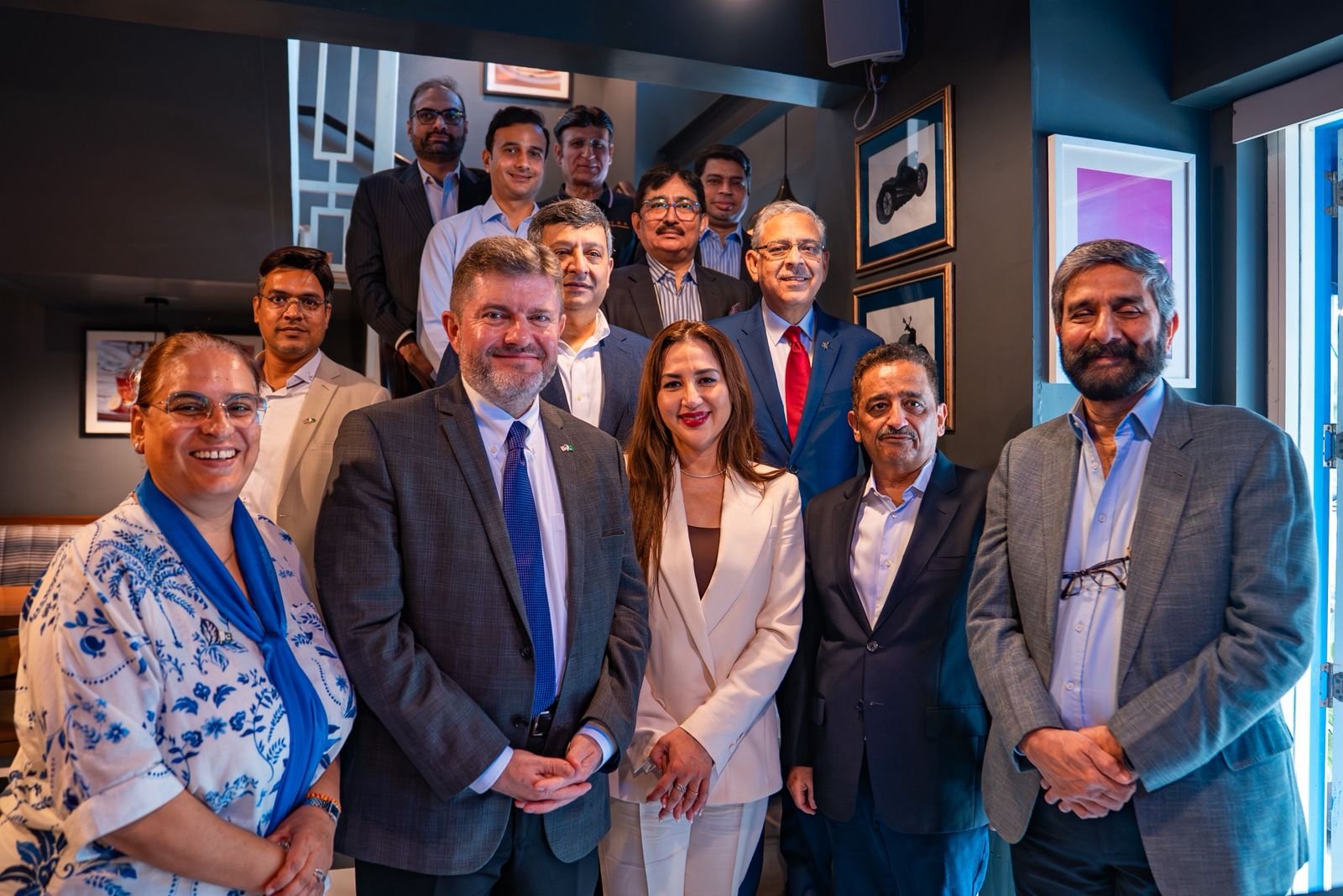
The impact was immediately felt in Karachi. CDA Natalie Baker’s visit from September 23–26 was more than symbolic; it was substantive. Her engagements with Sindh Chief Minister Murad Ali Shah and Governor Kamran Tessori focused on trade, investment, and flood recovery—issues that go straight to the heart of Pakistan’s development needs. Discussions with Karachi’s business leaders—from Liberty Group and Gerry’s Group to Reko Diq mining officials—signaled a decisive shift: Washington now views Pakistan not only as a geopolitical pivot but as an emerging economic hub.
This is precisely the vision Field Marshal Munir has been championing. He understands that military-to-military cooperation, while vital, is only one dimension of a multifaceted partnership. For U.S.–Pakistan relations to flourish in the 21st century, economic interdependence, technology transfer, and investment in critical sectors must anchor the relationship. By emphasizing ports, minerals, textiles, and digital innovation, Munir has ensured that Pakistan presents itself to the United States as an indispensable player in global supply chains.
Symbolism was not lost either. CDA Baker’s welcome of the guided-missile destroyer USS Wayne E. Meyer at Karachi port alongside the Pakistan Navy showcased a maritime partnership rooted in trust and interoperability. This was a clear message to adversaries that U.S. and Pakistan’s naval cooperation is alive, strong, and committed to safeguarding regional waters from piracy, terrorism, and emerging hybrid threats.
Equally significant was Baker’s visit to the KFC-sponsored Deaf Reach School. Here lies the softer side of the U.S.–Pakistan relationship—the human capital dimension. By spotlighting U.S. franchises’ social responsibility, she highlighted how American businesses can empower marginalized communities in Pakistan. It is a narrative often overlooked in geopolitical analysis but essential to sustaining public goodwill for bilateral ties.
What makes this moment so unique is the convergence of three leadership styles. Trump’s transactional but bold diplomacy has found resonance with Shahbaz Sharif’s pragmatic governance and Asim Munir’s disciplined strategic foresight. Together, they are crafting a relationship based not on dependency but on dignity.
Field Marshal Munir deserves particular praise. In a world where military leaders are often caricatured as narrow security managers, Munir has emerged as a statesman. He has placed Pakistan firmly at the intersection of security and economics, defense and diplomacy. By doing so, he has safeguarded national interests while opening new avenues for prosperity. It is under his stewardship that U.S. officials now speak of “shared prosperity” and “mutual growth” rather than the tired tropes of aid and assistance.
The numbers speak volumes. Over 80 U.S. companies already operate in Pakistan, directly employing 120,000 Pakistanis and indirectly supporting over a million more. With the new push in critical minerals, textiles, and technology, these figures are set to rise. Such partnerships will not only create jobs but also anchor Pakistan’s long-term economic stability—something Munir has identified as a strategic imperative for national security.
As CDA Baker aptly noted, “Strengthening our commercial partnership with Pakistan benefits both our peoples.” This sentiment reflects the new grammar of the U.S.–Pakistan relationship: respect, reciprocity, and results.
In sum, the past week may well be remembered as the turning point in modern U.S.–Pakistan ties. Trump’s openness, Shahbaz Sharif’s leadership, and most importantly, Field Marshal Asim Munir’s vision have combined to usher in an era of partnership that is as much about trade and investment as it is about defense and security.
For Pakistanis, this moment is more than diplomatic theater; it is a validation that the country’s sacrifices, resilience, and strategic importance are finally being recognized. For Americans, it is a chance to engage a reliable partner in a turbulent region. For both, it is a new dawn—crafted by the steady hands of Field Marshal Asim Munir, the architect of modern-day U.S.–Pakistan relations.