


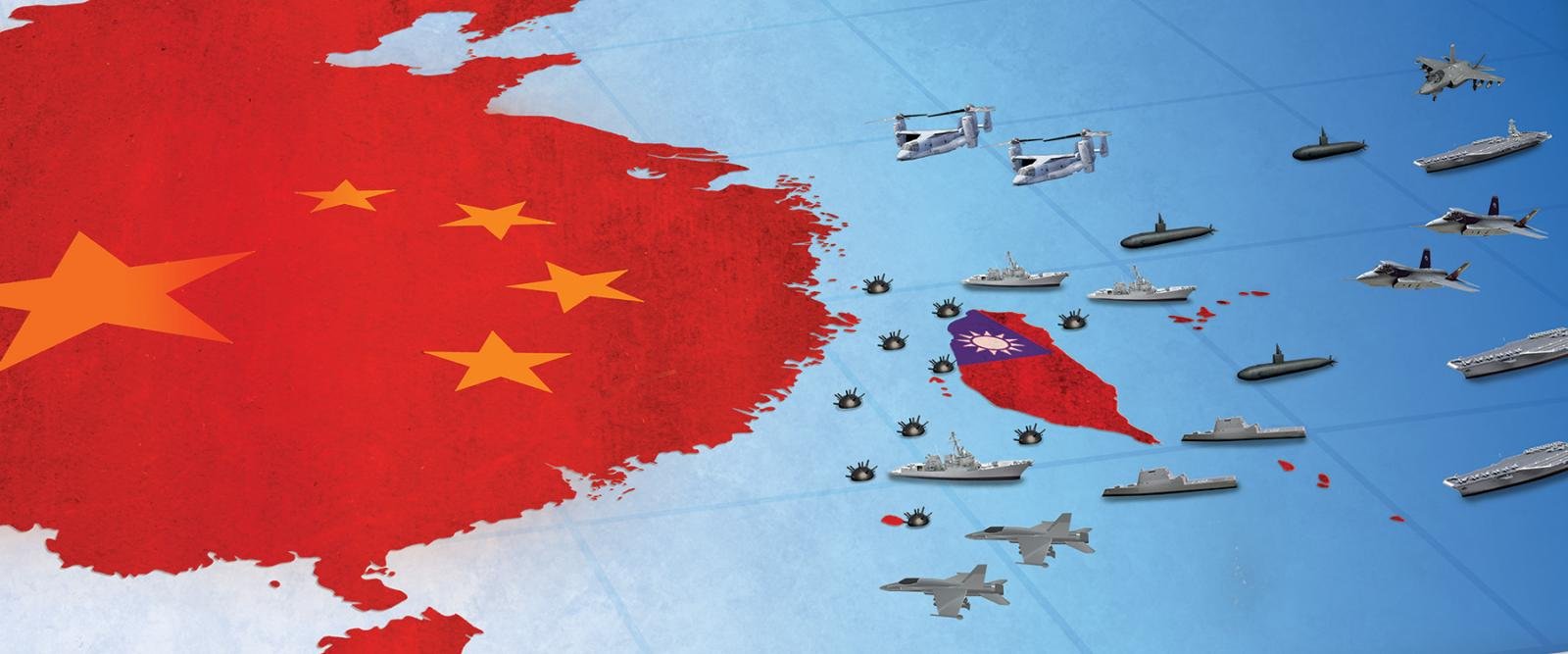
The Asia-Pacific is entering its most dangerous strategic phase since the Cold War, with U.S. allies increasingly preparing for the real prospect of military confrontation with China in the near future. Recent developments surrounding Taiwan’s successful testing of jet-powered attack drones with U.S.-based Kratos Defense highlight a broader regional shift from diplomatic balancing to concrete war readiness.
Taiwan’s partnership with Kratos Defense and its leading military research institution, the National Chung-Shan Institute of Science and Technology (NCSIST), represents a pivotal step in building an asymmetric defense architecture. The Mighty Hornet IV drone—designed as a low-cost, cruise missile-like strike system—is intended to be deployed in large numbers across Taiwan. Officials have emphasized its role in enabling long-range preemptive strikes and rapid countermeasures, signaling Taipei’s intent to saturate any invading force with unmanned systems capable of inflicting high casualties at minimal cost.
This strategy mirrors lessons from recent conflicts where drone swarms proved decisive in disrupting superior conventional forces. Taiwan aims to transform itself into a hardened battlespace where any Chinese amphibious assault would face overwhelming attrition before establishing a foothold.
China, meanwhile, has dramatically escalated its military pressure. Chinese warplanes, drones, and naval vessels now operate around Taiwan on an almost daily basis under what Beijing terms “routine patrols” and what Taipei calls “grey zone warfare.” Taiwan’s defense ministry reported a 23 percent rise in detected Chinese military aircraft activity in 2025 alone, underscoring the intensifying operational tempo. Large-scale Chinese war exercises near the island late last year further demonstrated Beijing’s preparedness for rapid escalation.
Yet Taiwan is only one front in a rapidly militarizing region.
Japan has embarked on its most ambitious defense buildup in decades, acquiring additional F-35 stealth fighters, expanding missile forces, and significantly increasing military spending. Tokyo’s evolving doctrine now includes counterstrike capabilities against enemy bases—a historic departure from its post-war defensive stance.
India is simultaneously asserting itself as a major counterweight to China across the Indo-Pacific. From reinforcing its Himalayan border positions to expanding naval deployments in the Indian Ocean and accelerating missile and space warfare programs, New Delhi is positioning itself as a central pillar in the U.S.-led strategic architecture.
Collectively, the United States and its allies maintain overwhelming technological and operational advantages in airpower, undersea warfare, intelligence fusion, and joint command structures. U.S. aircraft carriers, Japanese air dominance platforms, Australian naval forces, and India’s growing blue-water navy form a formidable coalition.
China, however, has built the world’s largest navy by vessel count and possesses one of the most sophisticated missile arsenals globally. The People’s Liberation Army Rocket Force can target U.S. bases throughout the Western Pacific, while China’s expanding air and naval forces are designed to deny allied access to regional waters.
The emerging balance is not one of clear superiority but of escalating readiness.
From a future perspective, the region appears locked in a strategic race against time. As Taiwan rapidly fortifies itself with drones, missiles, and hardened infrastructure, Beijing may perceive a narrowing window to achieve reunification through force. Conversely, Washington and its allies are accelerating military integration to deter—or fight—such an attempt.
This dynamic increases the risk of miscalculation. Each new weapons system deployed in the name of defense reinforces the other side’s sense of urgency.
For global leaders and institutions, the implications are immense. A conflict in the Asia-Pacific would disrupt global trade routes, cripple semiconductor supply chains, destabilize energy markets, and send shockwaves through financial systems worldwide.
The Asia-Pacific is no longer a distant flashpoint—it is fast becoming the central arena of 21st-century geopolitical competition. Whether diplomacy can arrest the march toward confrontation remains uncertain. What is clear is that the region’s major powers are now preparing not for possibility, but for probability.
Intelligence-Style Comparative Snapshot
🇨🇳 China
- World’s largest navy (350+ vessels)
- Thousands of ballistic & cruise missiles
- Rapidly modernizing air force
- Strong anti-access/area denial (A2/AD) network
🇺🇸 U.S. & Asia-Pacific Allies
- 11+ U.S. aircraft carriers
- Stealth air dominance (F-35, F-22 fleets)
- Advanced submarine warfare capability
- Integrated intelligence & missile defense systems
Strategic Reality:
China dominates regional missile volume and proximity advantage.
The U.S.-allied bloc dominates technology, coordination, and power projection.
MILITARY STRENGTH COMPARISON TABLES
NAVAL POWER
| Power Bloc | Aircraft Carriers | Major Warships | Submarines | Strategic Position |
|---|---|---|---|---|
| 🇨🇳 China | 3 | 350+ | 60+ | Largest navy by vessel count |
| 🇺🇸 United States | 11 | 290+ | 68 | Global power projection |
| 🇯🇵 Japan | 2 (light carriers) | 155+ | 22 | Advanced regional navy |
| 🇮🇳 India | 2 | 150+ | 18 | Expanding Indo-Pacific reach |
| 🇦🇺 Australia | 0 | 48+ | 6 | Allied support role |
Advantage:
China in numbers & proximity
U.S.-allies in carrier power & submarine warfare
AIR POWER
| Country/Bloc | Combat Aircraft | Stealth Jets | Strength |
|---|---|---|---|
| 🇨🇳 China | 2,800+ | J-20 stealth fighters | Rapid modernization |
| 🇺🇸 United States | 3,700+ | F-35, F-22 fleets | Global air dominance |
| 🇯🇵 Japan | 450+ | F-35 growing fleet | Regional air superiority |
| 🇮🇳 India | 600+ | Developing stealth | Large force, improving tech |
Advantage:
U.S. and allies in stealth, training, combat experience
MISSILE & STRIKE CAPABILITIES
| Power | Ballistic/Cruise Missiles | Key Strength |
|---|---|---|
| 🇨🇳 China | 2,000+ | Regional base targeting, anti-ship missiles |
| 🇺🇸 U.S. | Advanced precision systems | Global strike reach |
| 🇯🇵 Japan | Growing stockpiles | Defensive & counterstrike |
| 🇮🇳 India | Hypersonic & long-range missiles | Regional deterrence |
Advantage:
China in regional saturation firepower
U.S.-allies in precision & defense networks
TECHNOLOGY & ALLIANCE POWER
| Area | China | U.S. & Allies |
|---|---|---|
| Intelligence | Expanding | Highly integrated |
| Cyber warfare | Strong | Stronger coordination |
| Missile defense | Limited | Advanced multi-layered |
| Joint operations | Improving | Highly mature |
Advantage: U.S.-allied bloc
STRATEGIC BALANCE SUMMARY
China Strengths:
✔ Massive missile forces
✔ Proximity to Taiwan
✔ Largest navy by volume
✔ Rapid production capacity
U.S. & Allies Strengths:
✔ Superior technology
✔ Air & sea dominance platforms
✔ Integrated alliances
✔ Global logistics
FUTURE WAR PERSPECTIVE (ANALYTICAL OUTLOOK)
| Scenario | Probability (Next 5–7 Years) | Impact |
|---|---|---|
| Limited Taiwan blockade | High | Global trade disruption |
| Air & naval clashes | Medium-High | Regional instability |
| Full-scale war | Medium | Global economic shock |
| Diplomatic de-escalation | Low-Medium | Temporary stability |
Strategic Conclusion
China holds immediate regional strike advantage, but the U.S.-led alliance network retains overwhelming long-term military superiority.
This growing imbalance is driving faster militarization and narrowing diplomatic space, making conflict increasingly likely as both sides prepare for worst-case scenarios.