



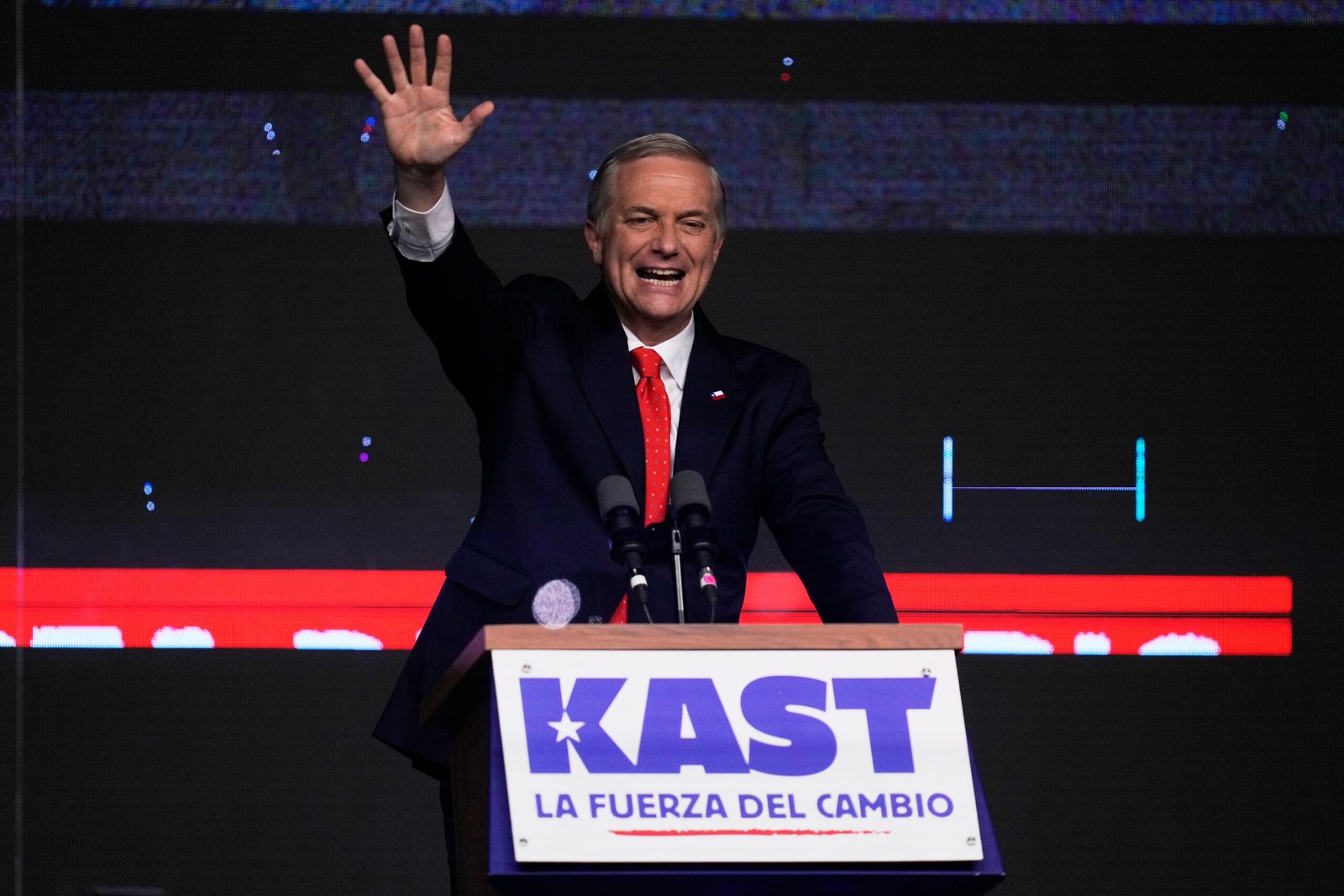
- Chile Elections 2025: Jose Antonio Kast wins Chile’s presidential runoff election with 58% of the vote against Communist Party contender Jeannette Jara.
- Far-right Republican Party to tackle five urgent issues: security, immigration, economy, social policies, and public trust.
- Security emerges as Chile’s top concern, with citizens demanding stronger law enforcement and anti-crime measures.
- Immigration reform and border control will be a priority to address rising concerns over undocumented migration.
- Economic revitalization and job creation expected as the new government seeks stability after pandemic and social unrest.
Chile has taken a decisive rightward turn as far-right Republican Party candidate Jose Antonio Kast won the country’s presidential runoff election, securing more than 58% of the vote against Communist Party contender Jeannette Jara, who conceded defeat with grace. The result signals a major shift in Chile’s political landscape, reflecting the public’s growing concern over security, immigration, and economic stability.
Kast, 59, campaigned on a tough-on-crime, anti-migrant, and socially conservative platform. During his victory speech in Santiago, Kast emphasized the need for security as the foundation of peace, democracy, and freedom. “Without security, there is no peace. Without peace, there is no democracy, and without democracy, there is no freedom,” he declared, promising a Chile free of crime, fear, and social unrest.
Chile Elections 2025: Chile Votes in High-Stakes Runoff as Right-Wing Surge Looms
The election turnout was historically high, with over 15.8 million eligible voters, marking the first time voting has been made compulsory in Chile for over a decade. Kast’s victory comes after consolidating support from other right-wing candidates following a strong showing in the first round of elections, where Jara had initially led with 27% of the vote.
How Kast Won
Kast’s success can be attributed to multiple factors. Rising concerns over crime and security played a central role, with over 60% of Chileans citing it as the country’s most pressing issue.
READ MORE: Chile election: Far-right Kast wins presidential runoff
Migration also emerged as a contentious topic during the campaign, as Chile now hosts migrants making up roughly 10% of the population, many fleeing violence and economic hardship in neighboring countries like Venezuela, Peru, and Colombia. Kast pledged to secure Chile’s borders, deport illegal migrants, and strengthen law enforcement.
Additionally, dissatisfaction with the outgoing leftist government of President Gabriel Boric contributed to Kast’s appeal. Many voters felt that Boric’s attempts to reform the Pinochet-era constitution had stalled, and that the administration struggled to tackle social unrest and the economic fallout of the COVID-19 pandemic. Kast positioned himself as a decisive alternative capable of restoring order and national confidence.
ALSO READ: Chile Elections 2025: Chile Votes in High-Stakes Runoff as Right-Wing Surge Looms
What Kast’s Victory Means for Chileans
For Chileans, the election outcome promises substantial changes in governance and policy direction. Kast has promised to tackle five urgent issues immediately after taking office in March 2026:
- Strengthening National Security – Bolstering police forces, increasing prison capacity, and implementing tougher anti-crime measures.
- Immigration Reform – Enforcing stricter border controls and deporting undocumented migrants.
- Economic Revitalization – Stimulating job creation and supporting local industries to offset rising living costs.
- Social Policy Adjustments – Promoting conservative policies, including opposition to abortion without exceptions.
- Restoring Public Order and Trust – Addressing social unrest and rebuilding confidence in government institutions.
Kast’s victory also signals a potential shift in Chile’s foreign policy, with stronger alignment toward the United States. US Secretary of State Marco Rubio congratulated Kast on his win, expressing optimism for enhanced regional security cooperation and trade relations.
Despite concerns among critics that Kast’s policies may mirror authoritarian practices reminiscent of former ruler Augusto Pinochet, many Chileans see his leadership as a path toward stability after years of social and political turbulence. The new government is expected to take swift action on security, migration, and economic issues, aiming to unify a deeply polarized nation while addressing citizens’ top priorities.
As Chile transitions to a far-right administration, citizens and international observers alike will closely monitor how the Republican Party balances its hardline agenda with the democratic expectations of the Chilean people.