



BY KASWAR KLASRA
ISLAMABAD: Clouds of a nuclear war are hovering on the horizons of South Asia—thanks to Narendra Modi, powerful Prime Minister of India who’s controversial policies are pushing the region to brink of war which may go nuclear thus putting slightly above billion people living in sub-continent at risk.
Last summer, on a bright morning of Monday, August 5, 2019, Narendra Modi, an over-confident Prime Minister of India dropped a bomb shell on Indian held Kashmir by annexing its special status. The move sent shocking waves among millions of Kashmiris in Indian Occupied Kashmiris including women and children who took to roads and streets protesting the decision.
Unleashing crackdown on the innocent Kashmiris, Indian government imposed curfew in the entire state OF JAMMU AND KASMIR, suspended all sort of communication including internet and cellular network.
Exactly nine and half months after annexation of Kashmir of its special status, Indian and Chinese forces got engaged in serious fight in a disputed Himalayan border area, which killed 20 Indian soldiers.
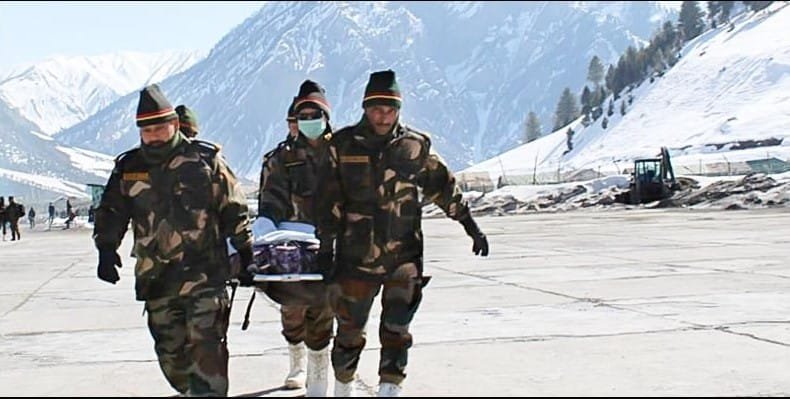
The incident follows rising tensions, and is the first deadly clash in the border area in at least 45 years. The Indian army initially said three of its soldiers had been killed, adding that both sides suffered casualties. But later on Tuesday, officials said a number of critically injured soldiers had died of their wounds.
India’s external affairs ministry accused China of breaking an agreement struck the previous week to respect the Line of Actual Control (LAC) in the Galwan Valley.
This newspaper has learnt reliably that violence between two armies high up in the Himalayas is very serious, and pressure will grow on the two nuclear powers not to allow a slide into full-scale conflict. also, Pakistan, another nuclear armed South Asian country which shares border with both China and India, will not remain neutral. There are chances, Pakistan will throw its weight behind China, its long lasting trusted friend.
While higher military and civilian leadership of China and India is currently engaged to resolve the standoff at high-altitude Ladakh region China has linked the de-escalation in tensions with India to its commitment for restoring the status of Indian Occupied Jammu and Kashmir to pre-August 5, 2019 level, sources said.
What’s happening Today, has roots in Kashmir.
Kashmir is the worst legacy of the fratricidal partition of sub-continent in 1947. It was one of the hundreds of princely states in the subcontinent at the time who were supposed to join either India or Pakistan. Contrary to wishes of Muslim majority people of Kashmir, its Hindu ruler cast his lot with India after tribal fighters from Pakistan attempted his overthrow.
Since then ‘Kashmir’ has been a bone of contention between Pakistan and India. Two nations have since fought three wars over the overwhelmingly Muslim territory.
India controls 55% of the disputed territory of ‘Kashmir’ , including Kashmir Valley. Pakistan holds 30% percent while China 15%, including a part ceded to it by Pakistan.
It’s worth noting that generations of Pakistanis have grown up regarding Kashmir as unfinished but integral part of Partition. Interestingly, Pakistan itself is an acronym in which the K stands for Kashmir. India and Pakistan have fought three wars over the territory.
As expected, Pakistan reacted sharply to Indian move of revoking of special status of Indian occupied Kashmir. Pakistan’s parliament termed Indian move as ‘illegal and Unilateral’ and asked international community to take notice of it.
Following order from Prime Minister of Pakistan, country’s armed forces have been made standby while clouds of war hovers over horizons of South Asia between nuclear armed south Asian rival.
Revocation Of Article 370 and 35a in the Indian Constitution are acts long premeditated with a view to abrogating them as a step towards Modi’s vision of Greater India.
“He planned it well and executed it with alacrity. His whole agenda for last elections was based on the execution of his plan. Unfortunately Pakistan under Prime Minister Imran Khan and his powerful Army Chief has had no vision. Both lived in their fool’s illusions that though Modi was a hawk yet he was the leader India had that they could do business with,” Wajid Shamsul Hasan, Pakistan’s former High Commissionaire to Great Britain told this correspondent .
Wajid believes, country was let down by its intelligence apparatus in providing its civil and military leadership right information on Modi government’s well calculated machinations.
Jammu Kashmir is most important for India for two reasons. First, it’s a flashpoint for the world’s most dangerous nuclear rivalry between Pakistan and India, two nuclear states. Bomb blasts and terrorist attacks there have repeatedly brought India and Pakistan on the edge of another war. Secondly, it’s also the only Muslim-majority state within Hindu-majority India. How India treats it can be regarded as an essential test of the India’s diversity and tolerance.
Given the above mentioned circumstances, million dollar question is : Is
Modi’s gambit in Kashmir is a mistake?
Well! It is. Modi’s game in Jammu and Kashmir is costing heavily to India. Without taking people of Jammu and Kashmir into confidence, India revoked Article 370 of the Constitution of India, which granted Kashmir a degree of autonomy, even without warning while breaking up the state into two union territories.
As expected , Kashmiris reacted to the move angrily. Indian law enforcement agencies resorted to violence against them while placing hundreds of local leaders under house arrest. Tourists have been evacuated. Curfew has been imposed while communications links were cut. The parliamentary maneuvers the government used to ram through its decision were so dubious they’ve already landed before the Supreme Court. It all shows, India has badly failed in its test of diversity and tolerance.
Secondly, changing Kashmir’s status has escalated tensions between two arch rivals. It has further empower the Pakistani military, which is calling the shots more aggressively soon after Modi annexed Kashmir’s special status.
Modi’s mistake [of revoking article 370] has brought South Asia on the verge of a dangerous war which may go nuclear. Prime Minister of Pakistan has made it loud and clear to India that Pakistan doesn’t want war. However, it knows how to defend it’s territory if war imposed.
“We don’t want war with India. But, ready to fight if war imposed on us,” Imran Khan said last week adding that war may go nuclear.
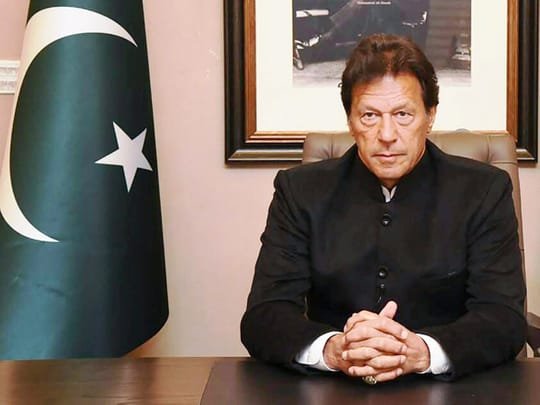
Pakistan has already downgraded diplomatic relations with India, ended bilateral trade and suspended a train service between the two countries. Prime Minister Imran Khan has announced to take his case to the United Nations in September. He has already appealed to President Trump to mediate.
Last year, in a press appearance with the visiting Mr. Khan, Trump offered to mediate the dispute, which New Delhi promptly denied promptly arguing it’s contrary to its policy of treating Kashmir as a bilateral dispute with Pakistan.
With deteriorating economy which is in the midst of an International Monetary Fund bailout—the 13th in three decades—Pakistan is trying hard to avoid tension with arch-rival India over ‘Kashmir’. High inflation, un-employment and corruption are some of the factors prompting Imran Khan and powerful Pakistan army to show restraint. For decades, Pakistan has trying to internationalize ‘Kashmir Dispute’.
Poor lobbying by Pakistan’s diplomats and strong Indian lobby at International front has been a hurdle in this regards. Pakistan called it a day on August 5, 2019 when Indian Prime Minister Modi’s government announced annexing of Special status of Kashmir.
Modi’s Kashmir gambit highlighted ‘Kashmir dispute’ globally. Even President Trump has to offer ‘meditation’ over Kashmir which Pakistan regards as its achievement.
Situation is not that good for India , a $2.7 trillion economy, more than eight times as large as Pakistan’s.
Prem Shankar Jha, noted Indian economist and journalist believes Modi has put India’s future at risk with Kashmir Gambit.
“So great was the Kashmiris’ trust in India’s secularism that their faith in it was not shaken even by 20 years of Indian mistrust, and military rule. As a result, in 2009 a survey of public opinion in the Kashmir Valley, conducted by the London-based Royal Institute for International Affairs, found that even in the four worst-affected districts of the Valley, only 2.5-7.5% of Kashmiris said they would like to belong to Pakistan. By definition, this meant that the vast majority who wanted azadi (“independence”) did not want it at the cost of cutting their economic, educational and medical ties with India,” Prem wrote in one of his columns, published last year.