



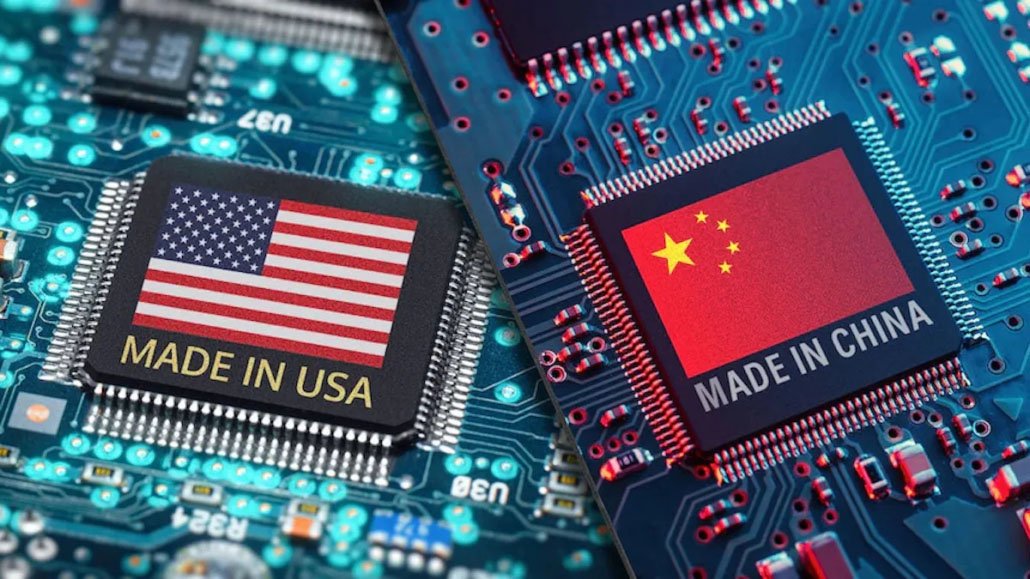
- China semiconductor breakthrough marks Beijing’s first real step toward producing Nvidia-grade chips domestically
- Xi Jinping’s long-term R&D strategy prioritized AI, defense, and chip self-sufficiency over Western reliance
- U.S. export bans on Nvidia and advanced chips failed to stop China’s technological momentum
- Japan, Europe, and the U.S. now face a weakened leverage in the global semiconductor race
China has made a decisive and historic leap in advanced semiconductor manufacturing, a breakthrough that is rapidly reshaping the global technology balance and challenging decades of Western dominance in chip production.
At a time when trending global searches range from old dominion vs south florida in college sports to Hollywood nostalgia around Gil Gerard, the most consequential contest playing out quietly is technological—and China is winning ground. Beijing is now on the brink of producing top-tier semiconductors domestically, a development that directly weakens U.S. leverage built around chip export controls.
China US Trade Tensions Persist Despite Recent Engagements: Analysis
This transformation is rooted in the long-term strategic vision of President Xi Jinping. Soon after assuming power, Xi placed scientific self-reliance at the center of China’s national security doctrine. Research and development in artificial intelligence, defense systems, and advanced semiconductor manufacturing were elevated to state priorities.
READ MORE: Exclusive: How China built its ‘Manhattan Project’ to rival the West in AI chips
Under Xi, China did not merely invest more—it restructured its entire innovation ecosystem, aligning universities, state laboratories, and private technology giants toward a single objective: ending dependence on the United States and the West for high-end chips.
That objective is now closer than ever. China has successfully developed a prototype extreme ultraviolet (EUV) lithography machine, the core technology required to manufacture cutting-edge chips comparable to those used by Nvidia and other global leaders.
ALSO READ: Sunshine, Strategy, and Suspicion: Will Madrid’s Charm Help U.S. and China Break Their Trade Deadlock?
EUV lithography has long been considered the most complex manufacturing technology on Earth, previously monopolized by Western suppliers. Its arrival inside China marks a strategic turning point, signaling that Beijing may soon be capable of producing high-grade chips entirely at home.
For years, Washington relied on chip dominance as its strongest pressure point against Beijing. Following the U.S.-China trade deadlock, American authorities blocked Nvidia and other firms from exporting advanced AI chips to China.
During the Trump era, export restrictions became the centerpiece of U.S. policy, with semiconductors used as a bargaining chip to constrain China’s rise. Even Chinese officials privately acknowledged that chip bans amounted to economic coercion designed to slow China’s technological ascent.
Yet Xi’s response was neither retreat nor negotiation—it was acceleration. Xi-appointed leaders overseeing science and technology delivered results faster than many in the West anticipated. By mobilizing thousands of engineers and leveraging national coordination led by firms such as Huawei, China pursued what insiders describe as a “Manhattan Project”-style push for semiconductor independence. The effort focused not only on chip design but also on mastering the machinery itself—long viewed as China’s weakest link.
The emergence of an operational EUV prototype is therefore more than a technical achievement. It represents the collapse of a long-standing Western assumption: that China could be locked out of top-tier chipmaking indefinitely. While challenges remain before large-scale production meets the exact standards of Nvidia-class processors, the direction of travel is clear. Beijing believes it can close the remaining gap within years, not decades.
This development has sent shockwaves through the United States and its allies, including Japan and Europe. Export controls that once appeared decisive now look increasingly temporary. As with unexpected upsets in sports—much like the surprise factor fans debate in old dominion vs south florida—the semiconductor race is proving far less predictable than many Western policymakers assumed.
For China, the breakthrough is deeply symbolic. It fulfills a national ambition pursued for decades and validates Xi Jinping’s belief that technological sovereignty defines modern power. What U.S. officials once dismissed as impossible is now unfolding in real time. Just as pop culture revisits icons like Gil Gerard, global markets are being forced to revisit outdated assumptions about who controls the future of advanced technology.
As China edges closer to full chip self-sufficiency, the global semiconductor order is entering a new phase—one where dominance is no longer guaranteed, and where Xi’s vision of homegrown innovation is rapidly becoming reality.