



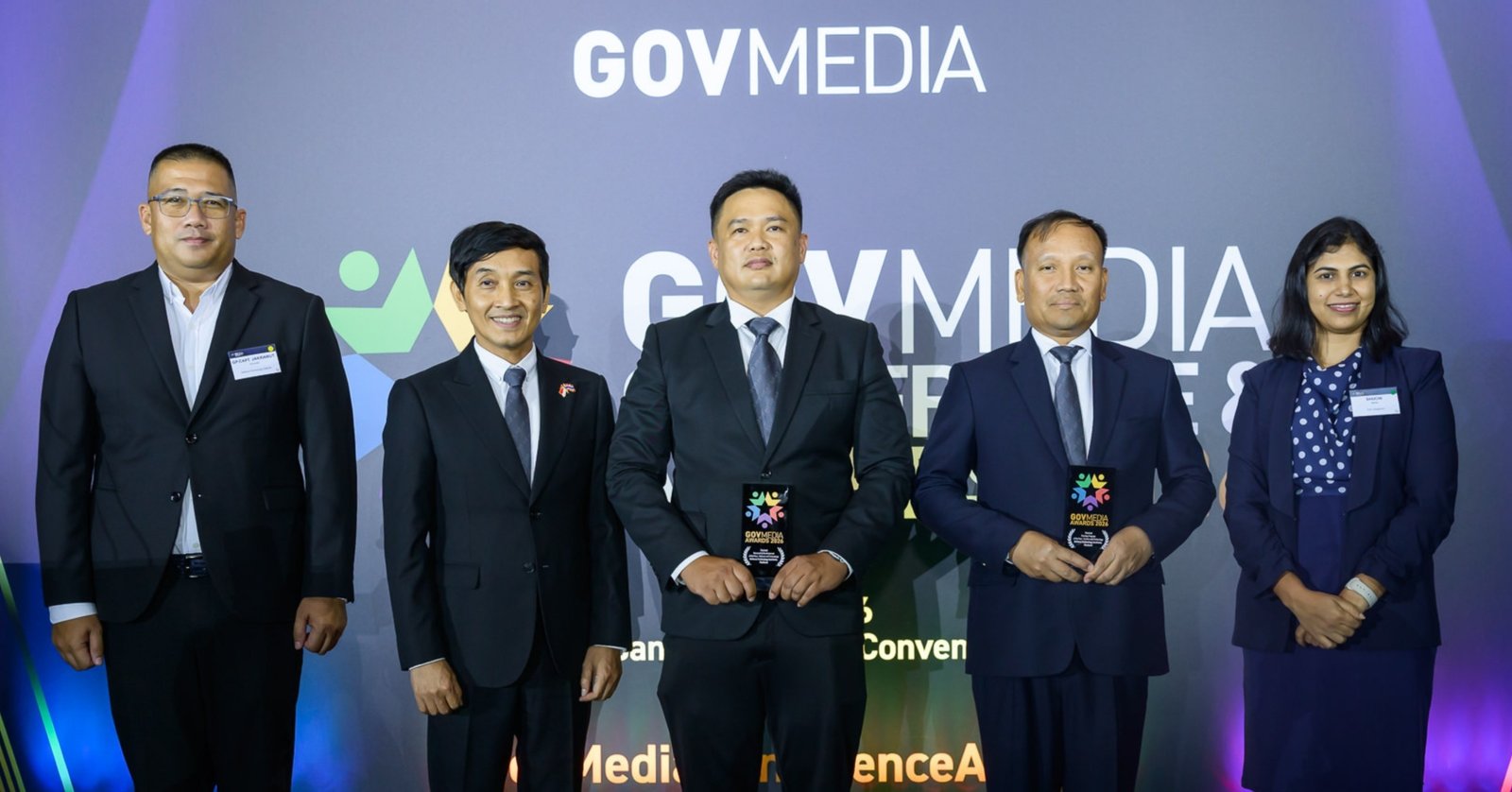
In a significant endorsement of indigenous innovation and institutional capability, Thailand’s Defence Technology Institute (DTI) has secured two major accolades at the GovMedia Conference & Awards 2026—marking a pivotal moment not only for the institute but for the evolving intersection of defence, technology, and public-sector modernisation across Southeast Asia.
The institute was recognised with the Thailand Research & Development of the Year – Science and Technology award and the Thailand Training Program of the Year – Science and Technology honour. These recognitions underscore a broader transformation underway in regional security architecture—one that increasingly relies on the fusion of advanced engineering, data-driven systems, and capacity-building frameworks.
A Milestone for Indigenous Defence Innovation
At the heart of DTI’s recognition lies its successful development of an Anthropomorphic Test Device (ATD) designed for armoured vehicle blast testing. Built in accordance with NATO AEP-55 STANAG 4569 standards, the domestically produced crash safety dummy represents a major leap forward in Thailand’s defence research ecosystem.
The ATD is capable of measuring critical mechanical variables such as force, acceleration, and momentum—allowing engineers to simulate and analyse blast impacts on armoured vehicles without the ethical and operational risks associated with live testing. This innovation not only enhances troop survivability but also aligns Thailand with international safety benchmarks, strengthening its credibility in global defence markets.
READ MORE: Thai Banks Pivot to $31B Wealth Management Market Amid Lending Slowdown
Equally important is the economic dimension. By reducing reliance on costly imported testing systems, the ATD lowers operational expenses for both public and private stakeholders. With DTI operating under ISO17020 and ISO17025 certifications, its testing outputs are internationally recognised—enabling Thai manufacturers to compete more effectively in global procurement and defence contracting.
Training as a Strategic Force Multiplier
Parallel to its engineering achievements, DTI’s Unmanned Aircraft Systems Training Centre has emerged as a cornerstone of Thailand’s human capital development in emerging technologies. Its award-winning Remote Pilot Visual Line of Sight Multi-Rotor Aerial Vehicle Certification Course—now in its 40th iteration—has set a national benchmark.
As the first drone pilot training programme accredited by the Civil Aviation Authority of Thailand, the course integrates theoretical instruction, simulation, and real-flight training within an intensive two-week framework. The programme is notable not only for its technical rigor but also for its inclusivity, training civilians, academics, and government officials alike.
Related News: Defence Technology Institute wins two accolades at GovMedia Conference & Awards 2026
This dual-track approach—combining innovation with skill development—positions DTI as a model institution in bridging the gap between research output and operational readiness.
Implications for Southeast Asia’s Security Landscape
DTI’s recognition reflects a broader regional trend: the growing convergence of defence and advanced technology as a cornerstone of national security strategy. For Southeast Asia, where geopolitical tensions, maritime disputes, and transnational threats continue to evolve, such integration is no longer optional—it is imperative.
The awards signal encouragement for governments across the region to invest in hybrid capabilities that merge defence infrastructure with technological innovation. This includes artificial intelligence, unmanned systems, predictive analytics, and simulation technologies—all of which are increasingly central to modern law enforcement and military operations.
Transforming Law Enforcement Through Technology
The integration of defence-grade technology into law enforcement frameworks offers several strategic advantages:
- Enhanced Surveillance and Monitoring: Drone systems and sensor technologies enable real-time intelligence gathering across urban and remote environments.
- Improved Response Capabilities: Data-driven systems allow for faster decision-making during emergencies, disasters, and security incidents.
- Cost Efficiency and Scalability: Indigenous innovation reduces dependence on foreign suppliers while enabling scalable solutions tailored to local needs.
- Training and Standardisation: Structured training programmes ensure that personnel are equipped with the skills required to operate advanced systems safely and effectively.
In regions vulnerable to natural disasters, organised crime, and border security challenges, such capabilities can significantly strengthen state resilience.
A Policy Signal for the Future
DTI’s dual victory is more than an institutional achievement—it is a policy signal. It demonstrates how targeted investment in research, certification, and training can yield tangible dividends in both national security and economic competitiveness.
For policymakers, the message is clear: the future of defence lies not merely in hardware, but in integrated ecosystems that combine innovation, regulation, and human capital. For Southeast Asia, this model offers a pathway toward greater self-reliance, interoperability, and strategic stability.
As geopolitical dynamics continue to shift, institutions like DTI are likely to play an increasingly central role in shaping the region’s security and technological trajectory—bridging the gap between defence imperatives and civilian applications in an era defined by complexity and convergence.