



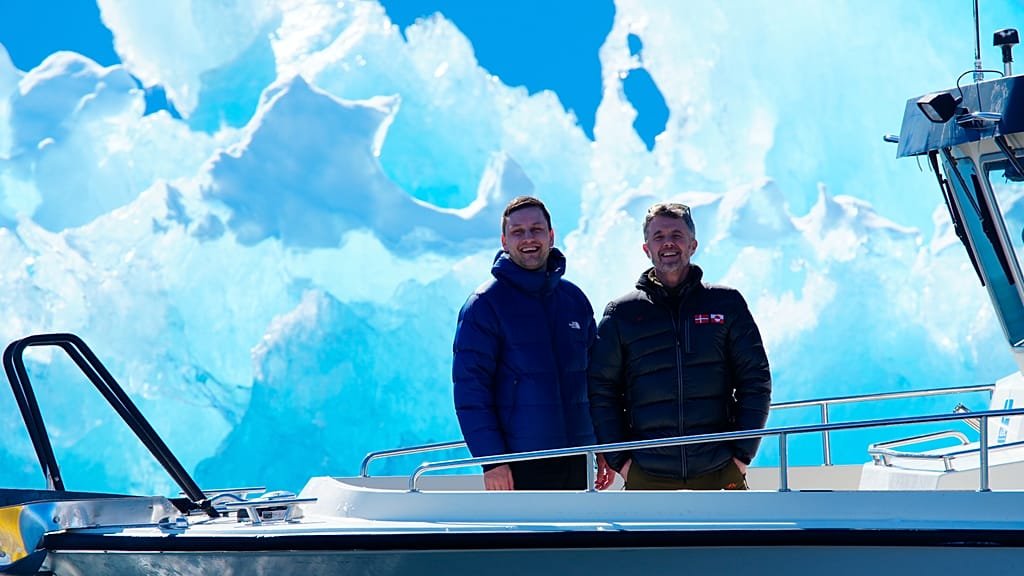
- Denmark Greenland Visit unfolds amid growing US-Europe tensions over Arctic sovereignty.
- King Frederik’s trip to Nuuk signals unity but underscores geopolitical vulnerability.
- France and Germany weigh security commitments as NATO faces Arctic uncertainty.
- Greenlanders largely reject US annexation despite mounting strategic pressure.
The Denmark Greenland visit by King Frederik X next week is being framed as a ceremonial show of unity. But behind the flag-waving crowds and kaffemik gatherings in Nuuk lies a serious geopolitical test. As Washington presses Europe over Greenland’s future, Denmark’s monarchy finds itself operating under far worse strategic circumstances than at any time in recent decades.
When King Frederik lands in Greenland’s capital, he is expected to receive a warm reception. The Arctic territory, unusually mild this winter, is preparing for images of solidarity to circulate across global media. Yet the Denmark Greenland visit is not merely symbolic. It comes at a moment when the administration of Donald Trump has revived strategic pressure on Europe regarding Greenland’s long-term alignment.
Although overt tensions have eased after diplomatic engagements involving U.S. Vice President JD Vance, the underlying contest remains unresolved. Technical talks between Copenhagen, Nuuk, and Washington have resumed, reportedly revisiting aspects of the 1951 U.S.-Denmark defense agreement governing American military presence at Pituffik Space Base.
For Denmark, Greenland is not peripheral real estate. It is central to the Kingdom’s geopolitical identity. The Arctic island sits astride emerging shipping lanes, holds vast untapped rare earth mineral deposits, and anchors North America’s early-warning missile defense architecture. In an era of intensifying competition among the United States, Russia, and China, Greenland has become strategically indispensable.
The Denmark Greenland visit is therefore carefully timed. Since ascending the throne after the abdication of Margrethe IIin January 2024, Frederik has made Greenland a visible priority. His predecessors understood the political power of royal symbolism. In 1921, Christian X visited Greenland to reinforce Danish sovereignty amid Norwegian claims. Today, the challenge comes not from Oslo but from Washington’s strategic recalibration.
Public opinion in Greenland offers Denmark reassurance. A January survey of 610 Greenlanders showed that 76 percent oppose joining the United States, with only 8 percent in favor. The majority favor either maintaining ties with Denmark or pursuing gradual independence on their own terms. The Denmark Greenland visit seeks to amplify that sentiment of unity.
However, symbolism alone cannot resolve the broader US-Europe tussle. France and Germany have begun signaling quiet support for Arctic stability. European military planners are discussing limited deployments and coordination mechanisms. Britain and Canada have increased diplomatic engagement, and Paris and Ottawa are opening consulates in Nuuk.
But the central geopolitical question remains stark: if Washington were to escalate pressure, would French and German troops realistically be able to defend Greenland alongside Greenlanders? The logistical barriers are formidable. Greenland’s vast icy terrain, minimal infrastructure, and extreme climate complicate rapid military reinforcement. NATO’s cohesion would face an unprecedented strain if a sovereignty dispute emerged within the alliance itself.
Danish Prime Minister Mette Frederiksen has responded by emphasizing calm diplomacy while strengthening European coordination. Foreign Minister Lars Løkke Rasmussen has described the diplomatic track as “back on course,” yet Copenhagen remains on alert. National elections due later this year could further shape Denmark’s negotiating posture.
Ironically, the controversy has boosted Greenland’s global visibility. American tourists are arriving in higher numbers, curious about the island at the center of geopolitical headlines. Greenlandic flags have appeared more prominently in Copenhagen, and athletes such as Ukaleq and Sondre Slettemark have symbolized shared identity during international sporting events.
Yet beneath the surface, the Denmark Greenland visit underscores a deeper structural shift. Climate change is opening Arctic sea routes and exposing mineral wealth. Great-power rivalry is moving northward. The United States sees Greenland as critical to continental defense. Europe sees it as sovereign territory and a test of transatlantic respect.
When King Frederik walks through Nuuk next week, the optics will project unity. The Denmark Greenland visit will showcase cultural bonds and historical ties. But the harsh reality remains: Greenland has become a geopolitical pivot point in an era of transactional diplomacy.
Warm welcomes may steady morale. Royal symbolism may strengthen domestic cohesion. But whether France and Germany — alongside Greenlanders themselves — could ultimately shield the island from mounting strategic pressure remains an unanswered question in the unfolding Arctic power struggle.