



- A young man’s plea triggers a high-risk police operation in Khyber
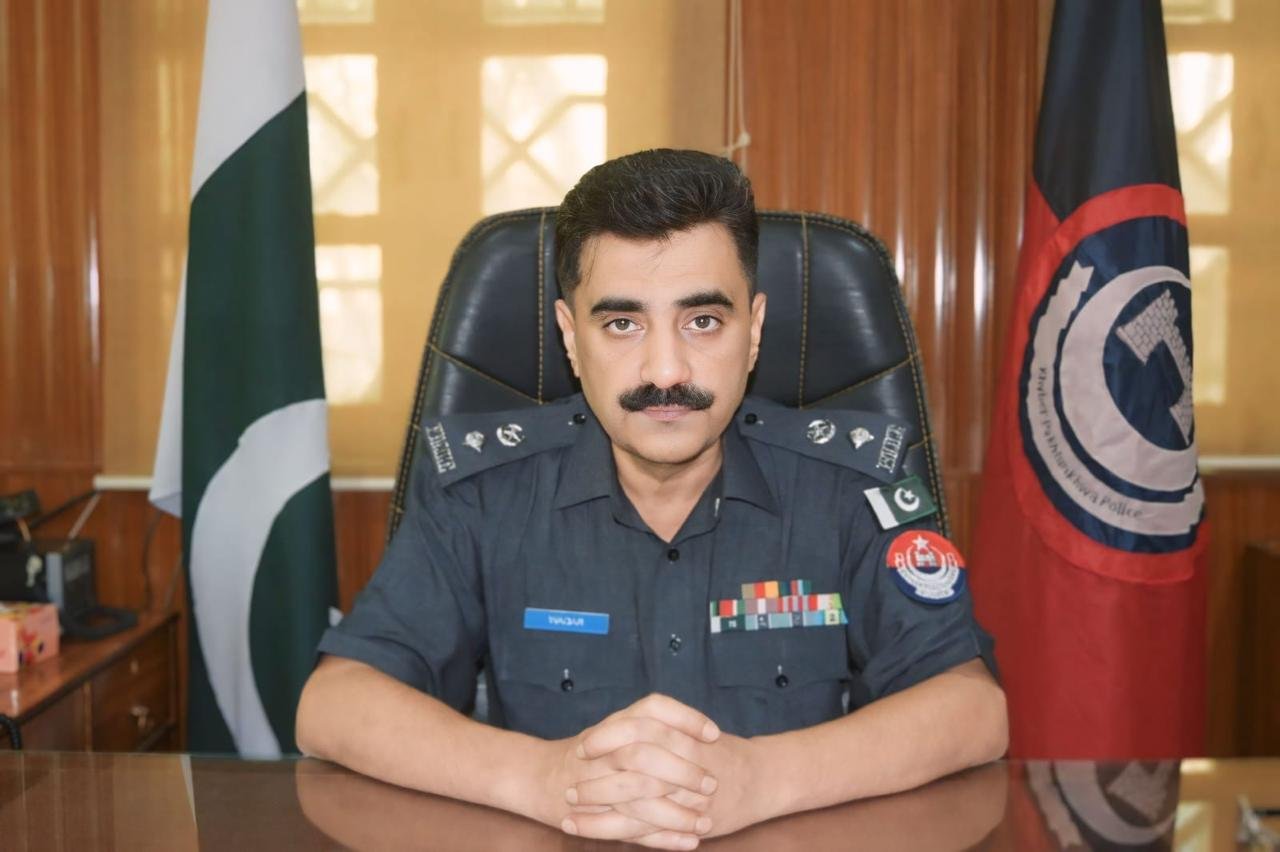
- District Police Officer Waqar Khan leads a rapid-response rescue mission
- French mother and five children freed after years of confinement
- Operation earns international recognition for Pakistan’s law enforcement
The call did not arrive with urgency stamped across it. There were no flashing alerts, no coded signals marking it as extraordinary. It came instead as something far more fragile: a story, carried hesitantly by a young man whose appearance suggested hardship, not consequence.
He walked into a police office in Peshawar and waited to be heard.
His clothes were worn. His voice wavered. His presence was unassuming enough that, in another setting, he might have been overlooked. But what he carried with him—what he chose to say—would soon test not only the instincts of a police officer, but the responsiveness of an entire system.
He said his mother was French.
He said she was trapped.
He said his sisters were in danger.
And then he added, with a clarity that cut through doubt: if help did not come immediately, they might be killed.
Inside that office, District Police Officer Waqar Khan listened.
There are moments in institutional life when procedure dominates instinct—when verification precedes action, when skepticism outweighs urgency. This could have been one of those moments. The account was improbable, the details fragmented, the stakes unclear.
But Waqar Khan did not lean back in caution. He did not pass the matter down a chain of review. He did not wait for confirmation to validate concern.
He stood up.
That decision—quiet, immediate, almost unremarkable in its simplicity—became the hinge upon which six lives would turn.
A Decision That Could Not Wait
According to officials familiar with the operation, Waqar Khan’s response was not only swift but decisive. He recognized that even if the young man’s claims were partially true, delay could carry irreversible consequences.
Read More:A French Mother’s Secret Hell in Pakistan: Years of Abuse, Five Children, and a Daring Rescue That Finally Broke the Silence
There was no time for procedural comfort.
Within minutes, a team was assembled. Vehicles were prepared. Officers were briefed with what little information was available. Routes into the mountainous terrain of Khyber District were mapped with urgency rather than precision.
And Waqar Khan made a choice that would come to define the operation.
He did not delegate.
He led.
From the confines of his office to the rugged expanse of northwestern Pakistan, the transition was immediate. The convoy moved through winding roads and uncertain terrain, carrying with it a question that remained unresolved: what, exactly, awaited them?
Inside the vehicles, officers prepared for a range of possibilities. They did not yet know they were heading toward a scene that would unsettle even the most experienced among them.
‘Baby Jessica’ accused of domestic abuse nearly 40 years after being rescued from well
They only knew that someone had asked for help—and that their commanding officer had decided to answer.
The House in the Mountains
The location, when they reached it, did not announce itself as extraordinary. It was remote, quiet, folded into a landscape where isolation can easily become invisibility.
Then they entered.
What they encountered inside was not merely neglect. It was prolonged confinement—years of life reduced to a single enclosed existence.
A French national, Sylvia Yasmina Bellaraji, and her five children had been living in conditions that officers later described as deeply distressing. Their world had been restricted to one space. Movement had been controlled. Contact with the outside world had been nearly nonexistent.
For the children, childhood had unfolded without freedom.
The reaction to the police entry was immediate and overwhelming.
“They began crying the moment we entered,” Waqar Khan would later recount. “The mother, the children—they were weeping uncontrollably. Even my officers could not hold back their tears.”
It was not simply the arrival of law enforcement. It was the rupture of silence.
The woman clung to the officers with a desperation that spoke to years of fear. The children huddled together, caught between confusion and relief, uncertain whether this intrusion marked danger or deliverance.
Waqar Khan did not hesitate.
“Take them out. Now.”
The Arrest and the Escape
The man accused of orchestrating the confinement—the husband and father—was taken into custody at the scene. There were no prolonged negotiations, no visible resistance, no delay in action.
For the woman and her children, the removal from that house marked the first unrestrained step into the outside world in years.
As they were escorted out, the landscape around them—open sky, shifting air, unfamiliar movement—must have felt almost unreal. These were not new elements, but they were newly accessible.
The convoy that had arrived with uncertainty now departed with clarity.
It carried lives that had been reclaimed.
A Return to Safety
Back in Peshawar, the rescued family was taken to a women’s police station—an environment intended not only for protection, but for dignity.
What followed extended beyond standard procedure.
Clothing was arranged. Food was provided. Medical attention was initiated. Officers who had witnessed the conditions firsthand remained present, attentive not just to security, but to recovery.
There are moments in institutional response when humanity becomes visible—not as policy, but as practice.
This was one of them.
Within those walls, something began to shift. The fear that had defined the family’s existence did not disappear, but it began to loosen.
And, gradually, voices emerged.
Voices That Had Been Silenced
In a video recorded after the rescue, Sylvia spoke. Her voice carried the weight of exhaustion, but also the first traces of relief.
She expressed gratitude to the police.
Her eldest son—the same young man whose decision to seek help had initiated the operation—spoke with a steadiness that belied his circumstances. He thanked the officers who chose to believe him.
A teenage daughter stood beside him, echoing the same sentiment.
“They saved us.”
It was not rhetoric. It was recognition.
District Police Officer Waqar Khan: The Man Behind the Mission
At the center of this story stands Waqar Khan—not as an abstract figure within a system, but as a decision-maker whose instincts altered outcomes.
Colleagues describe him as composed and disciplined, aware of the responsibilities attached to his position. Yet those attributes alone do not explain what happened that day.
What defined him in that moment was something less procedural and more immediate.
It was instinct.
Where hesitation could have been justified, he chose urgency.
Where doubt could have delayed action, he chose belief.
Where procedure might have slowed response, he chose humanity.
His decision to personally lead the operation carried symbolic weight. It signaled to his team that this was not routine. It reinforced the principle that even improbable accounts deserve attention.
And it demonstrated a broader truth—that leadership, in its most consequential form, is often measured in moments rather than mandates.
A Department Earns Respect
The implications of the operation extended far beyond the rescue itself.
Across Pakistan, the response of the Khyber Police drew attention for its speed and its conduct. In a region often framed through narratives of instability, this episode offered a different image—one of coordination, empathy, and decisiveness.
Officials at the French Embassy in Islamabad acknowledged the effort, recognizing it as both a humanitarian intervention and a reflection of institutional responsibility.
Within Pakistan’s law enforcement community, the operation has come to represent a moment of affirmation.
It is a reminder that authority is not defined solely by enforcement, but by protection—that the uniform carries not only power, but obligation.
The Long Road Ahead
For Sylvia and her children, rescue marks a beginning, not an end.
Years of confinement do not dissolve quickly. Psychological recovery will require time, support, and sustained care. Rebuilding trust—in people, in systems, in the outside world—will be gradual.
But the immediate danger has passed.
They are no longer confined. They are no longer unheard.
They are, at last, safe.
A Story That Must Be Heard
There are countless stories that remain buried—silenced by fear, obscured by distance, dismissed by disbelief.
This story is different.
Because one young man chose to speak.
Because one officer chose to listen.
And because, in a moment where hesitation might have been fatal, action prevailed.
From a modest office in Peshawar to a remote house in the mountains of Khyber, the distance crossed was not merely geographical.
It was the distance between silence and recognition.
Between captivity and freedom.
Between doubt and decision.
In the end, this is not only a story of rescue.
It is a story of timing.
A decision made in minutes.
A response carried out without delay.
And a reminder—to institutions in Pakistan, to observers in France, and to power corridors everywhere—that the difference between tragedy and survival can rest on something deceptively simple:
Whether someone, when it matters most, chooses to act.