



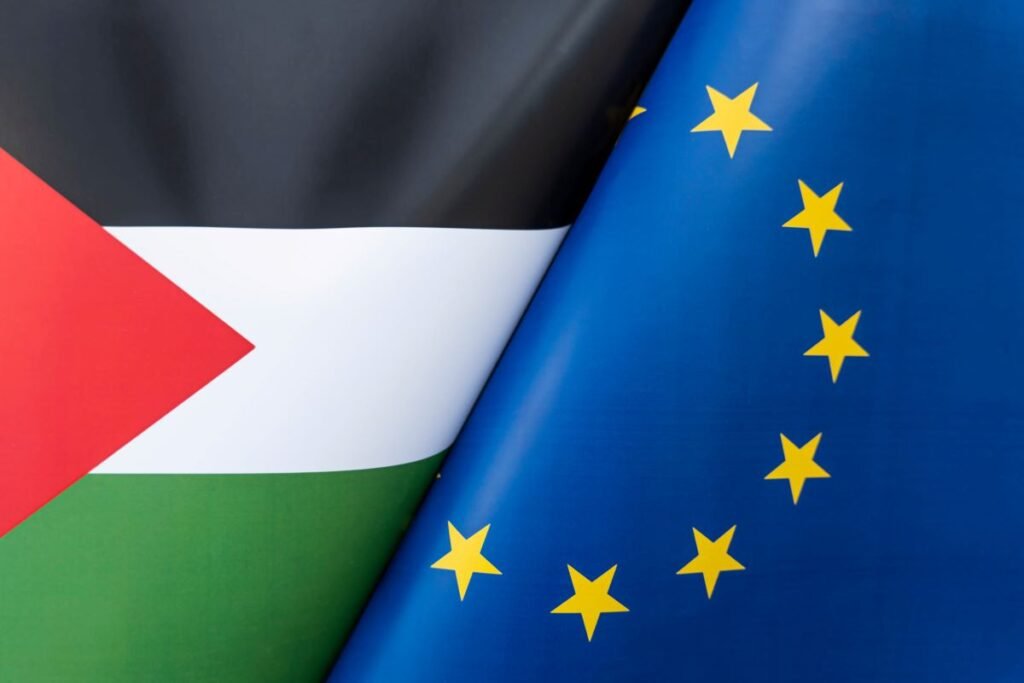
- Bold European Stand: Canada, the UK, Australia, France, Belgium, and more break with Israel’s narrative by recognizing Palestine.
- Hope Amid War: Recognition brings new legitimacy to the Palestinian struggle as Gaza suffers under bombardment.
- Unity Required: Palestinian factions must rally under the PLO and translate recognition into a national action plan.
- Next Steps: Recognizing states must back words with economic aid, legal pressure, and protection against annexation.
History is sometimes written not in battlefields, but in the quiet dignity of diplomatic signatures. Over the past week, Canada, the United Kingdom, Australia, France, Belgium, and several other European countries stood on the right side of history by recognizing the State of Palestine. Their decision has reverberated across the globe, breaking decades of inertia and challenging the unjust narrative that Palestinian statehood must forever remain hostage to Israeli consent.
For Palestinians, this moment is not simply symbolic. It is a moral, political, and legal acknowledgment of a people who have endured occupation, dispossession, and war for more than seventy-five years. Recognition by these influential nations restores something Israel has tried for decades to erase: the legitimacy of the Palestinian struggle for self-determination.
Recognition as a Beacon of Hope
The timing of these recognitions could not be more crucial. As bombs continue to rain down on Gaza, as children are buried under rubble, and as families are forced from their homes in the West Bank, Palestinians need more than words of sympathy. They need recognition that their cause is just, their suffering real, and their statehood inevitable.
World Pushes for Two-State Solution as Israel Rejects Palestine State
Britain, Canada, Australia, France, and Belgium have now joined over 147 other nations in declaring unequivocally: Palestine exists. That message pierces through the fog of occupation and war. It brings a measure of hope to Palestinians who have seen far too many international promises dissolve into diplomatic clichés.
But hope alone will not free Palestine. Recognition is the first step of many. The true test is whether the world, especially Europe and North America, will translate recognition into real, tangible action.
The Israeli Backlash
Unsurprisingly, Israeli leaders erupted with fury. Prime Minister Benjamin Netanyahu dismissed these recognitions as “rewards for terrorism.” Finance Minister Bezalel Smotrich threatened further annexation of the West Bank, arrogantly referring to it as “Judea and Samaria.” Their rage reveals the truth: Israel fears that the global tide is turning. For decades, Tel Aviv relied on Western complicity to shield its crimes. Now, its most trusted allies are finally breaking ranks.
READ MORE: Editorial | A Historic Shift: The World Must Recognize Palestine Now
This fury should not intimidate Europe. It should embolden it. Because for too long, Israel has acted as though it is above international law. Recognition of Palestine is the first clear signal that the world will no longer indulge that impunity.
The Responsibility of Palestinians
Recognition, however, places an equal responsibility on Palestinian leadership. Statehood cannot be built on fragmented politics and factional rivalries. All Palestinian factions – from Fatah to Hamas, from Gaza to Ramallah, from the diaspora to the refugee camps – must come together under the umbrella of the Palestine Liberation Organization (PLO). Only a united political front can transform these diplomatic victories into a real sovereign state.
ALSO READ: 152 Countries Recognize Palestine: Europe Leads the Wave as Israel Wavers and Considers Annexing the Jordan Valley
The New York Declaration issued at the UN summit earlier this year provides a strong foundation for such unity. It envisions a sovereign, viable Palestinian state empowered to govern its own territory and secure its own borders. Now is the time to translate that vision into a concrete national plan with clear objectives, timelines, and responsibilities.
Elections must also be prioritized. A genuine democratic process, open to Palestinians everywhere – including East Jerusalem – would renew legitimacy, rebuild institutions, and silence critics who claim Palestinians are divided or incapable of self-rule. Recognition from abroad will be hollow if not matched by renewal from within.
The Task for Recognizing States
To Europe’s credit, recognition is already a seismic political statement. But words without follow-through risk being reduced to symbolism. Recognizing countries must immediately back their decisions with:
-
Economic support to rebuild shattered Palestinian infrastructure.
-
Diplomatic pressure to halt Israeli settlement expansion and annexation.
-
Legal accountability by supporting International Court of Justice and International Criminal Court rulings against illegal occupation.
-
Protection measures to prevent further displacement and ethnic cleansing.
Anything less would betray the very principles that led these countries to recognize Palestine in the first place.
A Fundamental Right, Not a Bargaining Chip
It must be repeated again and again: Palestinian statehood is not a favor, not a gift, and not a bargaining chip to coax Israel into negotiations. It is a fundamental right enshrined in international law. For decades, Palestinians have been told to wait—wait for Israel to agree, wait for the United States to approve, wait for the “right conditions.” That waiting has cost generations their lives, homes, and futures.
Europe has now said: enough. And the world must follow. The United States, in particular, can no longer hide behind its veto at the UN while preaching democracy and human rights abroad. Washington must decide whether it wants to be remembered as the last defender of apartheid or as a partner in peace.
Conclusion
The recognitions by Canada, the UK, Australia, France, Belgium, and others are a turning point. They prove that Palestine is not forgotten, that the struggle for freedom still resonates in the halls of power, and that justice can no longer be delayed indefinitely.
But recognition is not the end. It is the beginning of a new chapter – one that demands Palestinian unity, international courage, and relentless pressure on Israel to end its occupation.
For the world, this is a moral test. For Palestinians, it is a renewed call to resilience and unity. And for history, it is a reminder that justice may be delayed, but it cannot be denied.
Palestine lives. And now, more than ever, the world must ensure it thrives.