



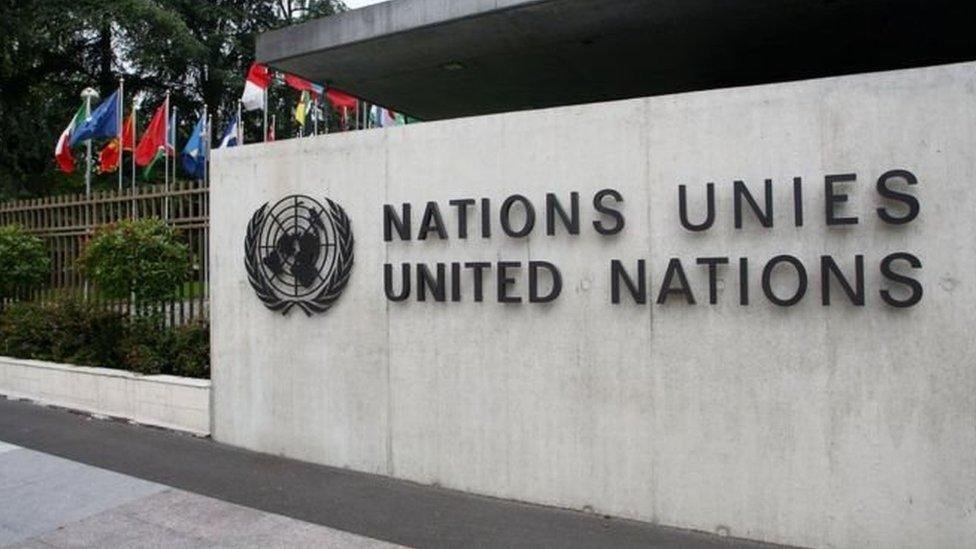
- Global Multilateralism is currently facing its most severe existential threat as the Trump administration shifts from diplomatic retreat to active territorial and military interventionism.
- The capture of Nicolás Maduro in January 2026, codenamed “Operation Absolute Resolve,” bypassed the U.N. Security Council entirely, signaling a new era of unilateral regime change.
- Trump’s recent “framework deal” to acquire Greenland, backed by threats of crippling tariffs against European dissenters, reintroduces colonial-era land acquisition into modern geopolitics.
- While the U.N. celebrated its 80th anniversary with the motto “Better Together,” the reality is a fragmented world where powerful nations operate without legal or moral restraint.
Eighty years after the founding of the United Nations, the General Assembly convened in late 2025 under the theme: “Better together: 80 years and more for peace, development and human rights.” It was a fine slogan. Yet, in 2026, it feels hollow. The U.N., once humanity’s safeguard, is now a bystander to a “New Colonialism” where borders are redrawn by economic threats and military strikes.
Venezuela and the Death of Sovereignty The recent U.S. military operation in Venezuela, resulting in the capture of President Nicolás Maduro on January 3, 2026, represents a definitive break from the U.N. Charter. Code-named “Operation Absolute Resolve,” the mission involved 150 aircraft and bypassed all international legal frameworks. While Washington justifies the move as a blow against “narcoterrorism,” the U.N. Security Council remains paralyzed. This move signals to every smaller nation that sovereignty is a secondary concern to the interests of a superpower.
Greenland: Real Estate Diplomacy If Venezuela was about regime change, the Greenland crisis is about territorial expansion. At the 2026 Davos summit, President Trump unveiled a “framework” to acquire the Arctic island, citing its necessity for the “Golden Dome” missile shield. By threatening 25% tariffs on European allies who object, the U.S. has turned a NATO partner’s territory into a bargaining chip. The U.N. has no mechanism to stop a superpower from “buying” a country, leaving Greenland and Denmark to navigate a world where might makes right.
The Palestinian Silence The exclusion of President Mahmoud Abbas from the UNGA remains a stinging wound. By revoking visas for 80 Palestinian officials, the Trump administration effectively used its status as a host nation to censor a people. Although the U.N. passed a resolution allowing Abbas to speak via video, the message was clear: the world’s top forum is no longer a neutral ground.
Can the U.N. Stop the Giants? The paradox of 2026 is that the U.N. has never been more necessary, yet it has rarely been weaker. From Haiti’s collapse to AI governance, the world needs a central arbiter. However, with the U.S. withholding its 2026 peacekeeping contributions and pushing state-centric models of dominance, the leadership vacuum is being filled by chaos rather than China or Europe.
For the U.N. to survive its 81st year and beyond, it must move past managerial reforms and reassert the 1947 Headquarters Agreement. If the “influential nations” can ignore the Charter with impunity—whether in the streets of Caracas or the ice of Greenland—the U.N. risks becoming a museum of 20th-century idealism rather than a guardian of 21st-century peace.
Would you like me to research specific European or Global South responses to the 2026 Venezuela intervention to add more perspectives to this article?
The U.N. at 80 is a hollow shell, paralyzed by the return of “might is right.” The 2026 Venezuela intervention and the coercion of Denmark over Greenland signal a shift from a rules-based order to an era of Hard-Power Transactionalism.
By 2030, the U.N. will likely lose its New York headquarters as host-nation friction peaks. Global governance will fragment into regional “Sovereignty Blocs,” where smaller nations must trade resource rights for protection, effectively ending universal multilateralism.