



- India-Bangladesh border military maneuvers involving Rafale and Tejas jets have raised regional alarms.
- The ouster of Sheikh Hasina has triggered a fundamental shift in Dhaka’s “India-first” foreign policy.
- Intelligence reports suggest potential friction points leading up to the February 2026 general elections.
- A strategic realignment is visible as Bangladesh explores defense ties with Pakistan and China.
As the final days of 2025 unfold, a chilling atmosphere has settled over South Asia. While much of the world observes the holiday season, the 4,096-kilometer frontier between India and Bangladesh has become a theater of high-stakes military posturing.
Recent footage circulating on social media platforms like X (formerly Twitter) has captured Indian Rafale and Tejas fighter jets conducting low-altitude maneuvers near the border, mirrored by the Bangladesh Air Force putting its fleet on high alert.
Stock Market vs. Cost-of-Living Crisis: Data-Driven Insights for Smart Investing Decisions
What was once hailed as a “Golden Era” (Shonali Adhyay) of bilateral ties has evaporated, replaced by a volatile mix of electoral anxiety, historical grievances, and a dramatic shift in the regional balance of power.
The Spark: A Revolution Unfinished
The current friction is rooted in the “July Revolution” of 2024, which saw the dramatic ouster of Sheikh Hasina. After fifteen years of rule, Hasina fled to New Delhi, where she remains in exile—a fact that serves as a constant point of contention for Dhaka’s interim government, led by Nobel laureate Muhammad Yunus.
READ MORE: Greenland National Security: Trump Appoints Special Envoy to Greenland: Why National Security and Minerals Are Driving the Push Amid Denmark Fury
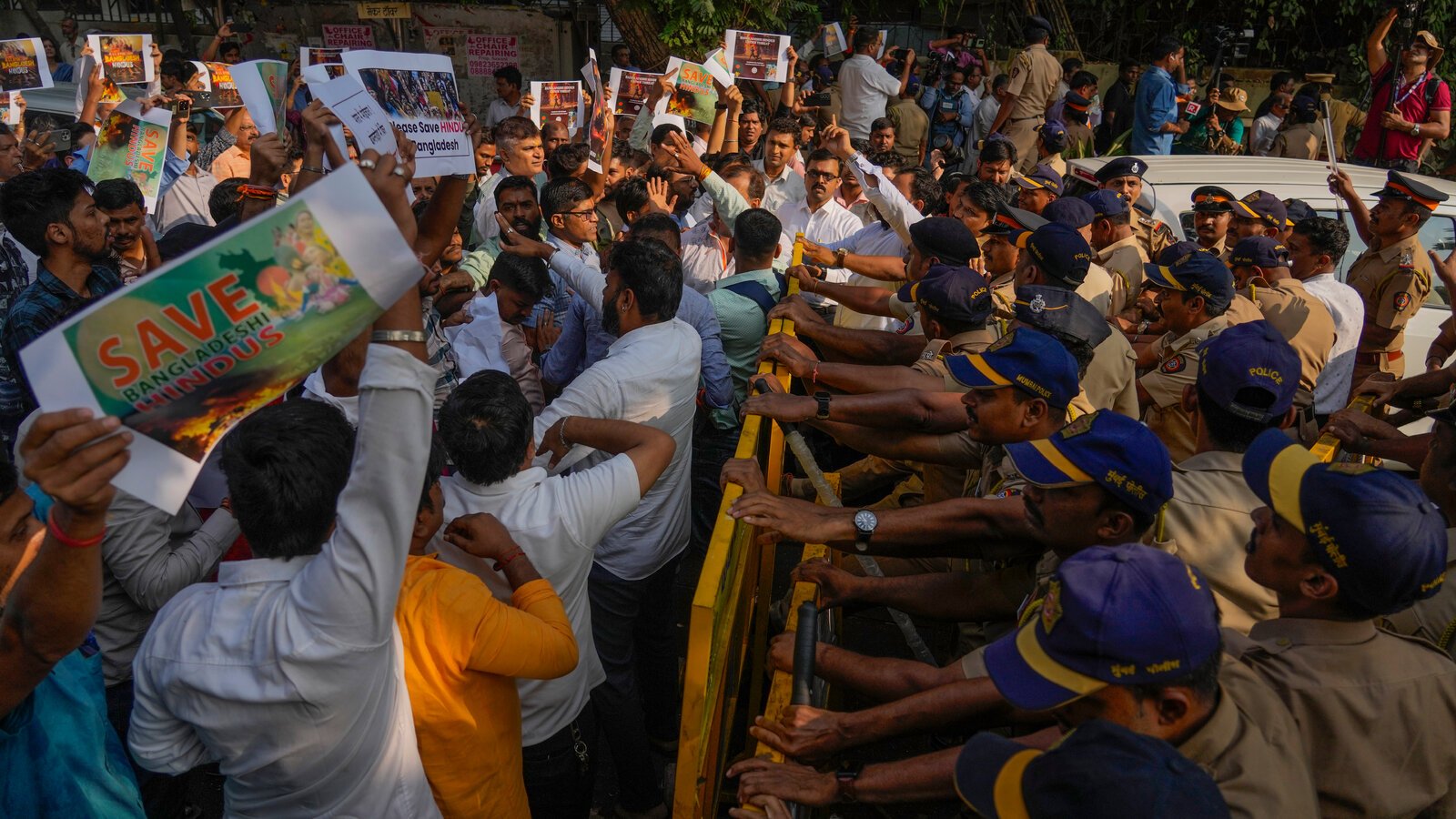
Tensions reached a breaking point in mid-December 2025 following the killing of Sharif Osman Hadi, a prominent activist from the July uprising. Allegations that the perpetrator fled to India have ignited “India Out” protests across Bangladesh. In retaliation, communal unrest in Indian border towns like Kailashahar has led to reciprocal visa freezes and the summoning of envoys, pushing diplomatic relations to their lowest point in decades.
Military Posturing: The “Chicken’s Neck” Under Watch
The military build-up is no longer speculative. India has reinforced its defenses along the Siliguri Corridor, the strategic “Chicken’s Neck” that connects mainland India to its Seven Sister states. Reports indicate the deployment of S-400 air defense systems and BrahMos supersonic missiles, with New Delhi citing the need to neutralize “anti-India elements.”
ALSO READ: Bangladesh leader considered PM frontrunner returns from exile ahead of polls
Conversely, Bangladesh is signaling a pivot that has stunned regional observers. At the Dubai Airshow 2025, reports surfaced of a Memorandum of Understanding (MoU) for Dhaka to acquire the JF-17 Thunder Block III, a fighter co-developed by Pakistan and China.
“The future is written on the wall, but it’s in invisible ink,” remarked a Dhaka-based geopolitical analyst. “We are seeing a fundamental reconfiguration of South Asian security architecture.”
The Pakistan-China Factor: A Strategic Realignment
The most significant wild card is the thawing of relations between Dhaka and Islamabad. For the first time since 1971, high-level defense delegations have met to discuss joint training initiatives. Pakistan has reportedly offered a comprehensive training package for Bangladeshi pilots, specifically focusing on Chinese-origin platforms like the J-10 and JF-17.
This burgeoning “Dhaka-Islamabad-Beijing” axis is a nightmare scenario for New Delhi. A recent U.S. Department of War report suggests that China is leveraging the disengagement at the Line of Actual Control (LAC) to stabilize its northern front while simultaneously expanding its naval and aerial footprint in the Bay of Bengal.
The 2026 Election: A Flashpoint for War?
All eyes are now on February 12, 2026, the date set for Bangladesh’s first post-Hasina general election. The political landscape is fraught:
- The Awami League: Currently banned from contesting, the party has rejected the election schedule as “illegal.”
- Tarique Rahman: The BNP leader has returned from 17 years of exile, positioning his party as a frontrunner.
- Interim Pressure: Dr. Yunus faces mounting domestic pressure to ensure a transition that prevents a return to autocracy.
Intelligence leaks suggest fears of “electoral sabotage,” with Dhaka accusing New Delhi of supporting pro-Hasina loyalists to destabilize the polls. If border skirmishes escalate during the campaign, the risk of a “limited conflict”—one designed to influence political outcomes—becomes dangerously plausible.
Is Diplomacy Still Possible?
Despite the saber-rattling, economic reality remains a powerful deterrent. With billions in bilateral trade at stake, a full-scale war would be mutually assured economic destruction. However, as the rhetoric intensifies, the margin for error shrinks. For the United States and the international community, the challenge is to manage a transition in Bangladesh that respects democratic aspirations without triggering a regional conflagration.
As fighter jets continue their patrols over the lush Bengal landscape, the “invisible ink” of the future is beginning to appear—and it reads like a warning.