



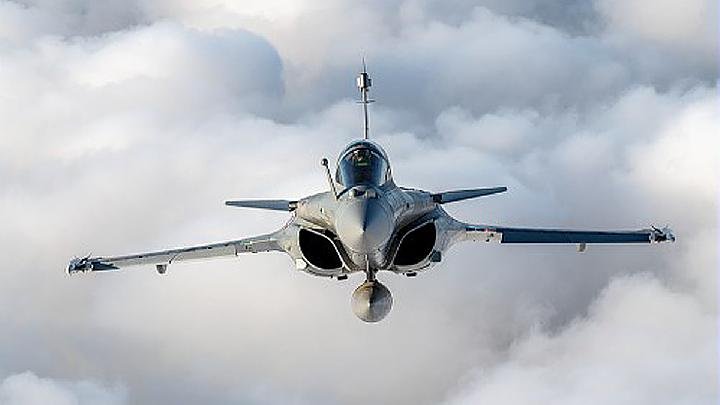
- Indonesia Rafale fighter jets deal marks Jakarta’s biggest military modernization push in decades
- The agreement strengthens France’s strategic footprint in Southeast Asia
- Indonesia balances U.S., China, Turkey, and European defense ties through diversified procurement
- The Rafale delivery boosts Indonesia’s deterrence amid rising South China Sea tensions
Indonesia’s receipt of its first three Rafale fighter jets from France on January 26, 2026, marks far more than a routine military delivery. It signals Jakarta’s deliberate entry into a new phase of strategic maneuvering in an increasingly multipolar world where air power, technological autonomy, and flexible alliances are becoming decisive tools of statecraft. For Southeast Asia’s largest nation, the Rafale deal reflects a calculated effort to modernize its armed forces while hedging between competing global powers.
The multi-billion-dollar agreement with France, which will ultimately bring 42 Rafale jets into Indonesia’s inventory, represents the single largest foreign arms purchase in the country’s history. Under President Prabowo Subianto, a former special forces commander with a strong emphasis on defense readiness, Indonesia has significantly expanded military spending to replace aging Cold War-era equipment. The arrival of the advanced French jets at Roesmin Nurjadin Air Base in Sumatra symbolizes a technological leap for the Indonesian Air Force, enhancing its ability to monitor vast airspace stretching across thousands of islands.
But Indonesia’s modernization drive cannot be viewed in isolation. It is unfolding against the backdrop of intensifying competition between major powers in the Indo-Pacific. The United States continues to strengthen security ties with regional allies, China is expanding its military presence in the South China Sea, and European powers such as France are seeking a larger strategic footprint in Asia. By choosing the Rafale, Jakarta is not merely upgrading hardware; it is diversifying partnerships and signaling that it refuses to fall exclusively within any single power bloc.
France, for its part, has emerged as Indonesia’s primary arms supplier in Southeast Asia, offering not just aircraft but also frigates, submarines, and industrial cooperation in ammunition production. This comprehensive defense partnership allows Jakarta to build long-term capacity while reducing dependence on any one supplier. It also fits neatly with France’s ambition to present itself as a credible Indo-Pacific security actor, particularly as European nations look to protect trade routes and maintain influence in a region central to global commerce.
Indonesia’s strategy, however, goes beyond its relationship with Paris. Jakarta has explored options ranging from China’s J-10 fighters to America’s F-15EX, and has already signed a major deal with Turkey for 48 KAAN fifth-generation jets in the coming decade. Recent discussions with Pakistan over combat aircraft and armed drones further underline Indonesia’s desire to keep its procurement portfolio broad. This multi-vector approach gives Jakarta leverage, technological flexibility, and diplomatic balance.
Yet the Rafale program has not been without controversy. The global reputation of the French jet suffered a blow after reports last year claimed several Rafales were shot down during clashes involving Pakistan’s Air Force, raising questions about the aircraft’s battlefield survivability. While the circumstances and technical details remain disputed, the episode temporarily dampened international enthusiasm for the platform. Indonesia’s continued commitment to the Rafale despite these concerns suggests that Jakarta values the broader strategic partnership with France as much as the aircraft’s combat performance.
At the heart of Indonesia’s defense transformation lies a clear geopolitical calculation. The country sits astride some of the world’s most critical maritime chokepoints, including the Malacca Strait, through which a significant portion of global trade flows. Any escalation of tensions in the South China Sea, particularly between China and U.S. allies, could directly impact Indonesian security and economic stability. A stronger air force acts as both a deterrent and a rapid response tool in this volatile environment.
Indonesia’s modernization also reflects emerging non-traditional threats. Cyber intrusions, foreign drones, hybrid warfare tactics, and gray-zone operations are increasingly shaping regional security. Alongside new fighter jets, Jakarta has invested in radar networks, command-and-control integration, and cyber defense capabilities. This holistic approach indicates that Indonesia is not merely preparing for conventional conflict but is adapting to the complex warfare landscape of the 21st century.
Ultimately, the arrival of the Rafales underscores Indonesia’s ambition to become a more assertive and self-reliant regional power. Rather than aligning fully with Washington or Beijing, Jakarta is carving out a strategic middle path, leveraging competition among major powers to strengthen its own military and diplomatic position.
In the era of multipolar rivalry, Indonesia’s skies are becoming a crucial arena of deterrence and influence. The Rafale jets may be French in origin, but their geopolitical significance is unmistakably Indonesian — a symbol of a nation determined to safeguard its sovereignty while skillfully navigating the shifting currents of global power.