



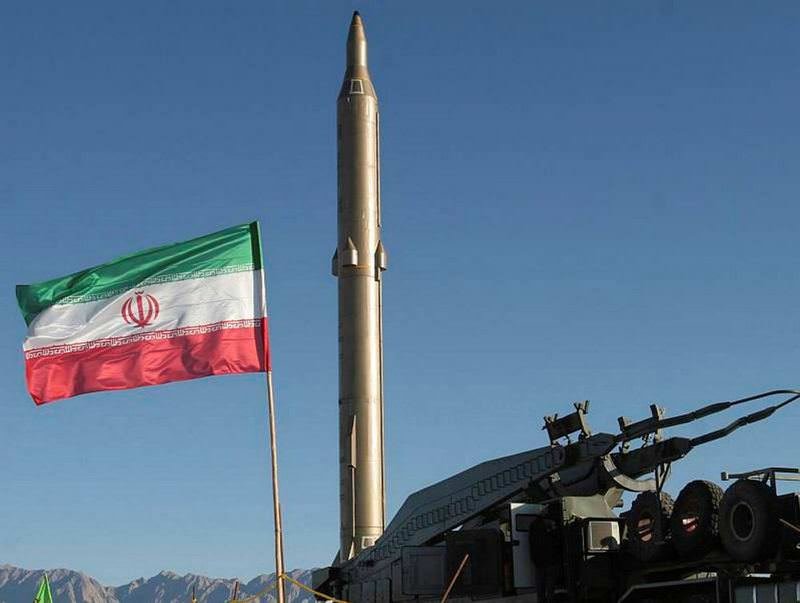
- Israeli intelligence claims the Iran ballistic missile program is targeting a production rate of 3,000 units per year.
- Netanyahu is scheduled to meet Trump at Mar-a-Lago on December 29 to discuss “swift action” and military options.
- Concerns over Iran reconstituting nuclear sites and air defenses like the S-300 follow the June 2025 “Operation Midnight Hammer.”
- Potential strikes threaten Trump’s Gaza peace plan, which relies on a stabilization force from Muslim states like Pakistan.
The Middle East stands at a familiar, yet increasingly dangerous, crossroads. According to a story published by NBC News on December 20, 2025, Israeli Prime Minister Benjamin Netanyahu is preparing to brief President Donald Trump at Mar-a-Lago later this month regarding a potential new round of strikes against Iran. This comes a mere six months after “Operation Midnight Hammer” and “Operation Rising Lion”—the June 2025 strikes that supposedly “obliterated” Iran’s nuclear capabilities. The million-dollar question, however, remains: Why is Israel planning to attack Iran once again?
The Narrative of 3,000 Missiles
The primary driver for this renewed aggression is a claim from Israeli intelligence that Iran is expanding its ballistic missile production at an unprecedented rate. Netanyahu’s team asserts that, if left unchecked, Iran could soon produce 3,000 ballistic missiles per year. This figure is staggering, yet it remains largely speculative. While reports indicate Iran is receiving chemical precursors like sodium perchlorate to boost solid propellant production, there is no verified public evidence that they have reached such industrial capacity.
Al-Sharaa and U.S. Forces Launch Operation Hawkeye Strike Against ISIS
Furthermore, the logic behind using such a number as a casus belli (justification for war) is inherently flawed. Iran is a sovereign nation. Like India, France, China, or North Korea, it maintains the right to safeguard its territory.
READ MORE: Al-Sharaa and U.S. Forces Launch Operation Hawkeye Strike Against ISIS
If missile stockpiling alone is the threshold for an attack, one must ask: Will Israel attack Paris? Delhi? Pyongyang? Even more pointedly, does Israel intend to brief the world on its own unacknowledged nuclear arsenal, or the humanitarian cost of its strikes in Gaza, where thousands of Palestinians have been martyred?
Reconstitution vs. Sovereignty
Israeli officials are also raising alarms that Iran is reconstituting nuclear enrichment sites and repairing air defense systems—specifically the S-300 and the domestically produced Bavar-373—that were damaged in June. While Israel views this as an “immediate concern,” from a legal and diplomatic standpoint, it is a circular argument. Iran is rebuilding its defenses because it was attacked. To attack a country because it is attempting to repair its ability to defend itself from your last attack is a cycle of escalation that defies international norms of sovereignty.
ALSO READ: IDF chief, while discussing Iran, says military will strike ‘wherever required’
Netanyahu’s remarks appear increasingly absurd when viewed through the lens of international law. Is Iran the only country piling up its stock of missiles? Hardly. Global powers across the globe are in a perpetual state of rearmament. By targeting Iran’s defensive installations, Israel is essentially demanding that its neighbor remain defenseless while Israel itself maintains one of the most advanced military machines in the world.
The Trump Variable and the “Muslim Army”
The timing of this briefing is particularly sensitive. President Trump has recently boasted that he “destroyed the Iran nuclear threat” and brought “peace for the first time in 3,000 years” with the October 2025 ceasefire. A new war would effectively admit that his previous military actions failed to achieve a permanent solution.
Furthermore, the domestic landscape in the U.S. has shifted. Pro-Israel lobbying groups no longer enjoy the monolithic support in Congress they once did. Trump himself has warned Netanyahu to “be careful,” signaling that he may not be willing to sign a “blank check” for another regional conflagration. Trump is also trying hard to secure a stabilization force in Gaza—the International Stabilization Force (ISF)—comprising Muslim states including Pakistan.
Adding to the complexity is Trump’s 20-point plan for Gaza. If Israel launches a strike on Iran now, it risks:
- Alienating Muslim Allies: Countries like Pakistan or Egypt are unlikely to participate in a U.S.-led Gaza force while the U.S. supports an attack on another major Muslim power. Secretary of State Marco Rubio recently expressed gratitude for Pakistan’s “consideration” of this role, but a strike on Iran would likely kill that cooperation instantly.
- Regional Blowback: Iran has already proven it can strike back, having launched over 500 missiles during the “Twelve Days of Inferno” in June. Another strike may not “silence” Tehran, especially after it reportedly eliminated a network of Israeli spies—including tech-savvy youth—who were allegedly used to coordinate previous strikes.
The Intelligence Gap
One of the most concerning aspects of the proposed strike is the potential for intelligence failure. While Netanyahu claims Iran is “piling up” missiles, Western intelligence assessments as recently as March 2025 suggested Iran was not even pursuing a nuclear weapon. The drive toward war seems fueled more by a desire to maintain absolute regional hegemony than by a verifiable shift in Iranian intent.
Moreover, the human cost cannot be ignored. While Netanyahu discusses “surgical strikes” on missile factories, the reality on the ground is often far different. The world is still reeling from the martyred thousands in Gaza; a full-scale war with Iran would multiply that tragedy a hundredfold.
Will Another Strike Silence Iran?
History suggests that military strikes rarely “silence” a nation’s resolve; instead, they often harden it. Iran’s survival through decades of sanctions and the recent “Operation Midnight Hammer” has shown a resilience that cannot be bombed away. By repairing its air defenses and continuing its missile program, Iran is signaling that it will not be intimidated into unilateral disarmament.
The Mar-a-Lago meeting on December 29 will be a pivot point for the decade. If Netanyahu succeeds in dragging the U.S. into another offensive, the “peace” Trump so loudly touts will vanish. The region will be pushed into another bloody, open-ended war that could involve global powers and disrupt the global economy.
The million-dollar question isn’t just why Israel wants to attack, but whether the world is willing to let the pendulum of war swing back once more.