


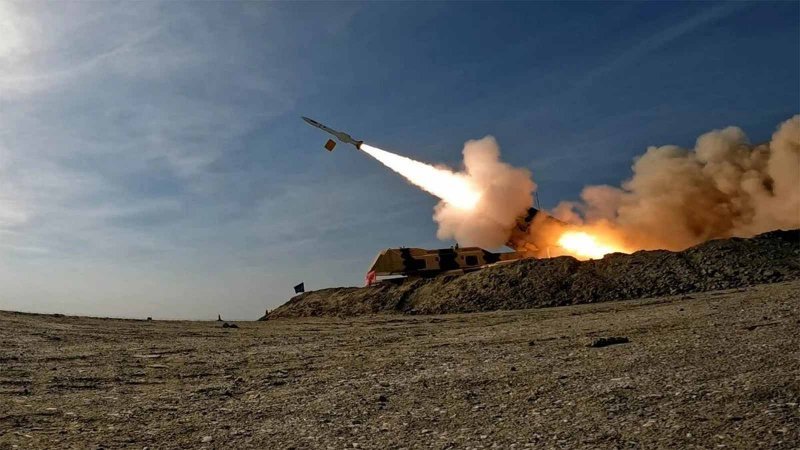
- Iran Ballistic Missile Strike in Azerbaijan: Iranian missiles and drones struck near Nakhchivan International Airport in Azerbaijan.
- The attack damaged the airport terminal and injured two civilians.
- Azerbaijan condemned the strike and summoned Iran’s ambassador.
- Baku warned that the attack “will not go unanswered,” raising fears of regional escalation.
A ballistic missile strike that slammed into a busy area near the airport in Nakhchivan on Thursday has sharply escalated tensions between Iran and Azerbaijan, prompting furious reactions in Baku and raising fears of a widening regional confrontation.
Authorities in Azerbaijan said missiles and drones flew in from the direction of Iran and struck near the terminal of Nakhchivan International Airport, located roughly 10 kilometers from the Iranian border. Dramatic video footage shared by local sources showed thick black smoke rising from the vicinity of the airport as emergency responders rushed to the scene.
According to Azerbaijan’s Foreign Ministry, the attack occurred around midday and involved multiple aerial weapons. One drone reportedly struck the terminal building, causing structural damage, while another crashed near a school in the nearby village of Shakarabad. At least two civilians were reported injured in the incident, though authorities warned that casualty figures could change as investigations continue.
US-Iran War Escalation: Trump Finalizes Ground Strategy as Middle East Conflict Widens
Officials in Baku issued a swift and strongly worded condemnation, describing the strike as a violation of international law and an unacceptable act of aggression against civilian infrastructure.
“We strongly condemn these drone attacks launched from the territory of the Islamic Republic of Iran, which resulted in damage to the airport building and injuries to two civilians,” Azerbaijan’s Foreign Ministry said in a statement.
Azerbaijan vows to respond after four injured by Iranian drones
The government demanded an immediate explanation from Tehran and called for a full investigation. Azerbaijani authorities also summoned Iran’s ambassador to Baku, Mojtaba Demirchilou, to deliver a formal diplomatic protest and demand assurances that similar incidents would not be repeated.
More ominously, Azerbaijan signaled that retaliation could be on the table.
“The Ministry of Defense of the Republic of Azerbaijan is preparing the necessary response measures to protect the territorial integrity and sovereignty of our country,” the defense ministry said in a separate statement, warning that “these acts of aggression will not go unanswered.”
Azerbaijan vows to respond after four injured by Iranian drones
The strike marks the latest in a growing series of missile and drone incidents linked to Iran across the wider region. In recent months, Tehran has reportedly launched strikes targeting what it claims are U.S. or allied military assets across the Middle East, including incidents involving Gulf Cooperation Council states, Turkey, and Oman.
Iranian officials have repeatedly argued that such operations are aimed at neutralizing U.S. military infrastructure and supply routes in the region. Tehran claims American forces use tanker vehicles, logistical hubs, and covert facilities spread across neighboring states to support operations against Iran.
In the case of Nakhchivan, Iranian sources have suggested that the missile targeted what they described as a “U.S.-linked tanker or logistical asset” operating near the airport. Azerbaijani officials have strongly rejected the allegation, saying the strike hit civilian areas and endangered local residents.
Analysts say the attack is particularly sensitive because Nakhchivan is a strategic exclave of Azerbaijan wedged between Iran, Armenia, and Turkey. The region serves as a critical transit point and is politically significant due to its proximity to multiple geopolitical fault lines in the South Caucasus.
A missile strike there risks destabilizing an already fragile regional balance involving Azerbaijan, Armenia, Iran, Turkey, and Russia.
Security experts warn that Azerbaijan’s warning of “response measures” could mark the beginning of a new phase of confrontation between Tehran and Baku. Azerbaijan maintains close military cooperation with Turkey and has increasingly deep security ties with Western partners, developments that Iran has frequently criticized.
So far, Iranian authorities have not issued an official statement addressing the Azerbaijani accusations, leaving the circumstances surrounding the strike unclear.
However, the absence of clarification from Tehran has only intensified anger in Azerbaijan, where officials argue that attacks on civilian infrastructure cannot be justified by claims of targeting foreign military assets.
With tensions already high across the Middle East and surrounding regions, the Nakhchivan strike threatens to open yet another dangerous front in an expanding geopolitical crisis. Diplomats warn that unless both sides quickly de-escalate, the incident could trigger retaliatory military actions and further destabilize the volatile South Caucasus.