


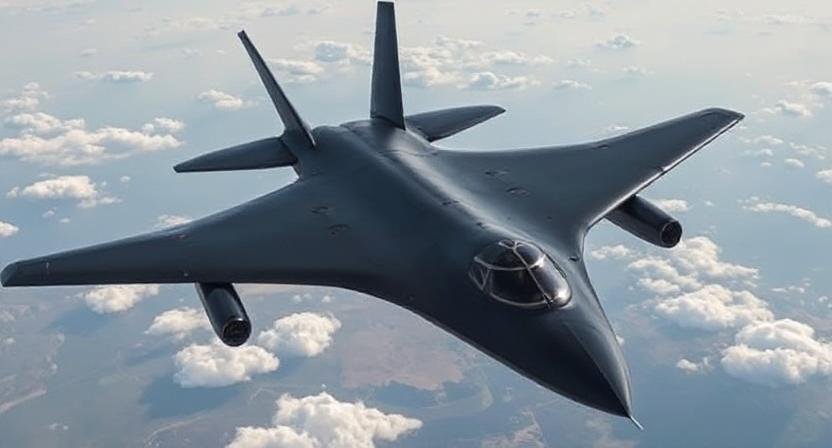
- U.S. B-2 stealth bombers deployed from Missouri, possibly en route to Guam, amid Iran-Israel conflict escalation.
- President Trump to decide within hours whether to join Israeli airstrikes on Iran’s nuclear facility at Fordo.
- Israel strikes Iran’s Ahvaz region, killing senior IRGC commanders and targeting missile infrastructure.
- Iran vows retaliation, warns U.S. involvement will be “extremely dangerous,” while rejecting full nuclear rollback.
WASHINGTON — The United States has moved multiple B-2 stealth bombers from Whiteman Air Force Base in Missouri toward the Pacific, signaling a possible American entry into the intensifying conflict between Iran and Israel. The deployment comes just hours before President Donald Trump is set to convene a high-stakes meeting with his National Security Council at the White House to discuss potential U.S. involvement in strikes targeting Iran’s nuclear facilities.
Air traffic control transmissions monitored early Saturday revealed B-2 Spirit bombers departing Whiteman, with one signal suggesting a likely stopover at the U.S. air base in Guam. These long-range bombers are capable of carrying the 30,000-pound GBU-57 Massive Ordnance Penetrator — bunker-buster bombs specifically designed to hit fortified underground targets like Iran’s Fordo nuclear enrichment site.
While the relocation of bombers does not necessarily indicate a final decision to strike, military officials acknowledge that such strategic posturing is aimed at giving the president credible options should he authorize offensive action. The world is watching closely, aware that any American strike on Iranian nuclear facilities could escalate the conflict into a full-scale regional war.
Regional Escalation
Tensions between Israel and Iran boiled over into open military confrontation early Saturday. Israeli Air Force jets launched a sweeping offensive targeting Iranian missile infrastructure and a suspected nuclear site in the Ahvaz region of southwestern Iran. The Israeli Defense Forces (IDF) confirmed that approximately 30 fighter jets were used in the operation.
READ MORE: China Faces Economic Fallout If Iran’s Oil Supply Is Cut Off Amid Middle East Escalation
In response, Iran launched a barrage of ballistic missiles and drones into Israeli territory, striking what Tehran described as “military and strategic sites.” No casualty figures have been confirmed as yet, but both sides claim significant damage inflicted on military infrastructure.
Israel’s foreign minister Gideon Saar declared the operation a success, stating that Iran’s nuclear capability had been set back by “two or three years.” However, critical enrichment facilities — particularly the deeply buried Fordo site — remain operational, further raising speculation that Israel alone may be unable to neutralize Iran’s nuclear program without U.S. assistance.
Commanders Killed, Tensions Soar
Israel also claimed it successfully targeted and killed three senior Islamic Revolutionary Guard Corps (IRGC) commanders during the strikes: Mohammed Said Izadi, Behnam Shahriyari, and Aminpour Joudaki. According to Israel’s Ministry of Defense, Izadi and Shahriyari were senior Quds Force officials involved in directing proxy militias across the Middle East.
Read More:U.S. Moves B-2 Bombers as Iran and Israel Exchange Strikes
Iran has not yet confirmed the deaths, but reports from Tehran suggest preparations are underway for nationwide funerals, signaling the seriousness of the blow.
Meanwhile, Iran’s President Masoud Pezeshkian, in a phone call with French President Emmanuel Macron, declared that Iran “will not reduce nuclear activities to zero under any circumstances.” While reiterating Iran’s readiness for dialogue, he made clear that military retaliation against Israeli “aggression” would continue unabated.
Diplomatic Paralysis
Efforts at international diplomacy have so far failed to de-escalate the conflict. Talks in Geneva between Iran and European envoys ended in deadlock late Friday. Iranian Foreign Minister Abbas Araghchi said Tehran will not enter new negotiations until what he described as Israeli “aggression” ends.
“We are not the ones who started this, but we will be the ones who finish it if forced,” Araghchi warned on Saturday, also cautioning the United States against any military action. “U.S. involvement will be extremely dangerous for everybody — for American forces in the region and for U.S. allies.”
Trump’s Decision Looms
According to a White House source, President Trump, currently in Washington after returning from his Bedminster golf club, will hold two emergency meetings — one Saturday evening and another on Sunday — with senior defense and intelligence officials to assess the risks and benefits of striking Iran.
Pentagon insiders say the primary option under review is a joint Israeli-American strike on the Fordo facility using U.S. B-2 bombers and Israeli F-35s. Such a move would almost certainly provoke a broader Iranian retaliation, potentially targeting American bases in Iraq, Kuwait, Qatar, and the UAE.
Though Trump has previously indicated reluctance to engage in a new Middle East war, aides say the president sees Iran’s nuclear advancement as a “red line.” Any American strike could be framed as a limited operation to destroy weapons capability, similar to past precedent in Syria and Iraq.
However, analysts warn that Iran, facing mounting internal and external pressure, may not respond with restraint. “Iran will not just sit back,” said a senior intelligence official. “They will target U.S. troops, allies, oil infrastructure — anything within reach.”
What’s Next?
The coming hours are critical. With B-2 bombers already airborne and Israeli jets pounding Iranian sites, the region teeters on the brink of a broader war. If President Trump authorizes strikes, it could mark the beginning of a new and potentially more dangerous phase in the decades-long confrontation between the West and Iran.