



-
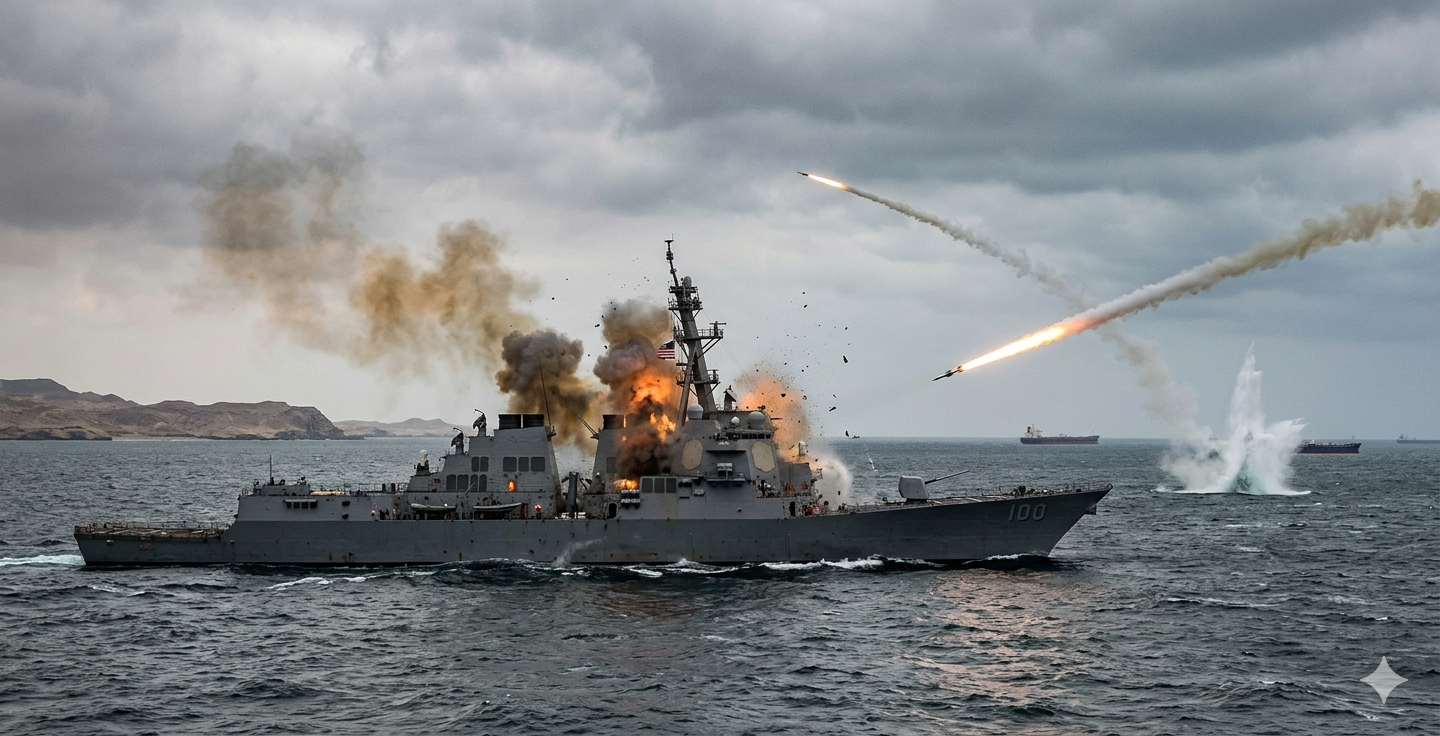
Iran missile attack on US vessel: Islamic Revolutionary Guard Corps fires missiles at US Navy vessel near Strait of Hormuz after warning ignored
- No casualties reported, but incident marks dangerous escalation in US-Iran tensions
- Donald Trump’s “Project Freedom” seen by Iran as provocation
- Oil prices likely to surge amid fears of shipping disruption and wider conflict
Tensions in the Middle East surged dramatically on Monday after Iran’s elite Islamic Revolutionary Guard Corps (IRGC) confirmed it had fired two missiles at a United States Navy vessel operating near Jask Island in the strategically vital Strait of Hormuz.
The incident marks one of the most dangerous direct confrontations between Tehran and Washington in recent months, threatening to unravel already fragile ceasefire understandings and potentially ignite a broader regional conflict.
According to an official IRGC statement, the missiles were launched after the U.S. vessel allegedly ignored repeated warnings to halt and withdraw from Iranian-monitored waters. Iranian military officials described the strike as a “measured defensive response” intended to enforce maritime security boundaries. Initial reports indicate that while the missiles struck close to or impacted the vessel, there have been no confirmed casualties or significant structural damage.
The United States has yet to release a detailed account of the incident, but defense sources acknowledged an “engagement” in the vicinity of the Strait, one of the world’s most critical oil transit corridors. Nearly a fifth of global petroleum supply passes through this narrow waterway, making any disruption a matter of immediate global economic concern.
The attack comes at a particularly volatile moment. Just hours earlier, U.S. President Donald Trump announced a new naval initiative—“Project Freedom”—aimed at escorting and guiding stranded commercial vessels through the Strait of Hormuz. The mission was framed by Washington as a humanitarian effort, responding to requests from international shipping companies whose vessels have remained immobilized for weeks amid escalating hostilities.
Tehran, however, had issued stark warnings prior to the announcement. Iranian military commanders made it clear that any attempt by U.S. forces to enter or patrol the Strait under such a mission would be treated as a provocation. Monday’s missile strike appears to signal that Iran is prepared to act on those warnings.
Iran US Talks Islamabad: Iranian Foreign Minister Arrives Tonight as High-Stakes Negotiations with U.S. Set for Breakthrough
Analysts say the implications of this confrontation could be severe. The strike not only risks triggering a direct U.S. military response but also threatens to collapse ongoing diplomatic efforts. Iran’s Foreign Ministry confirmed it is still awaiting Washington’s response to its recently submitted 14-point peace proposal aimed at ending the broader conflict. President Trump had earlier dismissed the proposal as “unacceptable,” further narrowing the space for negotiation.
“The danger here is miscalculation,” said a regional security expert. “An incident like this—especially one involving direct fire—can escalate very quickly, particularly when both sides have already drawn red lines.”
Iran US Talks Islamabad Resume Without VP JD Vance as High-Stakes Negotiations Enter Critical Phase
Global markets reacted swiftly to the news. Oil prices surged in early trading, with traders fearing a complete shutdown of maritime traffic through the Strait of Hormuz. Energy analysts warn that even the perception of instability in the region can trigger sharp increases in petroleum prices, with immediate ripple effects across global supply chains.
“If shipping lanes are disrupted or insurance premiums spike, we could see a sustained rise in fuel costs worldwide,” said an energy market strategist. “This is not just a regional issue—it’s a global economic shock in the making.”
Iran war live: US warship attacked with missiles in Hormuz by Iran’s navy
Meanwhile, the broader regional situation continues to deteriorate. Israel has intensified its military operations in both Lebanon and Gaza Strip, reportedly wounding five medics in recent airstrikes and expanding its ground footprint through what it has termed the “Orange Line.” The multi-front escalation underscores the increasingly interconnected nature of the conflict, where developments in one theater can rapidly influence others.
Military observers warn that the latest incident at sea could serve as a pretext for a larger U.S. military operation against Iran, particularly if Washington determines that its naval assets were deliberately targeted. Such a move would likely provoke a broader Iranian response, potentially drawing in regional allies and further destabilizing the Middle East.
For now, both sides appear to be treading a fine line between signaling strength and avoiding full-scale war. But with missiles already fired and warnings escalating, the margin for restraint is rapidly narrowing.
As the world watches the Strait of Hormuz—long regarded as the geopolitical fault line of global energy security—the question remains whether this latest flashpoint will be contained, or whether it will ignite a conflict with consequences far beyond the region.