



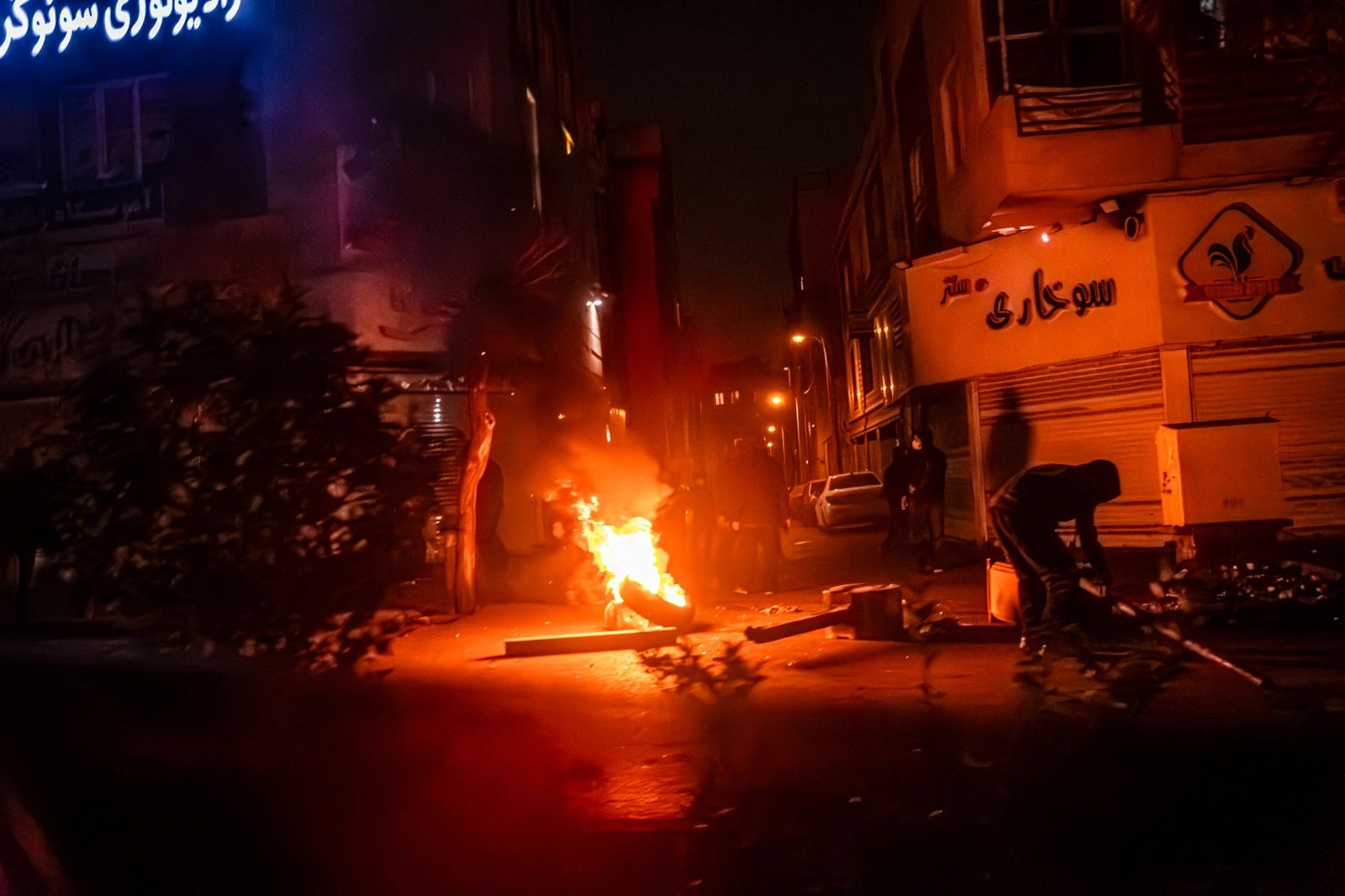
- The Iran Winter Uprising has spread to 108 cities, fueled by the Rial’s collapse to 1.46 million per USD and a merchant-led general strike.
- Verified death tolls exceed 648, with eyewitness accounts describing mass casualties at the Kahrizak morgue amid a total internet blackout.
- President Trump has imposed 25% tariffs on Iran’s trade partners, citing the regime’s “red line” violation of killing unarmed protesters.
- Despite offering “negotiations” through Foreign Minister Araghchi, the regime continues to brand protesters as “terrorists” to justify the use of live ammunition.
As of January 13, 2026, Iran is witnessing its most severe political and social crisis since the 1979 Revolution. What began on December 28, 2025, as a protest against the catastrophic collapse of the Rial has transformed into a nationwide uprising that threatens the very foundations of the Islamic Republic.
For readers from Washington to Moscow, the situation represents not just a local riot, but a geopolitical flashpoint that could reshape the Middle East.
Iran protests and the Fragility of Force: Why Hundreds of Deaths Have Failed to Restore Order
The Human Toll: Bodies and Blackouts
The exact casualty count is currently a matter of intense dispute due to a near-total internet blackout. However, reports from the Human Rights Activists News Agency (HRANA) and Amnesty International suggest a grim reality.
- Casualties: Confirmed deaths have surpassed 500, though some activist networks suggest the number could be in the thousands. At least 42 fatalities were documented in a single 24-hour window last week.
- The “How”: Security forces—including the Basij and, more recently, the IRGC Ground Forces—have moved from using rubber bullets to live ammunition. Reports describe the use of metal pellets fired at close range, often targeting the eyes of protesters.
- Eyewitness Account: A protester from the western city of Kermanshah described the scene on Friday: “The streets are literally full of blood. They are not just dispersing us; they are hunting us. I saw a 16-year-old boy shot in the back while he was trying to drag a wounded friend into a side alley. The ambulances are being used to transport detainees, not the wounded.”
Why 2026 is Different: The Economic-Political Synthesis
Almost 650 killed in Iran protests, rights group says, as supreme leader issues warning to US
Unlike the “Green Movement” of 2009 (middle-class led) or the 2022 “Woman, Life, Freedom” protests (cultural/rights led), the Winter Uprising of 2026 has bridged every social divide.
- The Bazaar-Student Alliance: For the first time in decades, the conservative merchants of Tehran’s Grand Bazaar have shuttered their shops in solidarity with radicalized university students.
- Economic Despair: The Rial has crossed 1.4 million to the dollar. Inflation is not just a statistic; it has made basic bread and medicine unaffordable for the regime’s traditional working-class base.
- Weakened Proxies: Following the June 2025 strikes by the U.S. and Israel on Iranian nuclear sites and the weakening of Hezbollah and Hamas, the regime’s “strategic depth” has evaporated, leaving it isolated.
Tehran’s Strategy: Terrorists and Television
The government’s narrative has shifted dramatically. Initially, President Masoud Pezeshkian offered a conciliatory tone, admitting that “people have legitimate demands.” However, as the protests reached all 31 provinces, the Supreme Leader and the National Security Council pivoted.
Global Watch Daily Briefing
The regime now labels all protesters as “terrorists” and “foreign agents” orchestrated by Washington and Tel Aviv. This shift is a legal precursor to using “maximum force.” By branding the movement an “insurgency” rather than a protest, the IRGC has been authorized to use heavy weaponry in Kurdish and Baluchi regions.
The “Negotiation” Mirage
Earlier this week, reports emerged that Foreign Minister Abbas Araghchi had reached out to U.S. Special Envoy Steve Witkoff. President Trump confirmed that Iran “called and wanted to negotiate” a new nuclear deal to lift the crushing sanctions.
However, the “deal” appears to be a stall tactic. Washington has demanded an immediate end to the crackdown as a precondition, while Tehran views the protests as an internal security matter. The internal rift is clear: the reformist wing of the government wants to talk to save the economy, but the hardliners believe any concession during a protest is a sign of weakness that would lead to total collapse.
Can the Regime Maintain Order?
The survival of the Islamic Republic depends on the loyalty of the security apparatus. Currently, there are flickers of dissent:
- Defections: In Kermanshah, several Law Enforcement Command (LEC) members were reportedly arrested for refusing to fire on crowds.
- Bandwidth Issues: The sheer scale of the protests (occurring in 186 cities simultaneously) is stretching the Basij thin.
While the regime still holds the monopoly on heavy arms, it has lost the “war of narratives.” Even with the internet cut, the slogans have moved from “reform” to “regime change.” For the readers in Moscow and China, the concern is a power vacuum; for those in Washington and Paris, it is a moment of unprecedented opportunity mixed with the fear of a regional war.