



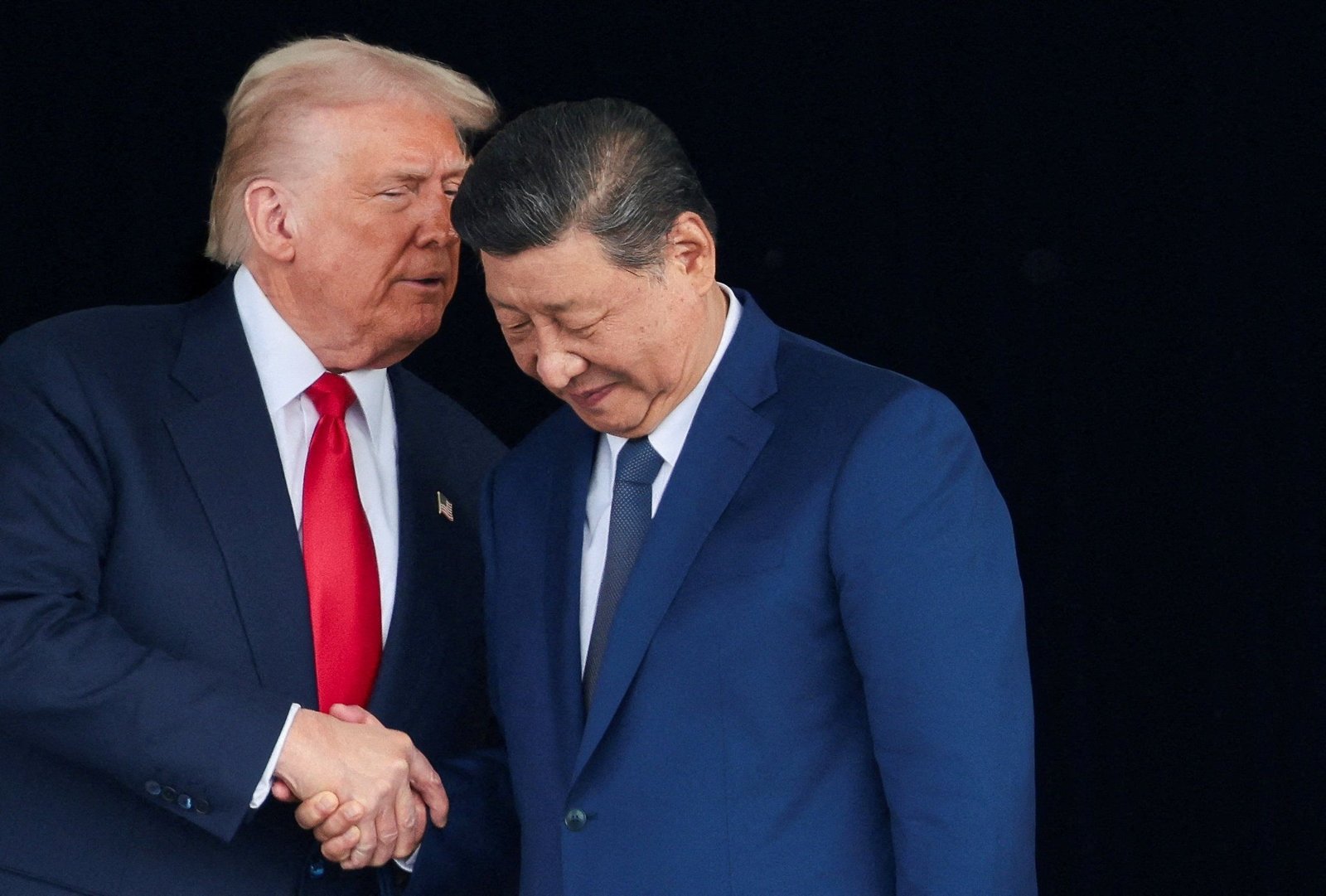
- National security strategy: Trump’s new strategy de-emphasizes ideological conflict, focusing on trade and economic relations with China.
- The policy softens language on Taiwan, signaling cautious flexibility without abandoning U.S. security commitments.
- Beijing is likely to view the document as a favorable opening for negotiations.
- U.S.–China relations remain centered on strategic competition, but economic diplomacy takes priority.
The White House’s newly released national-security strategy has sent ripples through Washington and Beijing alike. For the first time in years, a U.S. administration is signaling a softer, more nuanced approach toward China relations, downplaying ideological confrontation and placing trade, economic diplomacy, and U.S.–China trade war issues at the forefront. Analysts are now asking: Is this the beginning of a U.S.–China thaw, or merely a tactical repositioning for leverage?
On Friday, the Trump administration unveiled a 30-page blueprint that redefines Washington’s foreign-policy priorities. While the document maintains the language of “strategic competition” regarding Taiwan conflict, it markedly refrains from naming China as the United States’ paramount threat—a sharp departure from the Biden-era China policy.
The paper largely frames Beijing in economic terms, emphasizing a desire for a mutually beneficial U.S.–China economic relationship while continuing to caution against predatory trade practices.
National Security Strategy: A Calculated Recalibration
Experts see this shift as a deliberate recalibration rather than a sudden embrace of Beijing. “Beijing treats every written American commitment as a negotiating floor,” said Ryan Fedasiuk, a fellow at the American Enterprise Institute. By softening language around Taiwan—from opposing unilateral changes to merely not supporting them—the Trump administration provides Beijing with a baseline from which to negotiate further, without fundamentally abandoning U.S. Indo-Pacific strategy commitments.
READ MORE: National Security Strategy
Jessica Chen Weiss, a China studies professor at Johns Hopkins University, described the strategy as “a relatively favorable turn in U.S. grand strategy” from Beijing’s perspective. The absence of repeated references to a ‘rules-based international order’, a phrase heavily used in Biden’s 2022 document, signals a broader departure from ideological framing in favor of pragmatic, power-centered policymaking.
Yet the document does not ignore traditional U.S. alliances. It underscores the importance of the Quad alliance—comprising the U.S., Japan, Australia, and India—and stresses cooperation with regional partners to deter any attempt to seize Taiwan. Even as the White House critiques European allies for “civilizational self-confidence” declines, Washington is signaling that strategic coordination in Asia remains essential.
Economics at the Core of Strategic Competition
The Trump strategy casts U.S.–China trade competition as the ultimate battleground, a pivot consistent with his first-term trade policies and second-term ambitions. The administration frames the U.S.–China relationship as one between “near-peers,” with the potential for mutually beneficial commerce tempered by vigilance against economic coercion and unfair practices. Analysts note that this duality—advocating cooperation while preserving leverage—reflects a sophisticated understanding of how Beijing wields both military and economic tools to advance its interests.
ALSO READ: Breaking News: Trump’s Tough Stance on China Reinforced by Nomination of Michael Waltz as National Security Adviser
China’s use of economic leverage against countries such as Australia, and the hollowing out of foreign industries via cheap exports, underscores why trade remains central. The new strategy attempts to thread the needle: deterring predatory practices without framing the bilateral relationship as an existential ideological struggle.
National Security Strategy: Implications for U.S.–China Relations
Is this a signal that Trump is seeking a deeper rapprochement with China? The answer is not straightforward. While Beijing is likely to interpret the softening as a diplomatic opening, Washington’s core security commitments, particularly regarding Taiwan, remain intact. The Trump administration appears focused on trade-first foreign policy rather than ideological confrontation, suggesting a transactional approach designed to maximize U.S. interests rather than reset the broader geopolitical order.
Observers caution against over-interpreting the language shift as a full thaw. “This strategy crystallizes a turn away from international leadership and democratic values toward a narrower focus on U.S. power,” said Weiss. The document criticizes multilateralism and European allies but simultaneously emphasizes that the U.S. will work with regional partners to prevent China from achieving regional dominance.
A Measured Dance with Beijing
Ultimately, the Trump strategy illustrates the fine balance the U.S. is attempting: signaling flexibility to Beijing without ceding influence in Asia. By foregrounding economic diplomacy, trade negotiations, and softening ideological rhetoric, the administration appears to be opening a door to U.S.–China dialogue while retaining leverage in security and trade.
For China, the document represents both opportunity and caution. Beijing may welcome the softer stance and the de-emphasis on ideological framing, but the United States’ commitment to regional allies and Taiwan’s security remains clear. The unfolding months will reveal whether this pivot translates into tangible cooperation or remains a tactical maneuver in the ongoing U.S.–China strategic competition.
As U.S.–China relations enter this nuanced phase, one thing is evident: the era of blunt confrontation may be giving way to a more sophisticated, economically centered rivalry—one in which rhetoric is tempered, but stakes remain higher than ever.