



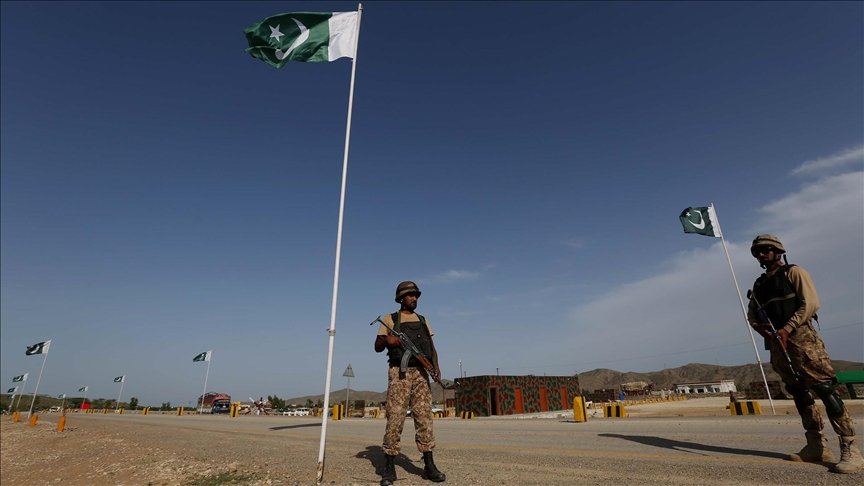
- Pakistan Afghanistan fighting has entered a new phase with strikes in Kabul, Kandahar, and Paktika.
- Global powers, including the UN, Iran, Russia, China, and Turkiye, call for de-escalation.
- Pakistan asserts its sovereign right to defend territory and eliminate cross-border threats.
- Analysts warn the escalation could reshape South Asia’s security landscape.
Pakistan has announced that it is now in “open war” with Afghanistan’s Taliban government, following a series of explosions reported in Kabul and continued fighting along the porous Durand Line. Islamabad confirmed that its military has carried out strikes inside Afghanistan, targeting Kandahar and Paktika provinces, in response to persistent cross-border attacks.
The declaration on Friday followed Taliban spokesperson Zabihullah Mujahid’s claim that Afghanistan had launched “large-scale offensive operations” against Pakistani forces along the border. The Taliban maintained that these operations were in retaliation for earlier Pakistani air strikes against militant positions inside Afghan territory.
The escalation has drawn immediate and sharp reactions from the international community, urging both sides to refrain from further fighting and avoid destabilizing the region.
Global Reactions Call for Restraint
Pakistan’s defense minister says latest clashes with Taliban mean ‘open war.’ What’s happening?
The United Nations has expressed deep concern over the surge in violence. UN Secretary-General Antonio Guterres, through his spokesperson Stephane Dujarric, called on Pakistan and Afghanistan to strictly adhere to international law, with particular emphasis on humanitarian protections for civilians. “The urgent priority is to ensure that civilians are shielded from harm as confrontations continue,” Dujarric said.
Iran has also urged restraint. Foreign Minister Abbas Araghchi emphasized dialogue and good neighbourly principles, highlighting the significance of Ramadan as a period for self-restraint and Islamic solidarity. In a post on X, Araghchi affirmed Iran’s willingness to support mediation and promote cooperation between Kabul and Islamabad.
Russia joined the chorus, calling on both sides to immediately halt cross-border attacks and resolve differences through diplomacy, offering to mediate if mutually agreed. Similarly, China expressed serious concern over the escalation, emphasizing border stability and signaling readiness to play a constructive role in reducing tensions.
Turkiye has engaged diplomatically as well. Turkish officials confirmed that top diplomat Hakan Fidan held talks with foreign ministers from Pakistan, Afghanistan, Qatar, and Saudi Arabia to discuss ways to de-escalate the conflict and prevent further civilian harm.
Pakistan’s Right to Defend Sovereignty
Pakistani analysts and officials have repeatedly underlined the country’s right to defend its territory and eliminate threats to national security, even if such measures require cross-border strikes. Defence Minister Khawaja Asif stated on X that Islamabad had exhausted all diplomatic avenues to maintain stability, both directly and through friendly countries. “Our patience has reached its limit. Now it is open war. Now there will be decisive action,” he declared.
For years, Pakistan has argued that militant networks operating from Afghan soil have orchestrated attacks against civilians and security forces within its borders. The recent airstrikes and coordinated operations represent a shift from defensive containment to proactive enforcement, signaling that Pakistan will not tolerate cross-border militancy or aggression from Afghan territory.
Analysts point out that the country’s actions serve a dual purpose: neutralizing immediate threats and sending a strategic message to Afghanistan’s Taliban administration. By targeting militant hideouts in Kandahar and Paktika, Islamabad is making it clear that failure to control armed groups within its territory will invite direct military consequences.
Afghanistan Responds with Determination
Afghan leaders, including former President Hamid Karzai, reaffirmed the country’s commitment to defend its territory. Karzai warned that Pakistan “cannot free itself from the violence and bombings it has created” and called for Islamabad to adopt a policy of good neighbourliness and respect. The Taliban maintain that their attacks along the Durand Line were retaliatory, emphasizing the cyclical nature of the conflict.
Implications for Regional Security
The escalation is set to have immediate ramifications for South Asia’s security environment. The Pakistan–Afghanistan border, historically treated as a sensitive but largely ungoverned frontier, is now an active theatre for counterterrorism operations. This shift could alter the calculus for regional actors and affect broader diplomatic and security arrangements across the subcontinent.
In the absence of structured mediation, the risk of recurring confrontations remains high. While calls for restraint from the UN, China, Russia, Iran, and Turkiye underscore global concern, the underlying dispute revolves around militancy and sovereignty rather than conventional territorial claims. Analysts warn that unless Kabul can demonstrate effective control over non-state actors operating within its territory, cross-border strikes from Pakistan may continue, setting a new precedent for military engagement in the region.
For ordinary civilians on both sides, the human cost is already mounting, with the potential for wider disruption to trade, aid flows, and regional stability. The world is watching closely as the situation develops, urging both parties to exercise restraint even as Pakistan asserts its sovereign right to protect its people.