



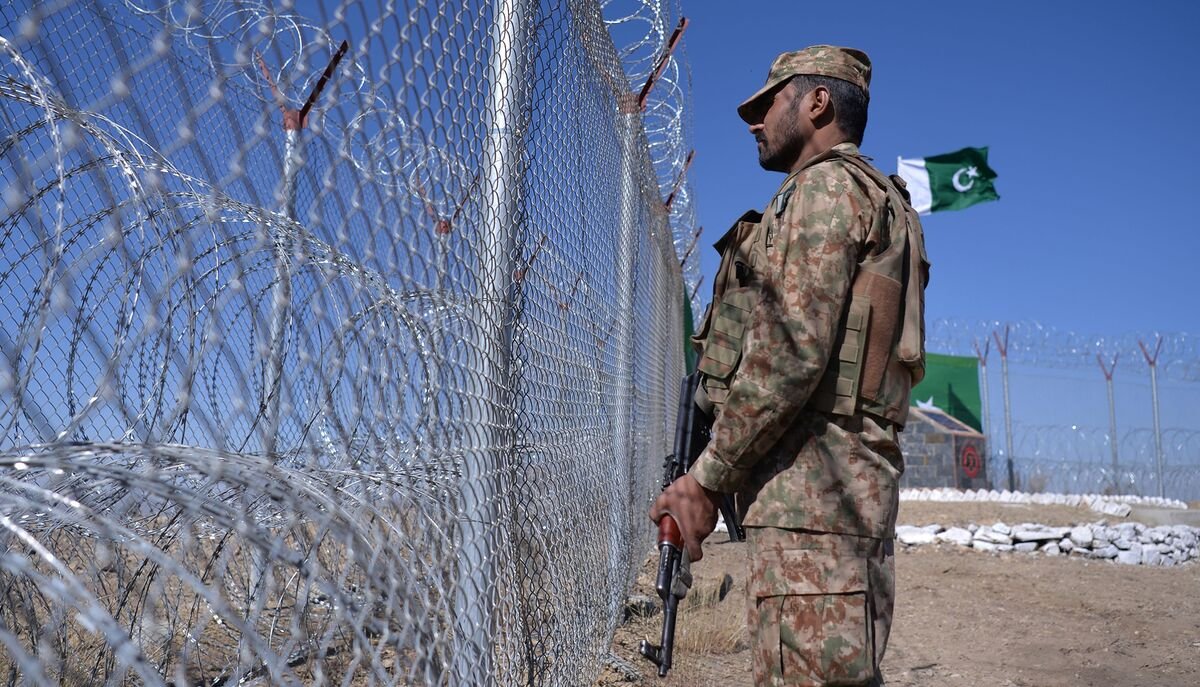
- Pakistan Afghanistan Terrorism: Pakistan accuses Afghan-based militants of a surge in cross-border attacks.
- Mohammad Sadiq urges Taliban rulers to eliminate all terrorist networks.
- Regional talks in Tehran include China, Russia, Iran, and Central Asian nations.
- Failure to act could escalate Pakistan-Afghanistan border tensions further.
Pakistan has intensified its call for Afghanistan to take decisive measures against terrorist groups operating from its soil, warning that regional stability depends on Kabul’s cooperation. Mohammad Sadiq, Pakistan’s special envoy on Afghanistan, delivered the message during a high-level regional meeting in Tehran on Sunday, hosted by Iran to discuss Afghan affairs.
The Tehran gathering included representatives from China, Russia, Iran, Tajikistan, Uzbekistan, Turkmenistan, and Pakistan, signaling the broader regional stakes in Afghanistan’s security. Sadiq emphasized that eliminating terrorist networks would not only stabilize Afghanistan internally but also encourage neighboring countries to engage economically and politically with Kabul.
“The foremost step in this regard would be to rid their soil indiscriminately of all types of terrorists,” Sadiq wrote on X. “It is imperative that the current de facto rulers take steps to ameliorate the suffering caused by these groups.”
Pakistan has blamed a surge of attacks on its soil on militants it claims are based in Afghanistan, allegations consistently rejected by Kabul. These accusations have fueled tensions, resulting in deadly border clashes in October, in which dozens of soldiers were killed on both sides.
Sadiq stressed that terrorism originating from Afghanistan represents a significant regional threat. “The threat of terrorism originating from Afghanistan’s soil is a big challenge for the region,” he said, urging the Taliban-led administration to act decisively. He added that an Afghanistan free from terrorist activity would inspire confidence among neighboring states, unlocking the country’s potential for economic growth and regional connectivity.
Despite multiple rounds of peace talks in Türkiye, Qatar, and Saudi Arabia following the October clashes, Pakistan and Afghanistan have been unable to reach a lasting agreement. Islamabad has repeatedly warned that it will act against militants in Afghanistan who threaten its security, while Kabul has vowed to retaliate against any cross-border aggression.
Experts note that Afghanistan’s internal security vacuum has allowed extremist groups to exploit the situation, posing risks not only to Pakistan but to the broader region. Pakistani authorities have documented repeated attacks on military and civilian targets, which they attribute to militants operating from Afghan territory.
The regional stakes are particularly high due to Afghanistan’s strategic location as a trade and energy crossroads. Ongoing terrorist activity threatens to undermine major economic projects, trade corridors, and infrastructure investments connecting Central and South Asia. Countries like China, Iran, and Russia, along with Central Asian neighbors, are closely monitoring the situation.
Sadiq’s remarks in Tehran underline Islamabad’s growing impatience with Kabul’s counterterrorism efforts. Pakistan insists that Afghan territory must no longer be used as a base for attacks against its soil, while Afghan authorities face mounting pressure to demonstrate tangible action against extremist groups.
Analysts warn that without decisive measures from Kabul, Pakistan may pursue more aggressive strategies to neutralize cross-border threats. The coming months could prove critical in determining whether Afghanistan can rein in militants or whether Pakistan-Afghanistan border tensions escalate further.
As Sadiq concluded, the solution is clear yet challenging: a stable Afghanistan free of terrorist havens is essential for regional security, economic growth, and sustained cooperation. The question remains whether Kabul is prepared to meet this urgent challenge or risk further conflict with its neighbor.