



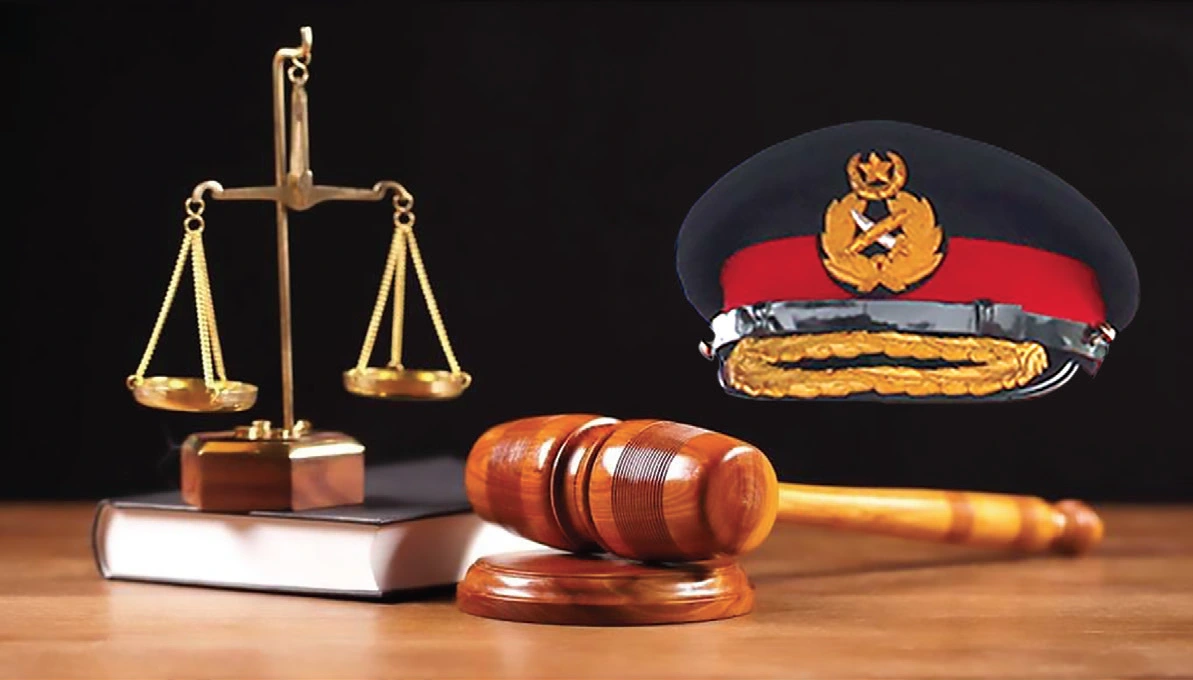
- International outcry over Pakistan’s military trials of civilians for May 9 riots.
- U.S. and EU urge Pakistan to ensure fair trials, citing ICCPR violations.
- Sentencing of 25 PTI supporters sparks concerns over judicial independence.
- Possible economic fallout as EU warns of GSP+ trade status review.
In a turn of events that has sent ripples through global human rights circles, the sentencing of 25 Pakistani civilians by a military court for their alleged involvement in the May 9, 2023, riots has raised significant alarms. Both the United States and the European Union (EU) have expressed serious concerns about the lack of judicial independence, transparency, and due process in these trials.
The U.S. State Department issued a strongly-worded statement, emphasizing that the trials conducted by military courts in Pakistan do not meet international standards for fairness and due process. “The United States continues to call on Pakistani authorities to respect the right to a fair trial and due process, as enshrined in Pakistan’s constitution,” the statement read.
Former US Marine’s Extradition Highlights Strategic Moves Against China
The United Kingdom echoed similar concerns, with officials calling the trial of civilians in military courts a process that “lacks transparency.” Human rights organizations, including the Human Rights Commission of Pakistan (HRCP), have joined the chorus, decrying the sentencing as a violation of fundamental rights.
The May 9 Riots: A Backdrop of Political Turmoil
The controversial trials stem from the violent riots that erupted on May 9, 2023, following the dramatic arrest of Pakistan Tehreek-e-Insaf (PTI) founder and former Prime Minister Imran Khan from the Islamabad High Court premises. In a matter of hours, the country descended into chaos, with angry protests spreading like wildfire. Military installations, public property, and law enforcement offices became the targets of arson and vandalism.
US, UK and EU condemn Pakistan military courts over sentencing of civilians
In response, the state launched an unprecedented crackdown on PTI supporters. Thousands were arrested, with allegations of torture and extrajudicial detentions emerging from multiple quarters. The government and military justified their actions as necessary to uphold the rule of law, citing the severity of the attacks on state institutions.
Yet, critics argue that the crackdown has veered dangerously into the realm of political persecution. The trials of civilians in military courts are seen as a direct assault on Pakistan’s fragile democratic framework, undermining its obligations under both domestic and international law.
Military Courts and the Question of Due Process
Military courts in Pakistan were originally established to deal with terrorism-related cases under special provisions. However, their jurisdiction has often been expanded in controversial ways. In the case of the May 9 riots, the decision to try civilians in these courts has drawn sharp criticism for its lack of judicial independence and adherence to basic principles of justice.
Exclussive: U.S. and Iraqi Forces Prepare for Major Offensive Against Iran-Backed Militants
The European Union, in particular, has raised red flags regarding Pakistan’s compliance with the International Covenant on Civil and Political Rights (ICCPR), to which the country is a signatory. Article 14 of the ICCPR guarantees every individual the right to a fair and public trial before an independent and impartial tribunal. The trials conducted in secrecy by military courts, critics argue, fall far short of these standards.
An EU spokesperson recently reminded Pakistan of its obligations under the Generalised Scheme of Preferences Plus (GSP+)—a trade incentive program that requires beneficiary countries to adhere to 27 core international conventions, including the ICCPR. The spokesperson warned that Pakistan’s failure to meet these obligations could jeopardize its GSP+ status, which has been crucial for the country’s textile exports to the EU.
Domestic and International Backlash
The opposition PTI has been vocal in its condemnation of the trials, with Central Information Secretary Waqas Akram calling them a “gross violation” of both international and domestic laws. Addressing a press conference in Peshawar, Akram accused the government of using military courts as a tool for political vendetta.
“This government has gone so far ahead in wiping out its political opponents due to ego and revenge that it is ready to violate Pakistan’s international agreements,” Akram said.
The Human Rights Commission of Pakistan has also expressed grave concern, emphasizing that military trials for civilians undermine the country’s justice system. “Pakistan’s commitment to democratic principles and the rule of law is being tested,” the HRCP said in a statement.
Analysis: A Grim Precedent for Pakistan
Majority in Pakistan believe the attacks on Miliitary installations were well orchestrated and unprecedented. These riots gave military legitimate reason to initiate trial of accused in iliitary courts. Althouh the Military court were established under special arrangements according to law, however, the sentencing of civilians by military courts sets a dangerous precedent, not just for Pakistan’s justice system but also for its democratic evolution. Military trials are often quick and ensure speedy justice, but they inherently lack the safeguards and transparency necessary for impartial justice. Critics argue that such actions erode public trust in state institutions and contribute to a growing sense of disenfranchisement among the populace.
From an international perspective, the issue could have far-reaching consequences for Pakistan’s diplomatic relations and economic stability. The EU’s concerns about GSP+ compliance are particularly alarming for a country already grappling with severe economic challenges. Losing preferential trade access to European markets could be a devastating blow to Pakistan’s struggling economy.
Moreover, the international condemnation underscores the broader geopolitical implications of the government’s actions. In a world increasingly focused on human rights and democratic norms, Pakistan risks isolation if it continues down this path.
A Way Forward
To mitigate the fallout, Pakistan must urgently address the concerns raised by its critics. A good starting point would be ensuring that all trials of civilians are conducted in civilian courts, as required by the constitution. Judicial reforms aimed at strengthening the independence and impartiality of the judiciary could go a long way in restoring public trust.
Additionally, the government must engage with the international community to reaffirm its commitment to human rights and democratic principles. Transparent investigations into the events of May 9, coupled with accountability for any excesses by law enforcement, could help rebuild Pakistan’s credibility on the global stage.
The May 9 riots and their aftermath have exposed deep fissures in Pakistan’s political and judicial landscape. While the state’s actions may have been aimed at restoring order, the methods employed have raised critical questions about the erosion of democratic norms and human rights.
As Pakistan faces mounting pressure from both domestic and international quarters, the path it chooses now will have profound implications for its future. Upholding the principles of justice and fairness is not just a constitutional obligation but also a moral imperative—one that Pakistan cannot afford to ignore.