



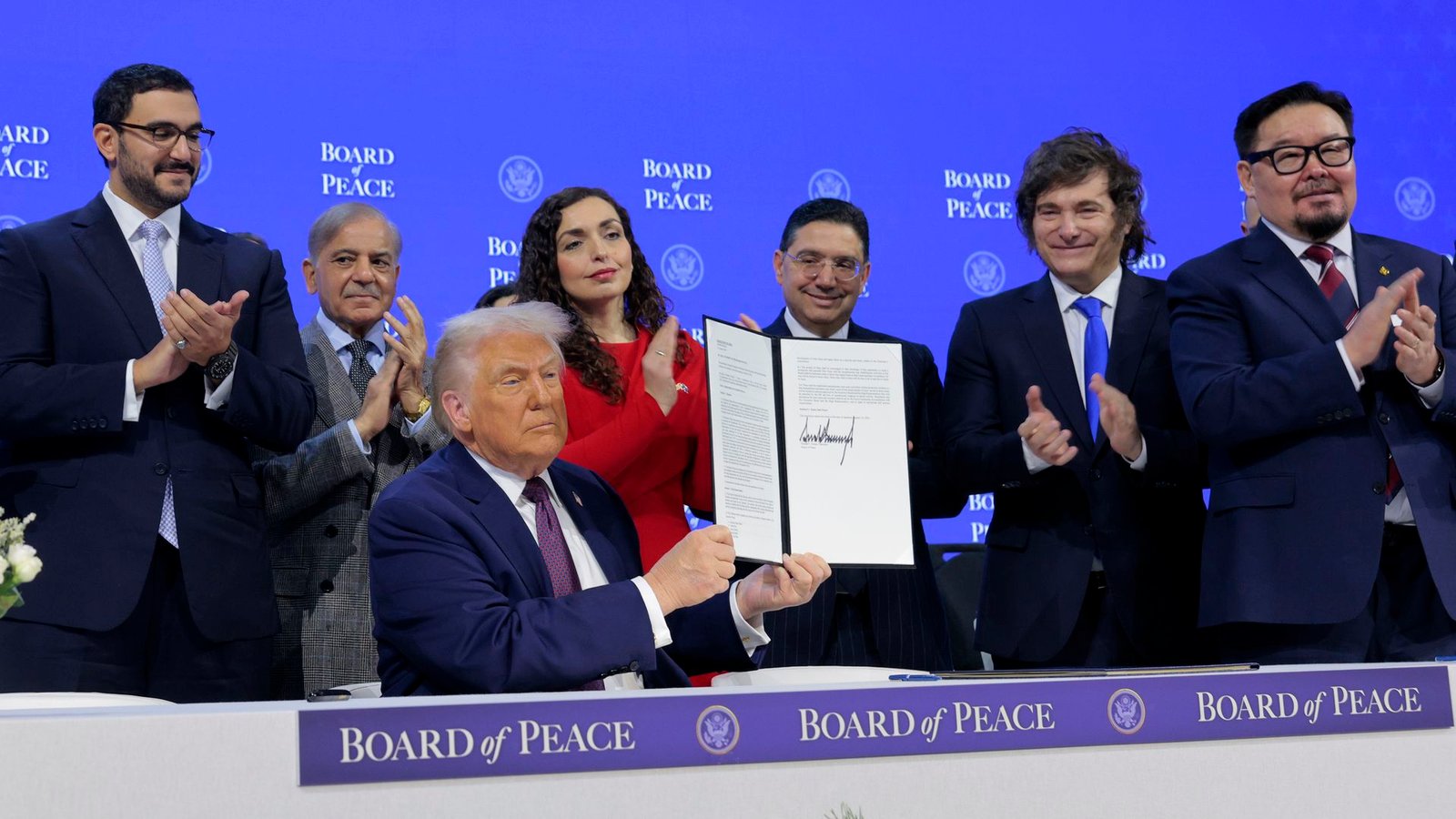
- Pakistan Prime Minister Shehbaz Sharif confirms attendance at Trump’s inaugural Board of Peace meeting.
- Participation underscores Pakistan’s principled stand on Palestine and commitment to Gaza’s stability.
- The Board of Peace aims to oversee Gaza governance and broader conflict resolution.
- Palestinian authorities and citizens welcome Pakistan’s involvement as a sign of hope.
In a bold and historic move, Pakistan’s Prime Minister Shehbaz Sharif has confirmed that he will attend the first-ever meeting of U.S. President Donald Trump’s “Board of Peace” (BoP) next week in Washington, officials from Islamabad said on Thursday. Accompanied by Foreign Minister Ishaq Dar, the Prime Minister’s participation marks a decisive commitment to the Palestinian cause and underscores Pakistan’s long-standing principled stand on Palestine.
According to sources from Gaza, the announcement has been met with palpable relief among the people of the Palestinian territories and the Palestinian Authority. For many, Islamabad’s active involvement signals renewed hope for a sustainable resolution to the enduring crisis in Gaza, which has been devastated by years of conflict, siege, and humanitarian deprivation.
The Board of Peace, initially conceived under Trump’s Gaza plan, was designed to supervise temporary governance in the Strip. Its scope has since been expanded to tackle global conflicts under the chairmanship of Trump. The initiative has been cautiously received internationally, with experts warning that it could challenge the authority of the United Nations, though more than 20 countries have reportedly signed on to participate.
Islamabad’s decision to join the Board aligns with Pakistan’s commitment to supporting Gaza within the framework of the U.N. Security Council. Pakistani diplomats have emphasized that their engagement is intended to protect Palestinian rights, advance humanitarian relief, and foster the long-term stability of the enclave.
The context for Pakistan’s involvement is grim. The two million residents of Gaza continue to grapple with the aftermath of prolonged conflict. While a ceasefire reached in October 2025 has alleviated some immediate suffering, the territory remains heavily restricted, with ongoing Israeli control over borders, land, and essential resources. Israel continues to detain tens of thousands of Palestinians and maintains a strict blockade, while Hamas retains significant military capacity in areas outside Israeli control.
Trump’s BoP is an ambitious, albeit complex, multilevel governance structure. Heads of state from 27 countries form the top tier of the Board, which also includes an executive board dominated by U.S. representatives, a multinational Gaza executive board, and a Palestinian technical committee tasked with administrative functions. An international stabilization force is envisioned to operate under the Board, though questions remain about troop contributions, funding, and precise mandates.
Phase two of Trump’s Gaza plan, which the Board will oversee, is critical. It aims to consolidate governance mechanisms, demilitarize the Strip, and begin reconstruction efforts. The success of this phase will depend on delicate diplomacy, as disarmament of Hamas remains a highly contentious issue. Palestinians insist on retaining weapons for resistance while Israel demands full demilitarization—a gulf that the Board will need to navigate with patience and skill.
For Pakistan, participation in the Board represents both an opportunity and a responsibility. By lending its voice to the highest tier of international decision-making on Gaza, Islamabad positions itself as a proactive advocate for Palestinian rights. Pakistani diplomats and policymakers will now be tasked with balancing global diplomatic pressures, regional dynamics, and the urgent humanitarian needs of the Palestinian people.
While the BoP’s effectiveness remains uncertain, Islamabad’s engagement signals a renewed commitment to principled diplomacy in the Middle East. For Gaza’s residents, Pakistan’s presence at the table is a powerful gesture of solidarity—one that could help anchor a fragile ceasefire, advance the cause of Palestinian self-determination, and shape the future trajectory of the peace process.