



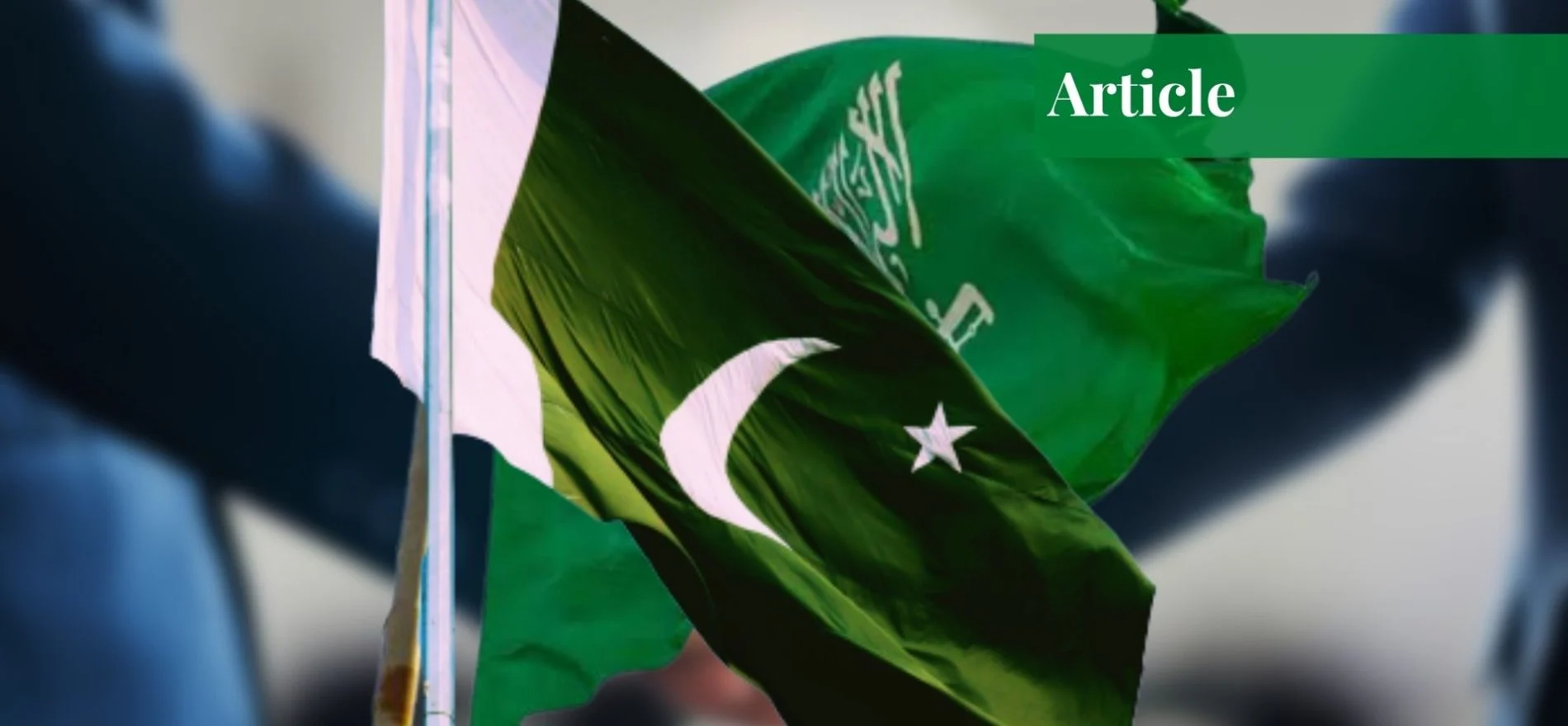
- Pakistan and Saudi Arabia signed a historic Strategic Mutual Defence Agreement in Riyadh this week.
- The pact ensures that an attack on one will be considered an attack on both, echoing NATO-style security guarantees.
- FO clarified the agreement is defensive in nature and will promote peace and stability, not threaten other states.
- Egyptian FM congratulated Pakistan, calling the pact a “milestone in partnership and trust”.
- The deal cements decades of Islamabad–Riyadh defence cooperation, dating back to the 1960s.
ISLAMABAD – The Foreign Office (FO) on Friday strongly underlined that the landmark Strategic Mutual Defence Agreement signed earlier this week between Pakistan and Saudi Arabia is purely defensive in nature, meant to ensure regional peace and stability rather than threaten any other country.
The agreement, inked on Wednesday at the Al-Yamamah Palace in Riyadh by Prime Minister Shehbaz Sharif and Saudi Crown Prince Mohammed bin Salman, represents the most significant upgrade in the bilateral defence partnership in over six decades. The pact stipulates that aggression against one state will be considered an attack on both, effectively placing Islamabad and Riyadh under a shared security umbrella.
At the weekly press briefing, FO spokesperson Shafqat Ali Khan described the accord as “an important milestone for promoting peace and security in the region and the world.” He emphasized that Pakistan and Saudi Arabia’s defence cooperation, dating back to the 1960s, had always been rooted in stability, solidarity and mutual respect.
“The Strategic Mutual Defence Agreement formalises this decades-old and robust defence partnership,” Khan said. “It is defensive in nature and not directed against any third country. It will contribute to regional peace, security and stability.”
Regional Warmth and International Support
The significance of the pact was underscored by international reactions. Khan confirmed that Foreign Minister Ishaq Dar received a congratulatory phone call from Egyptian Foreign Minister Badr Abdelatty on Thursday night. Cairo praised the agreement as a “milestone in promoting partnership and trust,” noting its potential to reinforce a cooperative security environment in the broader Muslim world.
The FO spokesperson added that both ministers discussed regional and global developments, with a shared focus on peace, stability, and economic progress. The endorsement from Egypt reflects how the Islamabad–Riyadh axis is being perceived as a stabilising force at a time when the Middle East is undergoing immense turbulence following Israel’s aggression in Gaza and shifting geopolitical alignments.
A Brotherhood Anchored in Faith and Security
Khan reiterated that Pakistan and Saudi Arabia enjoy a “long and distinguished history of brotherhood and cooperation.” He highlighted the unique nature of the bilateral relationship, which is both strategic and deeply emotional.
“[The] Pakistan-Saudi Arabia bilateral relationship is unique, enduring and multifaceted,” Khan said. “The leadership of the two countries share the common vision to take it to new heights. The relationship lives in the hearts of the people of [the] two countries. [The] people of Pakistan have special sentiments for Saudi Arabia, the land of Mecca and Madinah, and they hold the Royal family in high esteem for being the custodian of the holy sites.”
This sentiment reflects the deep historical bond whereby Pakistan has always stood by Saudi Arabia in times of security challenges, while the Kingdom has consistently supported Pakistan diplomatically and economically, particularly during times of financial strain.
Background: A Legacy of Cooperation
Defence ties between the two countries have been robust since the 1960s, when Pakistani military trainers and advisors were stationed in the Kingdom. Over the decades, joint military exercises, intelligence-sharing, and defence training programs have been at the core of this relationship.
The latest agreement, however, takes the partnership into a new era by institutionalising a mutual defence clause — a feature reminiscent of NATO’s Article 5. Analysts in Islamabad note that this is a clear message of strategic solidarity between the two brotherly states.
The deal comes at a critical juncture: Gulf states are reassessing their reliance on Western security guarantees, especially after the shifting U.S. posture in the region. By choosing Pakistan as a trusted partner, Saudi Arabia is diversifying its security alliances and sending a message of Muslim unity against common threats.
The Road Ahead
While some Western analysts speculated the pact could alter regional power balances, Islamabad has clarified that the agreement is not a tool for confrontation but for deterrence. “It is not about threatening others, it is about protecting each other,” a senior Pakistani diplomat told The Islamabad Telegraph.
The defence pact is also expected to open avenues for greater economic and technological cooperation, including the defence industry, military training, and joint security initiatives. With Saudi investments flowing into Pakistan under Vision 2030 and CPEC, the strategic partnership appears set to expand well beyond the realm of defence.
As both governments work towards operationalising the agreement, observers say the pact cements Pakistan’s role as the Kingdom’s most trusted military partner — a role that carries enormous significance for regional peace at a time of global uncertainty.