



- Putin Iran war advantage has grown as the Middle East conflict shifted global attention away from Ukraine’s battlefield and diplomacy.
- Closure risks in the Strait of Hormuz forced Washington to ease sanctions on Russian oil exports to stabilize energy markets.
- Ukraine fears the Iran war could drain Western air-defense stockpiles critical for countering Russian missile attacks.
- With global focus divided and energy revenues rising, Russia may gain strategic leverage in future peace negotiations.
By any measure, the war in Ukraine has entered a strange and uncertain phase. After more than four years of brutal fighting between Ukrainian forces and Russia’s larger military, the battlefield has become only one theater of a much wider geopolitical struggle. The diplomatic front—where peace might eventually be negotiated—has grown even more complex.
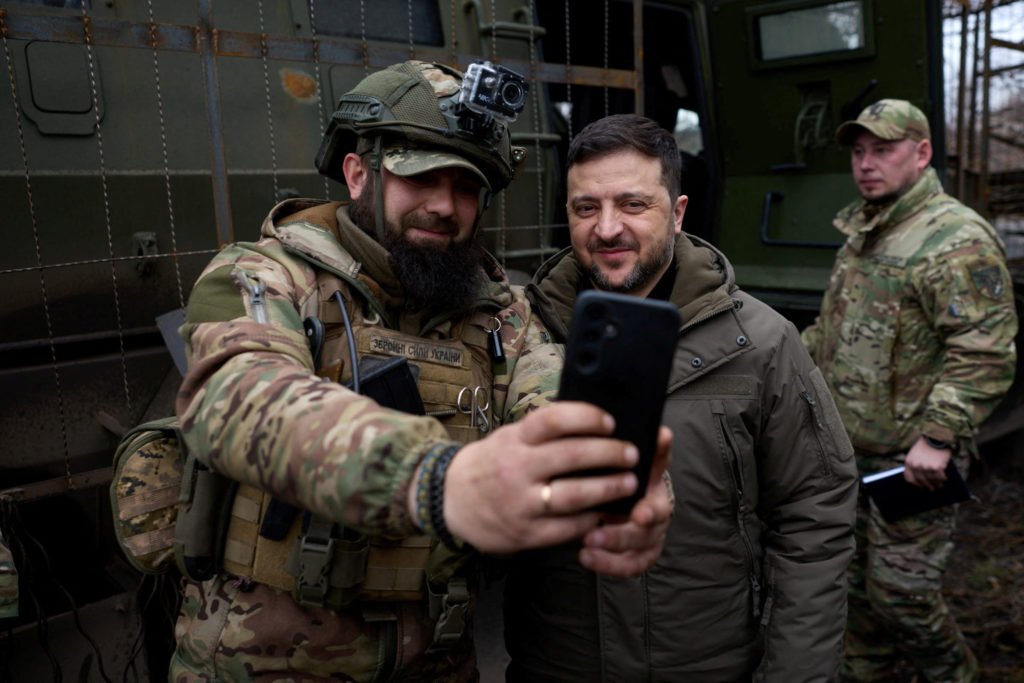
Ukrainian President Volodymyr Zelenskyy said this week that Kyiv is ready for another round of trilateral peace talks involving Washington and Moscow, yet the initiative remains stalled. For now, the timing and location of negotiations depend largely on two capitals far from Kyiv: Washington and Moscow.
Zelenskyy’s remarks underscore a stark reality. Ukraine is eager to pursue diplomacy but lacks the power to compel the major players shaping the war’s outcome. According to the Ukrainian leader, the United States had proposed hosting the next round of talks involving American, Ukrainian and Russian negotiators, including U.S. envoys Steve Witkoff and Jared Kushner. Moscow, however, has so far refused to send a delegation.
Trump Iran Strategy: What’s Driving Escalation and Future War Forecasts
“We are waiting for a response from the Americans,” Zelenskyy told reporters, signaling that Kyiv will not obstruct any diplomatic initiative. The message was clear: Ukraine is ready to talk, but the larger geopolitical currents are dictating the pace.
Those currents changed dramatically when the Middle East erupted into conflict following U.S. and Israeli strikes on Iran earlier this year. The crisis quickly escalated into a broader regional war that pulled Washington’s strategic focus away from Eastern Europe. What was once the central security crisis for the West—the war in Ukraine—suddenly found itself overshadowed by a more volatile confrontation in the Persian Gulf.
Zelenskyy says Ukraine is waiting on US and Russia to set the next round of talks
For Russian President Vladimir Putin, the shift has proven to be an unexpected geopolitical windfall. In many ways, the conflict with Iran has functioned as a blessing in disguise for the Kremlin.
The first benefit was strategic distraction. Since Russia launched its full-scale invasion of Ukraine in 2022, the West—particularly the United States—had concentrated enormous diplomatic, military, and financial resources on supporting Kyiv. But when U.S. President Donald Trump authorized strikes against Iran and the Middle East crisis expanded, Washington’s priorities inevitably shifted. Military planning rooms in the Pentagon, intelligence briefings at the White House, and diplomatic efforts in allied capitals began focusing on the escalating confrontation in the Gulf.
This diversion of attention has weakened the urgency that once surrounded Ukraine’s defense. Global headlines that once tracked every Russian missile strike now focus on Middle Eastern escalation, oil markets, and maritime security in the Persian Gulf. For Moscow, less scrutiny means less pressure.
The second—and perhaps more consequential—benefit came from energy markets. The conflict with Iran triggered instability around the Strait of Hormuz, the narrow maritime chokepoint through which roughly a fifth of the world’s oil supply passes. Even the threat of disruption sent global energy markets into turmoil.
When oil prices surged and supply fears mounted, Washington faced a difficult choice: maintain strict sanctions on Russian energy exports or stabilize global markets by easing them. The Trump administration ultimately granted temporary waivers allowing certain Russian oil shipments to move again. The move was framed as a pragmatic response to global supply shortages.
But for Moscow, it amounted to an economic lifeline.
Energy revenues remain the backbone of Russia’s wartime economy. Every additional dollar earned from oil exports strengthens the Kremlin’s ability to finance its military campaign and cushion the impact of Western sanctions. The temporary relaxation of restrictions—driven by the Iran crisis—effectively gave Russia access to the very revenue streams that sanctions had been designed to restrict.
Zelenskyy himself warned that the decision to ease sanctions was “not the right decision,” arguing that it undermined the pressure campaign against Moscow. From Kyiv’s perspective, the timing could not be worse: Ukraine continues to depend heavily on Western military aid while Russia regains financial breathing space.
The Middle East war has also introduced a third risk for Ukraine: the competition for weapons and air-defense systems. Zelenskyy has warned that the escalating conflict could drain the stockpiles of advanced air-defense systems that Ukraine relies on to intercept Russian missiles. Systems such as Patriot batteries are already in limited supply, and the growing demand for them in multiple theaters could leave Ukraine vulnerable.
Meanwhile, Moscow continues its slow but relentless campaign across Ukrainian territory. The battlefield momentum may be incremental, but time increasingly favors Russia. If Western unity weakens and sanctions pressure softens, the Kremlin may calculate that it can simply outlast Ukraine and its supporters.
This does not mean the war’s outcome is predetermined. Ukraine’s military resilience and continued Western support remain powerful factors. Yet the geopolitical environment surrounding the conflict is shifting in ways that increasingly benefit Moscow.
In the grand chessboard of global politics, crises rarely occur in isolation. The war in Ukraine was once the defining confrontation of the decade. Now it competes for attention with a volatile Middle East, energy shocks, and shifting alliances.
In that turbulent landscape, Putin may not have won the war in Ukraine—but the Iran conflict has undeniably changed the strategic equation. If anything, it has given the Kremlin what every wartime leader seeks most: time, money, and a distracted adversary.
And in the long arc of geopolitical struggle, those three advantages can prove decisive.