


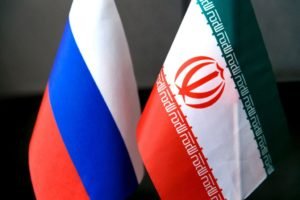
- Russia Iran U.S targeting intelligence is enhancing the precision and impact of Iranian attacks on American forces.
- Moscow is reportedly sharing detailed U.S. military locations, including warships, aircraft, and command infrastructure.
- Analysts warn that this collaboration significantly escalates the proxy dimension of the Middle East war.
- The Kremlin gains strategic leverage while avoiding direct military involvement, complicating U.S. operations.
In a striking revelation, the Washington Post has reported that Russia is providing Iran with detailed targeting information on American forces in the Middle East, marking the first concrete indication that another major U.S. adversary is indirectly engaging in the ongoing conflict. According to three U.S. officials familiar with the intelligence, Russia has been sharing locations of U.S. military assets, including warships and aircraft, since the war began on Saturday.
“The Russian assistance appears to be a pretty comprehensive effort,” one official told The Post, emphasizing the unusual depth of intelligence being shared. While Moscow has publicly called for an end to what it describes as an “unprovoked act of armed aggression,” the intelligence cooperation underscores a rapidly expanding war landscape, with one of America’s chief nuclear-armed competitors now indirectly in play.
The consequences of this collaboration are already evident on the battlefield. Six U.S. service members were killed in a drone strike in Kuwait, part of thousands of one-way drone attacks and hundreds of missile strikes directed at U.S. military positions, embassies, and civilian targets. Experts cited by The Washington Post note the precision of Iran’s attacks, which target command and control infrastructure and early warning radar systems—an operational sophistication likely enhanced by Russian intelligence and satellite data.
Iran Employing Foreigners: Pakistani Accused of Plot Against Trump Raises Global Security Concerns
Dara Massicot, a Russia military expert at the Carnegie Endowment for International Peace, noted, “They’re going after command and control. Russia’s space and targeting capabilities give Iran access to data it could not produce on its own, particularly given Iran’s limited military satellite capacity.” Nicole Grajewski of Harvard’s Belfer Center added that Iranian strikes have shown increased sophistication compared with its previous operations, suggesting a direct benefit from Russian guidance.
Russia is providing Iran intelligence to target U.S. forces, officials say
Despite these developments, U.S. officials maintain that China is not actively aiding Iran’s military operations, and Beijing has reiterated calls for an immediate ceasefire. Nevertheless, the intelligence-sharing dynamic marks a significant escalation in the proxy dimension of the conflict, reminiscent of patterns seen during Russia’s 2022 invasion of Ukraine, where Tehran, North Korea, and China provided various forms of support to Moscow.
Russia Energy Boon Iran War: Kremlin Gains Amid Strait of Hormuz Crisis
The Washington Post analysis underscores the strategic calculus in play. While Russia refrains from direct military engagement, it appears to leverage Iran’s attacks as a means of testing U.S. responses and potentially distracting Washington and European allies from the ongoing war in Ukraine.
“The Kremlin is very much considering this is not their problem and not their war,” Massicot observed. Yet, by providing targeting support, Russia positions itself to influence outcomes indirectly while potentially extracting strategic benefits, including higher oil revenues and a destabilized U.S. regional posture.
For the United States, the new intelligence dynamic raises urgent operational concerns. Pentagon officials report a rapid depletion of precision arms and air defense interceptors, compounding the challenges faced by American forces in the Gulf. The White House maintains that Iranian capabilities are being steadily degraded, but the emerging Russian-Iranian nexus adds a complex layer to Washington’s strategic calculations in the region.
As the conflict continues to evolve, the Washington Post’s reporting signals that the U.S. now faces a multi-dimensional adversarial network in the Middle East. Russia’s indirect involvement, combined with Iran’s drone and missile campaigns, represents a new frontier in proxy warfare, raising the stakes for American military operations and regional stability.