



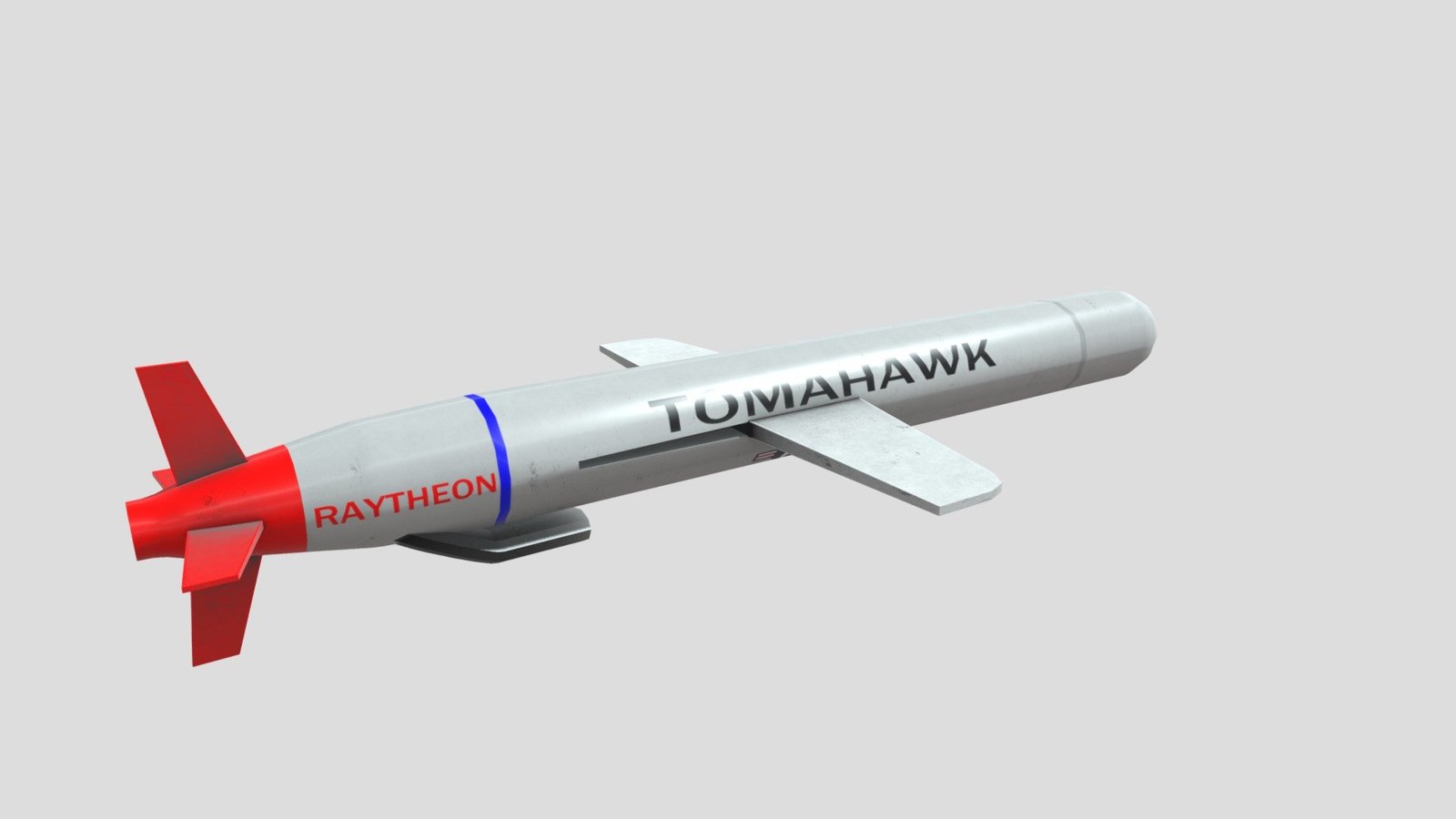
- Tomahawk missiles give Ukraine the ability to strike deep into Russian territory, including Moscow.
- Russia warns such a move would “destroy” ties with Washington and trigger harsh retaliation.
- Europe is divided: Western capitals fear escalation, Eastern states demand strength.
- A wider war looms, echoing Cold War missile crises with potential global consequences.
On a damp October afternoon in Moscow, the Kremlin’s press room buzzed with a tension that even the most seasoned correspondents could feel. Dmitry Peskov, Vladimir Putin’s spokesman, adjusted his glasses and leaned into the microphone.
“We need to wait for clarity,” he said when asked about reports that Washington might soon provide Tomahawk cruise missiles to Ukraine. The words were unremarkable on the surface, almost bureaucratic in their caution. But it was the pause, the deliberate cadence, the slight tightening of his lips, that carried the true message: Moscow saw this as something far more dangerous than another aid package.
The war in Ukraine has unfolded in bloody increments. First, Javelins and Stingers, then HIMARS and Patriots, later Abrams tanks and F-16s. Each new Western system was at first a red line, then a fact of life. Russia threatened consequences; the West crossed the line anyway. But the Tomahawk is different. It is not just another missile. It is a weapon synonymous with American power projection — sleek, long-range, once nuclear-capable, and capable of reaching the Kremlin walls themselves.
For Ukraine, the attraction is obvious. For months, Russian cruise missiles and drones have rained down on its cities from launch sites hundreds of miles away, beyond the reach of Kyiv’s current arsenal. Ukrainian officials argue, sometimes with desperation, that parity is survival. “Why should we only absorb strikes?” a Ukrainian security adviser told me in Kyiv. “If Russia can hit our cities, we should have the ability to hit theirs. That is the only way they will feel the cost of this war.”
Yet for Russia, the notion of American-made Tomahawks in Ukrainian hands is intolerable. President Putin himself was blunt: such a transfer, he said, would mean “the destruction of Moscow’s relationship with the United States.” He didn’t need to spell out the rest. In Russian military thinking, long-range, dual-capable systems blur the line between conventional and nuclear war. A Tomahawk flying toward Moscow may not carry a nuclear warhead — but how would Russia know, in the critical minutes before impact?
A Weapon of History
The Tomahawk carries its own mythology. First deployed in the 1980s, it was a child of the Cold War and the arms-control era. During the Gulf War, Americans watched on CNN as Tomahawks flew low and silent over Baghdad, announcing the start of “shock and awe.” They became the icon of U.S. military supremacy — the weapon Washington reached for when it wanted to send a message without risking pilots’ lives.
But to Moscow, they were something darker: a reminder of a time when U.S. nuclear-tipped cruise missiles sat in Europe, pointed eastward, until arms-control treaties removed them. For Russian generals who lived through that era, the idea of Tomahawks reappearing in the hands of a hostile neighbor has the whiff of déjà vu, even betrayal.
Ukraine’s Calculus
In Kyiv, the mood is a mixture of exhaustion and grim defiance. The city has learned to live with the drone sirens that cut through the night. Posters of fallen soldiers paper the streets, reminders that the war’s cost is measured not only in territory but in blood. In Independence Square, I spoke to a young woman whose fiancé was killed near Bakhmut. She held a small candle and spoke with a quiet fury: “They attack us from far away. They destroy our homes, our schools. If America gives us these missiles, maybe Russia will finally understand what they have done to us.”
For Ukraine, Tomahawks represent more than firepower. They are a chance to pierce the sanctuary Russia has enjoyed, to force Moscow to defend its own cities rather than bomb others with impunity. But Kyiv knows the risks. To use American Tomahawks to strike Moscow or St. Petersburg would invite a ferocious response, not just against Ukraine but potentially against the United States itself. Ukrainian officials insist they would target military logistics hubs, not civilian centers. Yet in war, intentions have a way of shifting with the battlefield.
Europe’s Uneasy Silence
Across Europe, the debate is raw, whispered in the corridors of Brussels and Paris, shouted in Warsaw and Vilnius. For Germany and France, the very mention of Tomahawks is a nightmare — a weapon that could pull NATO into direct confrontation with Russia. In private, diplomats worry about escalation spirals, about sleepwalking into a conflict that neither side can control.
Eastern Europe, by contrast, is less restrained. Polish and Baltic leaders argue that Russia’s threats should not dictate Western policy. “Every time Moscow sets a red line, and we cross it, they adjust,” a Polish official told me. “The only language Putin understands is strength. The Tomahawks should be given, and they should be used.”
This division — between caution in Western Europe and militancy in the East — mirrors the continent’s broader struggle to define its role in the war. Is NATO a shield, or is it a sword? And how much risk is Europe willing to bear to ensure Ukraine’s survival?
Washington’s Dilemma
Hovering over all of this is Washington, where Trump has been characteristically opaque. “I don’t want to escalate the war,” he said, before adding that he had “sort of made a decision.” The ambiguity is intentional, a hallmark of his political style. Yet the stakes are clear. To release Tomahawks is to signal that America is willing to risk more than it ever has in this conflict — and to accept that Moscow will treat the move as direct involvement in the war.
The Pentagon knows what that means. Tomahawks are not like HIMARS rockets or even F-16 jets. They are strategic weapons, designed to strike deep into enemy territory. Once launched, there is no taking them back. To greenlight their transfer is to cross a line that has so far kept the U.S. in the realm of proxy support rather than direct escalation.
Russia’s Options
What would Moscow do if Tomahawks arrive? The Kremlin has many tools short of nuclear retaliation. It could intensify strikes on Ukrainian infrastructure, aiming to cripple Kyiv before the missiles become operational. It could expand cyberattacks on Western systems, striking banks, grids, and communications. It could target supply hubs in NATO countries, testing the alliance’s willingness to respond.
And yet, the nuclear shadow lingers. Russian doctrine allows for escalation if the state itself is threatened. A Tomahawk streaking toward Moscow, even conventionally armed, could trigger just such an interpretation. In the Kremlin’s eyes, the missile is not simply metal and circuitry; it is a question of sovereignty, of survival.
A Wider War?
What happens if the Tomahawk becomes the spark for a broader conflagration? Already, the war has morphed from a local struggle into a proxy contest. With long-range U.S. cruise missiles in play, the temptation for Russia to retaliate against Washington — through cyber, through space, through allies — grows. The possibility of miscalculation increases. So too does the risk that China, Iran, or other powers might be drawn in, seeing opportunity in distraction or chaos.
The parallels to the Cold War are eerie. In 1962, the world nearly burned over missiles in Cuba. In the 1980s, Europe lived in fear of cruise missiles stationed on both sides of the Iron Curtain. The INF Treaty ended that nightmare. Today, with treaties dead and trust shattered, the specter has returned.
The Shadow That Remains
The Tomahawk may never reach Ukrainian soil. Trump may decide the cost is too high, or Congress too divided. But even the debate has changed the war’s psychology. It has forced Europe to confront the abyss of escalation. It has forced Russia to declare red lines in stark, uncompromising terms. It has given Ukraine a glimpse of a weapon that, once imagined, will be hard to renounce.
And so, the Tomahawk hangs over this war like a shadow — not yet launched, not yet real, but already altering the decisions of generals and presidents alike. It is a reminder that in modern war, symbols can be as dangerous as steel, and that a single missile, even before it is fired, can redraw the map of global security.
The question is no longer whether Tomahawks will escalate the war. The war itself, brutal and unrelenting, is escalating. The missiles are merely the shape of what comes next.