



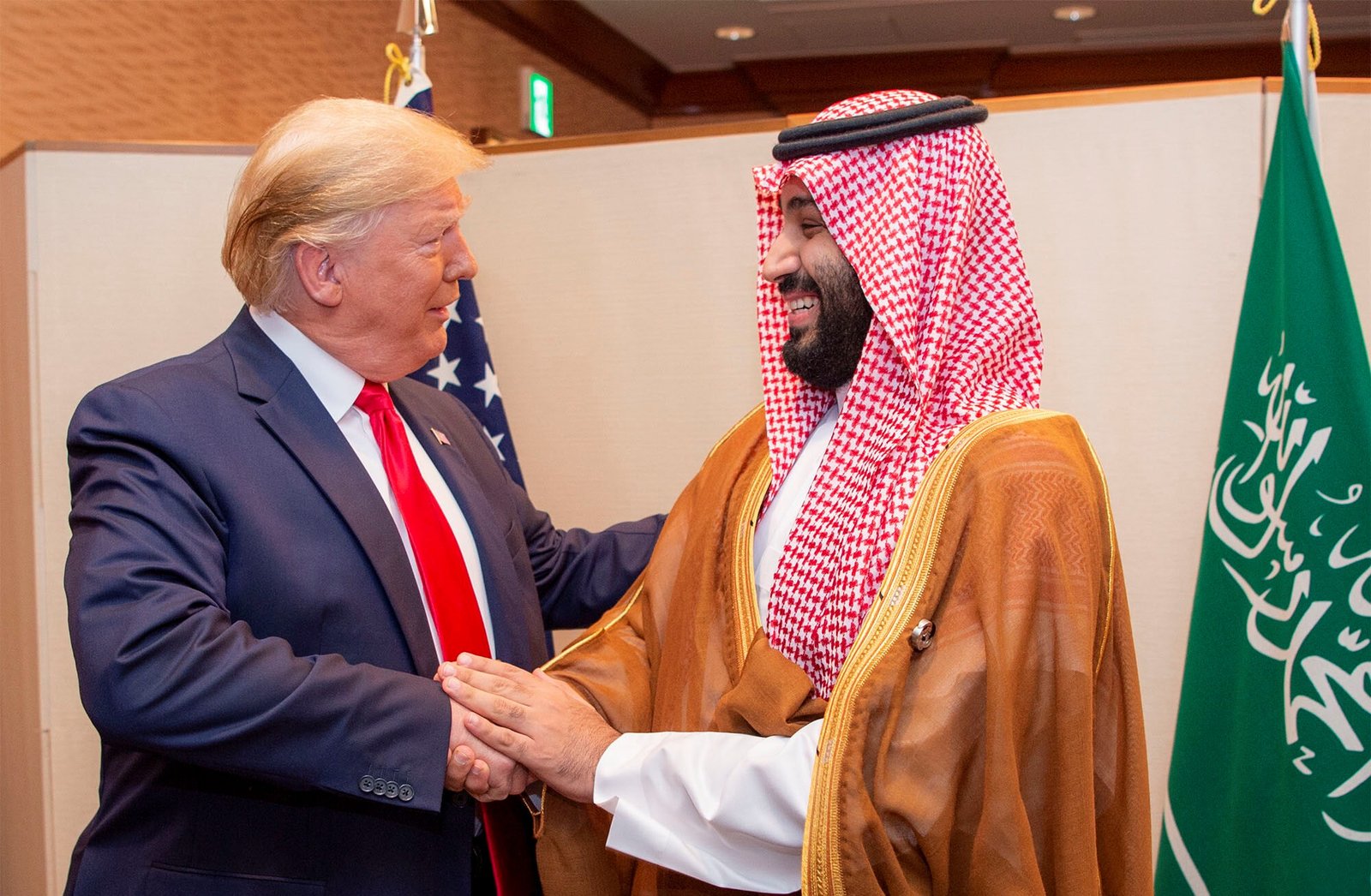
- Saudi Arabia foreign policy has shifted toward a mediation-led strategy to protect Vision 2030 economic interests.
- The MBS Trump partnership resulted in the historic lifting of Syrian sanctions in July 2025.
- On December 27, 2025, the Saudi-led coalition issued a decisive warning to Yemeni separatists to maintain national unity.
- Saudi mediation in the Af-Pak border crisis led to a 15% reduction in major military incidents in late 2025.
In the rapidly shifting terrain of Middle East geopolitics and South Asia security dynamics, Saudi Arabia under Crown Prince Mohammed bin Salman has emerged as a central diplomatic powerbroker. Once associated primarily with military assertiveness, Riyadh has recalibrated its regional posture, prioritizing mediation, political stabilization, and economic leverage.
This transformation has coincided with the return of President Donald Trump to the White House in January 2025, reviving a pragmatic Saudi-US partnership focused on conflict de-escalation rather than ideological nation-building.
From Yemen’s internal fractures to post-Assad Syria, from Afghanistan-Pakistan border tensions to the Ukraine war, Saudi diplomacy has increasingly intersected with Washington’s evolving foreign policy doctrine.
This analysis evaluates how MBS’s initiatives have contributed to reducing escalation, while also highlighting the structural limits and political risks embedded in transactional diplomacy. The Saudi-US axis, driven by stability, investment security, and strategic balance, is reshaping regional alignments at a time when global power centers are in flux.
Saudi Arabia Foreign Policy: From Battlefield Power to Diplomatic Broker
Saudi foreign policy has undergone a notable transformation under MBS. The kingdom’s early reliance on direct military intervention—most visibly in the Yemen conflict beginning in 2015—has gradually given way to a strategy anchored in diplomacy, economic statecraft, and selective pressure. This shift reflects both domestic imperatives, particularly Vision 2030, and regional realities, including the need to manage Iranian influence without perpetual warfare.
READ MORE: Syria Geopolitics 2025: The Rise of Ahmed al-Sharaa and the Saudi Blueprint
The renewed partnership with Trump has reinforced this approach. Riyadh increasingly serves as an intermediary between Washington and complex regional actors, positioning itself as a stabilizing force rather than a belligerent power. Critics argue this model prioritizes short-term stability over long-term governance reform, but supporters contend that it reflects geopolitical realism in an era of declining Western appetite for prolonged conflicts.
Yemen War Update: Saudi Warnings, Coalition Strains, and the Unity Question
Saudi Arabia’s evolving doctrine is particularly visible in Yemen, where Riyadh has intensified efforts to preserve the authority of the internationally recognized government while preventing fragmentation within the anti-Houthi coalition. In late December 2025, Saudi-led forces issued firm warnings to UAE-backed southern separatists, demanding a withdrawal from strategically vital provinces rich in energy resources and trade routes.
ALSO READ: Trump and MBS have big ambitions for the Middle East. Bold action must follow.
These warnings were accompanied by limited military signaling designed to deter escalation without triggering wider violence. Saudi officials emphasized that any attempt to undermine the central government would face consequences, framing their actions as protective rather than punitive. The objective, according to Riyadh, is to prevent Yemen from splintering further amid an already devastating war.
Saudi Arabia has also continued its humanitarian engagement, facilitating large-scale aid deliveries and backing localized ceasefires that have measurably reduced civilian casualties in contested zones. However, tensions with the UAE-backed Southern Transitional Council underscore persistent intra-Gulf rivalries, complicating efforts to unify Yemen under a single political framework.
While critics argue that Saudi pressure risks prolonging instability, proponents see these moves as evidence of a recalibrated policy aimed at preserving state institutions rather than managing chaos through proxies.
Syria News: MBS and the Architecture of Post-Assad Stabilization
The collapse of Bashar al-Assad’s regime in late 2024 reshaped the Syrian political landscape and opened a narrow window for regional re-engagement. Saudi Arabia, under MBS’s direction, played a pivotal role in facilitating the transition, advocating for pragmatic engagement over continued isolation. The emergence of Ahmed al-Sharaa as interim leader marked a controversial but strategic shift, prioritizing governance capacity over ideological purity.
MBS leveraged his relationship with President Trump to push for the removal of long-standing US sanctions, arguing that economic strangulation would only reignite instability. The subsequent easing of restrictions in mid-2025 unlocked regional investment and accelerated reconstruction, enabling the transitional government to consolidate territorial control and reintegrate fractured opposition factions.
Saudi-sponsored reconciliation forums helped reduce militia violence in key urban centers, while economic reactivation improved growth projections for the first time in over a decade. Trade corridors linking Syria with Gulf markets were reopened, symbolizing Syria’s cautious return to the regional fold.
Despite these gains, concerns persist over political freedoms and accountability. Human rights organizations continue to document abuses, warning that stabilization without institutional reform carries long-term risks. Even so, many regional analysts describe Saudi Arabia’s Syria policy as a calculated attempt to neutralize extremism through integration rather than exclusion.
Afghanistan-Pakistan Tensions: Saudi Arabia’s Quiet Mediation Role
Escalating Afghanistan-Pakistan border tensions in late 2025 tested Saudi Arabia’s diplomatic reach in South Asia. Cross-border militant activity and retaliatory strikes threatened to spiral into a wider security crisis. MBS stepped in quietly, hosting dialogue sessions aimed at reducing tensions and encouraging restraint, even as direct ceasefire agreements proved elusive.
Saudi engagement focused on urging Afghan authorities to dismantle militant infrastructure and adopt responsible border governance, framing stability as a prerequisite for international legitimacy and economic assistance. Riyadh’s broader economic engagement with Pakistan, including large-scale investment pledges, reinforced its leverage in pushing for de-escalation.
While clashes did not cease entirely, the intensity and frequency of major incidents declined in the months following Saudi intervention. Analysts note that Saudi Arabia’s influence remains constrained by the Taliban’s internal dynamics, but its role as an external stabilizer has nonetheless contributed to preventing a broader regional crisis.
Ukraine War Latest: Global De-escalation and the Trump-MBS Parallel
The Saudi-US partnership operates within a wider global context shaped by President Trump’s renewed push to end long-running wars. In the Ukraine conflict, Trump has signaled urgency, pressing for negotiated settlements and warning that security guarantees are not indefinite. Casualty figures and economic exhaustion have intensified calls for compromise, even as Europe shoulders an increasing share of the burden.
While Saudi Arabia is not a direct player in Eastern Europe, the parallels are striking. In both Ukraine and the Middle East, Trump’s approach emphasizes deals over doctrines, and outcomes over ideals. MBS’s success in influencing US policy on Syria reflects how regional actors can shape Washington’s calculations through strategic alignment rather than confrontation.
Crown Prince Mohammed bin Salman has repositioned Saudi Arabia as a central force in regional de-escalation, working in tandem with President Trump’s transactional foreign policy framework. From Yemen’s fragile unity and Syria’s cautious reintegration to Afghanistan-Pakistan stabilization efforts, Saudi diplomacy has produced tangible, if uneven, results.
Reduced violence, sanctions relief, and economic commitments underscore progress, yet structural challenges remain. Governance deficits, unresolved militant threats, and intra-regional rivalries continue to test the durability of these gains. For the Saudi-US partnership to deliver lasting stability, de-escalation must be paired with inclusive political frameworks and accountable institutions.
In an era defined by strategic fatigue and shifting alliances, MBS’s approach reflects a hard-nosed realism—one that may not resolve every conflict, but has undeniably reshaped the rules of engagement across the Middle East and South Asia.