



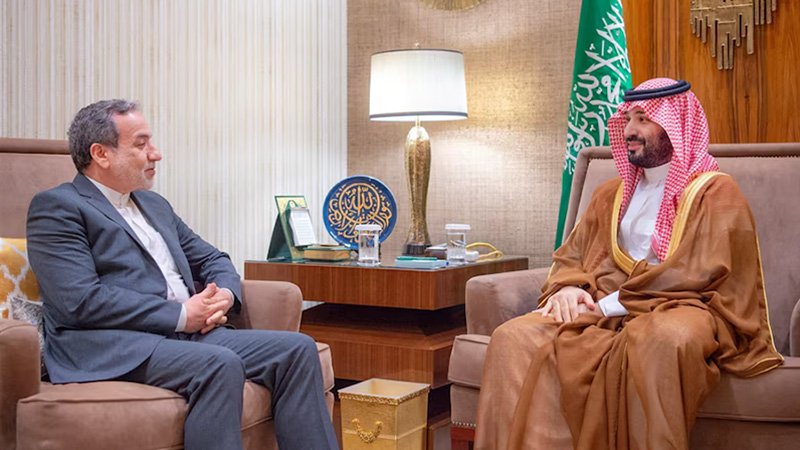
- Saudi Arabia joins war against Iran after missile strikes on Aramco energy infrastructure
- Gulf states Oman and Qatar align with coalition following Iranian regional attacks
- U.S.–Israel campaign expands across Middle East as Hezbollah opens Lebanon front
- Oil markets surge and global economy faces shock from widening Gulf war
The Middle East war expanded dramatically on Monday after Saudi Arabia officially entered the conflict against Iran, launching retaliatory strikes following what Riyadh described as a “deliberate act of war” targeting critical Saudi infrastructure — including one of the world’s largest oil processing facilities operated by Saudi Aramco.
A senior Saudi security source confirmed exclusively to The Islamabad Telegraph that Saudi military forces initiated coordinated air and missile operations against Iranian targets late Monday after Iranian missiles struck multiple locations across the kingdom, including energy facilities in the eastern province and areas near Riyadh.
“This was no longer containment. This was direct aggression against Saudi sovereignty and global energy security,” the source said, adding that the kingdom’s response was conducted “in coordination with allied partners.”
The escalation marks the first time Gulf Arab states have openly joined the ongoing U.S.–Israeli military campaign, transforming the conflict from a bilateral confrontation into a regional war involving multiple state actors.
Gulf Coalition Forms After Iranian Strikes
Saudi Arabia’s entry into the war was quickly followed by alignment from Oman and Qatar, according to regional diplomatic sources, after Iranian missile and drone attacks struck Gulf cities, airports, and military installations over the weekend.
Iranian retaliatory strikes targeted several Gulf capitals following the U.S.–Israeli campaign that killed Iran’s Supreme Leader and senior military leadership. Missiles and drones reportedly struck or were intercepted over Doha, Manama, Dubai, and Kuwaiti territory, causing casualties and widespread infrastructure disruption.
‘Missile debris’ sparks fire at Saudi’s Aramco oil refinery
Analysts say the attacks fundamentally altered Gulf calculations.
For years, Gulf Cooperation Council states sought neutrality between Tehran and Washington. However, direct strikes on civilian and energy infrastructure forced a rapid strategic shift.
“The Gulf states crossed a psychological red line,” a regional defense analyst told The Islamabad Telegraph. “Once energy infrastructure and cities were hit, neutrality became politically impossible.”
Expansion of the U.S.–Israeli Campaign
The widening coalition comes as the United States and Israel intensified aerial operations across Iran under an ongoing military campaign that officials say could last weeks.
U.S. President Donald Trump described the war as a decisive effort to eliminate Iranian military capabilities, calling it “the most consequential security operation in decades.”
Israeli forces claimed aerial superiority over Tehran, striking intelligence headquarters, missile sites, and command centers. Explosions were reported across Tehran, while civilians fled major urban areas amid fears of prolonged bombardment.
At the same time, Iran expanded its retaliation beyond Israel, targeting U.S. bases and allied facilities across the Gulf and even striking a British military installation in Cyprus, signaling the conflict’s widening geographic scope.
Aramco Strike: The Turning Point
Saudi officials say the decisive moment came when Iranian missiles struck facilities linked to Saudi Aramco — infrastructure central to global oil supply chains.
Energy analysts warn the attack represents one of the most dangerous escalations in modern energy geopolitics.
The targeted refinery processes millions of barrels per day and serves as a cornerstone of global oil stabilization mechanisms. Even limited disruption triggered immediate spikes in crude prices, sending shockwaves through financial markets already rattled by halted shipping through the Strait of Hormuz.
Saudi Crown Prince Mohammed bin Salman, who had earlier warned Tehran against escalation, reportedly authorized full retaliatory authority to Saudi armed forces following emergency consultations with Washington.
War Spreads Across Multiple Fronts
The conflict is no longer confined to Iran and Israel.
In Lebanon, Iran-aligned Hezbollah launched missiles toward Israeli territory, prompting massive Israeli airstrikes on Beirut’s southern suburbs. Casualty figures continue to rise, raising fears of another full-scale Lebanon war.
Meanwhile, Gulf states activated integrated air-defense systems after Iranian drones struck near U.S. installations in Kuwait and security zones in Bahrain, home to the U.S. Fifth Fleet.
Video verified by international media showed American aircraft crashing during operations near Kuwaiti territory, though officials confirmed all crew survived.
Regional airspace closures have paralyzed aviation routes across the Middle East, while maritime insurance costs surged amid attacks on oil tankers.
Global Economic Shockwaves
Markets reacted immediately.
Oil prices surged into double-digit gains as shipping traffic stalled and hundreds of tankers halted movement across Gulf waters. Analysts warn prolonged disruption could push crude toward historic highs, threatening fragile global economic recovery.
Air travel through major hubs such as Dubai and Doha has been severely disrupted, while supply chains across Asia and Europe face mounting delays.
Energy economists warn the conflict now represents the greatest threat to global energy stability since the 1970s oil crises.
Political and Strategic Risks for Washington
Despite military momentum, the expanding war presents political risks for Washington. Early polling indicates limited domestic support for prolonged conflict, and U.S. casualties have already been reported following Iranian strikes on regional bases.
European governments have expressed concern over escalation, stopping short of endorsing the campaign while urging diplomatic pathways.
Yet diplomacy appears distant. Iranian leadership figures have publicly rejected negotiations, vowing continued retaliation.
A New Regional Security Order Emerging
Military strategists increasingly describe the conflict as the Middle East’s transition from proxy warfare to direct state-on-state confrontation.
For Gulf monarchies, the war represents an existential calculation: defend sovereignty and energy infrastructure or risk appearing vulnerable to continued attacks.
“The Gulf states did not choose this war,” a senior regional diplomat said. “But after missiles landed in their cities, they believe they no longer had a choice.”
With Saudi Arabia now openly aligned alongside U.S. and Israeli operations, the conflict has entered an unpredictable phase that could redraw regional alliances for decades.
The key question now facing policymakers worldwide is no longer whether the war will expand — but how far it will go.