



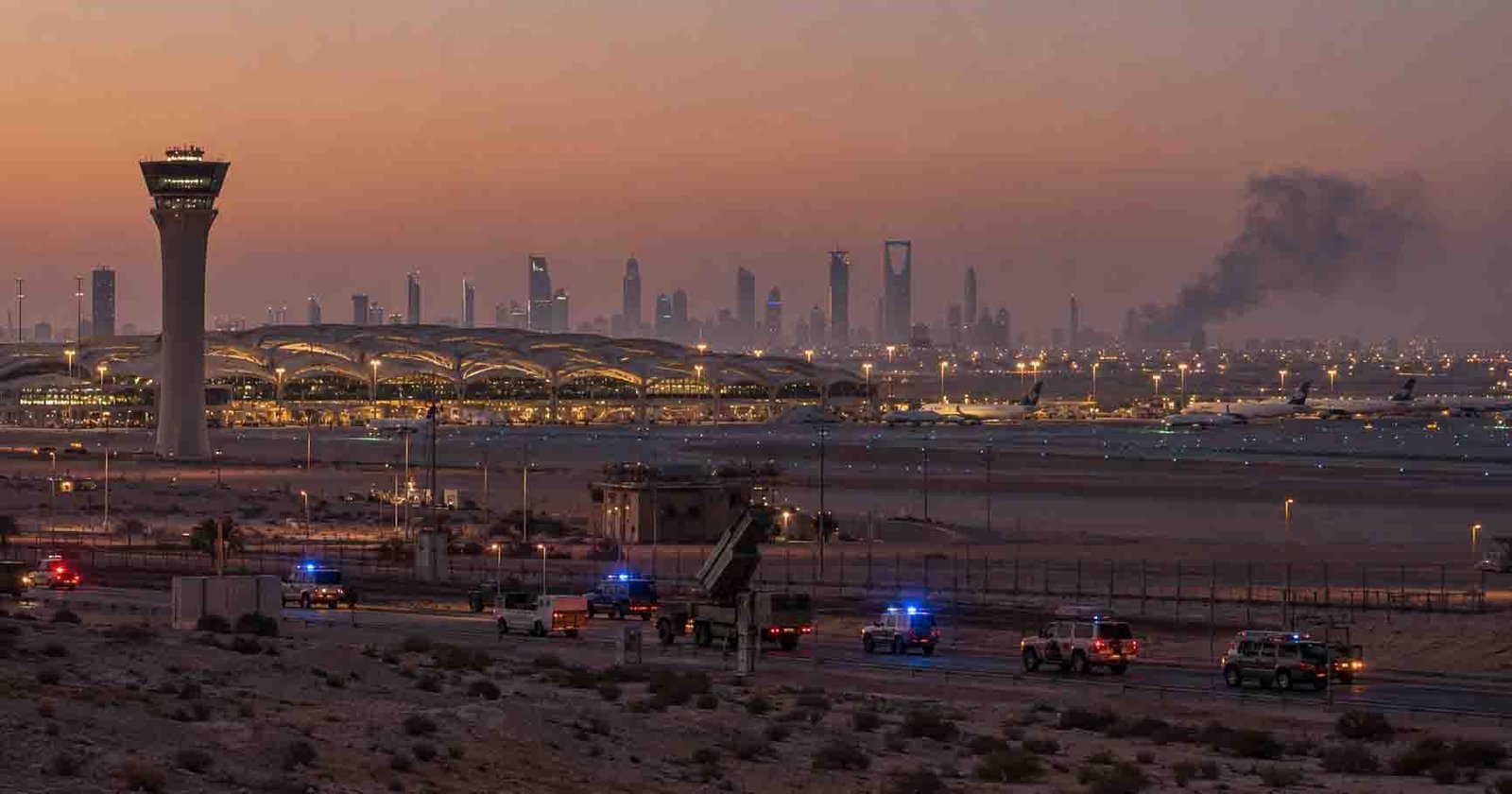
- Houthi attacks on Saudi Arabia: The reported Riyadh airport casualties highlight growing risks to civilian infrastructure and regional aviation.
- The Mecca Defence Alliance faces pressure to translate defence cooperation into practical deterrence.
- A possible resumption of US strikes could intensify pressure on the Houthis while increasing the risk of regional escalation.
Riyadh is burning politically, strategically and economically as Yemen’s Houthi movement takes its most devastating toll on Saudi Arabia in more than a decade.
A missile attack on King Khalid International Airport killed at least 12 people and wounded 309 others on Saturday, transforming an escalating border conflict into a regional security crisis that could draw Pakistan, Saudi Arabia and Turkey into a more direct military confrontation with the Iran-backed movement.
The attack, the third against Riyadh’s airport this week, followed a Saudi-backed Yemeni government offensive against Houthi positions along the strategically vital Red Sea coast. Its scale has intensified discussions about a coordinated response under the Mecca Defence Alliance, raising the possibility that the three partners could move beyond defensive cooperation if Saudi Arabia’s security continues to deteriorate.
Mecca Defence Alliance Shift: Saudi-Led Ground Offensives Force Houthi Retreat
US President Donald Trump is also weighing his options. Asked whether Washington might join Saudi strikes against the Houthis, he said the administration would examine the situation and make a decision quickly. The statement leaves open the possibility of renewed American military strikes, potentially widening a conflict already threatening vital maritime routes and regional stability. <escape>Reuters</escape>
A deadly escalation with strategic consequences
Saudi authorities said the dead included four Saudi citizens, two Bangladeshis and nationals of the United States, Egypt, Jordan, Syria, Palestine and Sudan.
Hospitals received hundreds of casualties, some critically injured, while flights were diverted and airport operations disrupted. The absence of a warning from Saudi Arabia’s threat-alert system raised serious questions about the country’s ability to protect critical civilian infrastructure from increasingly sophisticated attacks.
12 killed, 309 injured in attack on Riyadh airport, GACA confirms
The Houthis have declared Saudi airspace a military operations zone and warned airlines against flying into the kingdom. The attacks have also exposed the limits of air defence: even an advanced military cannot guarantee that every missile or drone will be intercepted, particularly when adversaries combine repeated launches, multiple attack vectors and pressure on surveillance systems.
For Saudi Arabia, the consequences extend beyond casualties. Riyadh is preparing to host major energy and investment gatherings central to its international economic ambitions. Prolonged airport disruption, travel warnings and uncertainty over the safety of commercial facilities could undermine investor confidence at precisely the moment the kingdom needs to demonstrate that its economic transformation can proceed despite regional warfare.
The Houthis, meanwhile, have demonstrated that they can impose costs far beyond the territory they control. Their strategy appears designed not merely to defend their positions in Yemen but to raise the political and economic price of the Saudi-backed offensive.
Operation Dawn of Yemen raises the stakes
Saudi Arabia and its partners have intensified military operations alongside the internationally recognised Yemeni government. The coalition announced a major campaign, Operation Dawn of Yemen, on October 5, reporting that 100 fighter aircraft had participated and that hundreds of targets had been struck.
These figures are coalition claims and have not been independently verified. Yemeni government forces are attempting to regain territory along the Red Sea coast, including areas near Bab el-Mandeb, one of the world’s most strategically important maritime chokepoints.
Air campaign against Houthis under way in Yemen, says Saudi-led coalition
The latest airport attack suggests the Houthis intend to answer territorial losses with strikes against Saudi infrastructure. That creates a dangerous cycle: coalition air operations may weaken Houthi military capacity, but retaliation against cities, airports and energy facilities could increase pressure on Riyadh to expand the war.
The central question is whether air power and Yemeni ground forces can deliver a decisive outcome. Saudi Arabia’s previous intervention, launched in 2015, failed to dislodge the Houthis from Sanaa and became a prolonged conflict with enormous humanitarian consequences.
A renewed campaign faces the same fundamental difficulty: degrading a movement’s military capabilities is not the same as dismantling its political and territorial control.
Houthi attacks on Saudi Arabia: Pakistan, Turkey and Saudi Arabia weigh their next move
The Mecca Defence Alliance is now facing its most consequential test since its formation. At an emergency meeting in Riyadh on October 5, Saudi Arabia, Pakistan and Turkey discussed the security threats confronting the kingdom and agreed to strengthen the alliance’s operational arrangements. Pakistan’s Foreign Office confirmed that the three countries were advancing the pact’s institutional and defence cooperation.
A coordinated operation against the Houthis is a possible next stage, but it should not be confused with a confirmed decision to launch joint offensive strikes.
The distinction matters: deploying forces to defend Saudi territory, reinforcing air and missile defence, sharing intelligence and supporting logistics would carry different political and military implications from sending troops into Yemen to fight the Houthis directly.
Pakistan brings established military cooperation with Saudi Arabia and the capacity to contribute trained personnel, air-defence expertise and operational support. Turkey offers defence technology, drones and a substantial military-industrial base. Saudi Arabia supplies the geographical access, financial resources and immediate strategic interest.
Together, these capabilities could strengthen deterrence. But direct combat would expose all three partners to retaliation, casualties and the risk of a prolonged campaign in Yemen’s difficult terrain. Ankara would also have to navigate its domestic political and legal processes before any substantial overseas combat deployment.
For Islamabad, the decision would be particularly consequential. Pakistan has strong strategic and economic ties with Saudi Arabia, but entering an offensive war could expose its personnel to sustained attacks and complicate relations with other regional actors.
The most likely initial step is therefore deeper defensive coordination, with a shift to offensive operations dependent on the scale of further Houthi attacks and decisions by the three governments.
Trump’s decision could change the war
Trump’s warning that Washington may resume strikes introduces another variable. American intervention could provide additional intelligence, surveillance and precision-strike capabilities, increasing pressure on Houthi missile and drone networks. Yet previous US operations against the movement have demonstrated the limits of air power alone in compelling a durable political settlement.
A renewed American campaign could also provoke retaliation against shipping and regional infrastructure, while increasing the risk of a wider confrontation involving Iran.
Washington must therefore weigh the immediate need to deter attacks against the possibility that a larger campaign will create new vulnerabilities.
The next phase will depend on whether the Houthis continue targeting Saudi cities and civilian facilities, whether Yemeni government forces can consolidate their advances, and whether the Mecca alliance remains defensive or assumes a more offensive role.
Saturday’s bloodshed has made the stakes unmistakable. Saudi Arabia faces a direct challenge to its territorial security, Pakistan and Turkey must decide how far their commitments extend, and Trump is considering whether American force should again enter the conflict. If diplomacy fails and attacks continue, the danger is no longer simply another round of fighting in Yemen. It is the emergence of a wider regional war with consequences for civilian safety, global energy markets and shipping through the Red Sea.