



- Sheikh Mohammed bin Rashid Al Maktoum has propelled Dubai into a top-tier global hub with GDP per capita (PPP) exceeding $87,000, zero personal income tax, and an unmatched business-friendly framework.
- Comprehensive economic growth supported by world-class infrastructure, the Golden Visa framework, and the Dubai Economic Agenda (D33) targeting AED 32 trillion in economic output.
- Systemic transformation of education through Knowledge and Human Development Authority (KHDA) standards, the 1 Million Arab Coders initiative, and the Digital School reaching refugee populations.
- Expansive humanitarian outreach via the Mohammed bin Rashid Al Maktoum Global Initiatives (MBRGI), directing billions in aid to Gaza, Sudan, Africa, and over 122 nations.
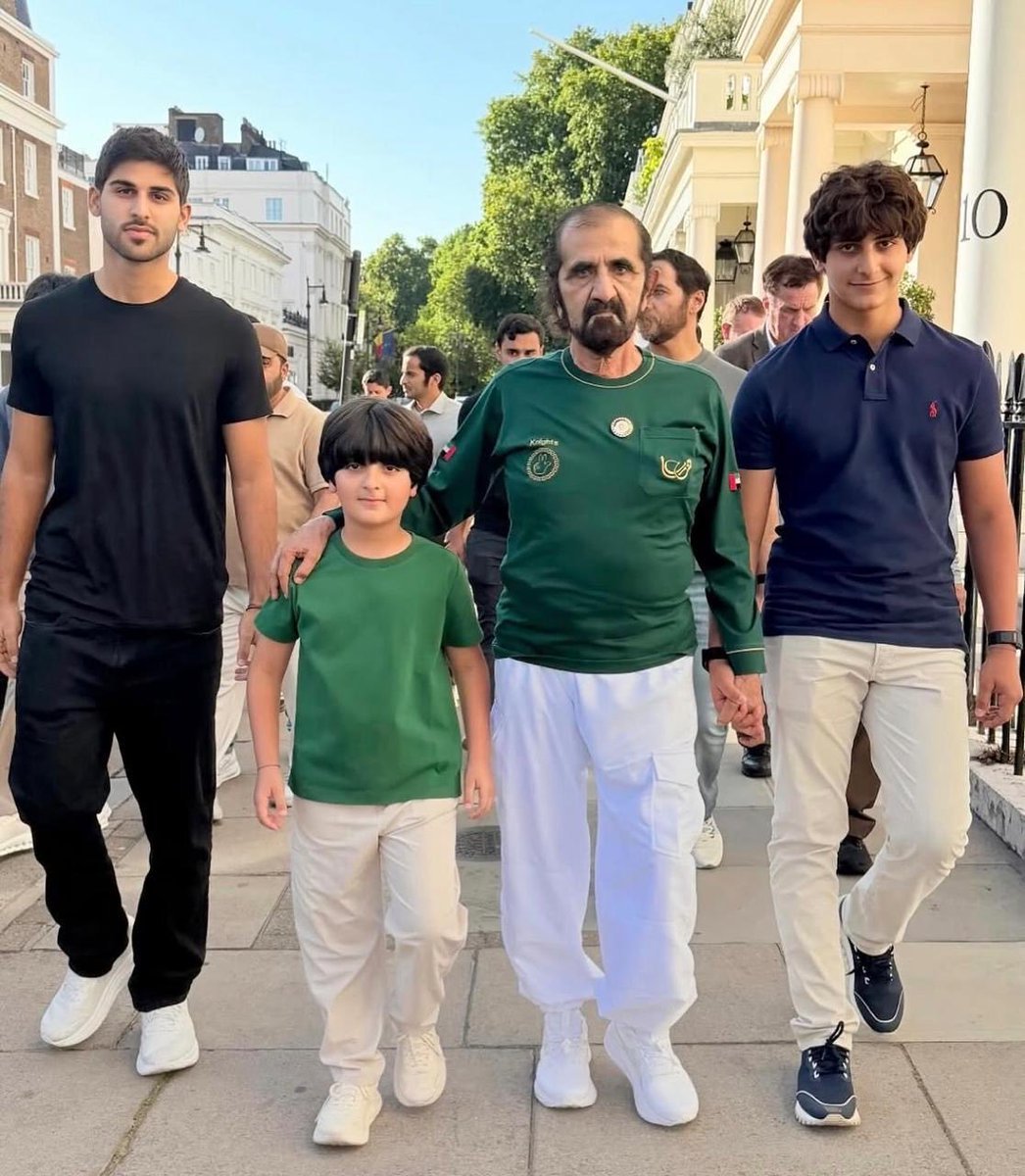
LONDON / DUBAI — On a bright late-summer afternoon in London, far from the soaring glass spires and climate-controlled boulevards of the Gulf, a passerby along Knightsbridge might have caught sight of an unassuming group taking the air. Among them was a tall, serene figure in a casual green polo and white trousers, walking side-by-side with his young grandsons.
To the casual British pedestrian, he looked like any grandfather enjoying a seasonal respite. To the rest of the world, he was His Highness Sheikh Mohammed bin Rashid Al Maktoum, Vice President and Prime Minister of the United Arab Emirates and the undisputed architect of modern Dubai.
Shortly after the walk, Sheikh Mohammed took to his official channel on X to share a quiet observation with his millions of followers:
“Life taught me… that the greatest investment in vacations is not the number of cities we visit… but the number of moments we create with our families. Beautiful memories are happiness and energy that drive us to more work, achievement, and success.”
In those two succinct sentences lies the core paradox of one of the most remarkable statebuilders of the modern era. Here is a ruler who built a global metropolis that measures itself by the superlatives of human engineering—the tallest tower, the largest artificial island, the busiest international airport—yet insists that the truest measure of wealth is inner contentment and shared human connection.
READ MORE: Zayed Sustainability Prize: How the UAE’s Global Award Is Transforming Lives and Rewriting the Future
To understand Dubai in the twenty-first century is to understand this exact synthesis of drive and peace, a philosophy that has transformed a quiet desert creek into the vibrant beating heart of global commerce, culture, and aviation.
The Economic Model: Per Capita Wealth, Business Agility, and the Job Market
When Sheikh Mohammed assumed a primary leadership role in the 1980s and officially became the Ruler of Dubai in 2006, the geopolitical and economic consensus surrounding the Gulf was strikingly conventional. Hydrocarbons were king, and regional stability was treated as a fragile commodity. Most observers expected small emirates to manage their oil reserves conservatively, invest in sovereign bonds abroad, and accept their geographic destiny on the periphery of world trade.
Sheikh Mohammed rejected every premise of that consensus. Recognizing early that Dubai’s modest oil reserves would not sustain future generations, he championed a relentless strategy of economic diversification.
Today, non-oil sectors contribute over 92% of Dubai’s GDP. The emirate’s economic model is grounded in exceptional individual and institutional prosperity:
-
Per Capita Income & Wealth: The UAE boasts a nominal GDP per capita of over $54,000, with a Purchasing Power Parity (PPP) figure exceeding $87,000, positioning it among the top tier of high-income nations globally. Dubai alone hosts over 72,000 high-net-worth individuals (HNWIs) and dozens of billionaires, attracted by tax efficiency, capital security, and lifestyle quality.
-
Zero-Tax Business Framework: By offering 0% personal income tax, 100% foreign business ownership in specialized free zones, and robust legal protections based on common-law principles within the Dubai International Financial Centre (DIFC), the emirate has created an environment for global business.
-
Dynamic Job Market & Capital Magnet: Driven by initiatives like the 10-year Golden Visa program, Dubai attracts tech founders, hedge fund managers, healthcare professionals, and engineers. Expatriates comprise over 85% of the workforce, creating a job market across financial technology, AI, logistics, and clean energy.
-
The D33 Agenda: Under the Dubai Economic Agenda (D33), the emirate aims to double its economic output to AED 32 trillion ($8.7 trillion) by 2033, cementing its rank among the top three global cities for business, tourism, and investment.
Sheikh Mohammed bin Rashid Al Maktoum : Engineering Infrastructure and Living Standards
Where international consultants saw risk, Sheikh Mohammed saw foundational infrastructure. In 1985, with $10 million in initial capital and two leased aircraft, he spearheaded the establishment of Emirates Airline. Critics predicted failure in a competitive global aviation sector; today, Emirates anchors a network linking every continent through Dubai International Airport (DXB).
READ MORE: H.H. Sheikh Maktoum appointed chair of Dubai Real Estate Corporation Board
The expansion of Jebel Ali Free Zone turned a coastal stretch into one of the world’s most efficient shipping hubs. In late 1999, he launched Dubai Internet City and Media City, offering foreign tech firms dedicated infrastructure long before global tech giants established regional Middle Eastern footprints.
In urban design, Sheikh Mohammed treated Dubai as a canvas. The sail-shaped Burj Al Arab redefined hospitality. The engineering marvel of Palm Jumeirah expanded the coastline, and in 2010, the 828-meter Burj Khalifa became a global architectural symbol. Engraved on the façade of the Museum of the Future is a quote by Sheikh Mohammed that captures his governing mantra:
“The future belongs to those who can imagine it, design it, and execute it. It isn’t something you await, but rather create.”
To elevate civic standards, Sheikh Mohammed established government service benchmarks, setting up the world’s first Ministry of State for Happiness and Wellbeing and implementing zero-bureaucracy initiatives aimed at eliminating redundant administrative steps across public offices.
Educational Transformation and Future Readiness
Recognizing that physical infrastructure must be matched by human capital, Sheikh Mohammed restructured Dubai’s education landscape through a combination of institutional oversight and regional development programs:
- KHDA Standards & School Excellence: The Knowledge and Human Development Authority (KHDA) enforces international quality benchmarks across private and public schools, hosting over 17 distinct curricula while elevating literacy and STEM capabilities.
- 1 Million Arab Coders: Launched to equip youth across the Arab world with digital skills, this program provided free software development training to over one million young individuals, creating pathways into the global remote digital economy.
- The Digital School: Under the umbrella of the Mohammed bin Rashid Al Maktoum Global Initiatives (MBRGI), this initiative provides AI-driven, accredited online education to underserved youth and refugees in war zones, targeting over one million students worldwide with multi-lingual, accredited curricula.
- Mohammed bin Rashid School of Government (MBRSG): Designed as an academic institution focused on public policy in the Arab world, training civil servants in modern public administration and data-driven governance.
Global Humanitarian Leadership: Gaza, Sudan, Africa, and Beyond
Beyond urban statecraft, Sheikh Mohammed’s legacy includes an international humanitarian apparatus designed to provide relief during humanitarian crises, irrespective of geographic or political boundaries.
Through the Mohammed bin Rashid Al Maktoum Global Initiatives (MBRGI)—which brings together more than 30 humanitarian and civil foundations—over AED 2.3 billion ($626 million) is spent annually, impacting over 165 million lives across 122 countries.
MBRGI Annual Global Reach (Key Pillars)
├── Total Annual Expenditure: AED 2.3+ Billion (~$626M)
├── Annual Beneficiaries: 165+ Million People across 122 Countries
├── Humanitarian Aid & Relief: AED 625+ Million (53M+ beneficiaries)
├── Healthcare & Disease Control: AED 872+ Million
└── Sustainable Endowments: AED 7+ Billion in long-term assets
Specific Interventions in Gaza, Sudan, and Africa:
- Support for Gaza: Under direct orders from Sheikh Mohammed, MBRGI committed tens of millions of dollars in direct food assistance to Palestine. In partnership with the UN World Food Programme (WFP), MBRGI allocated over AED 43 million ($11.7 million) specifically for Gaza relief, bringing total UAE-WFP commitments past AED 230 million ($62.6 million). Additionally, the Mohammed bin Rashid Humanitarian Ship initiative dispatches millions of meals and medical equipment to Gaza alongside Operation Chivalrous Knight 3.
- Emergency Relief in Sudan: Following conflict-driven displacement in Sudan, Sheikh Mohammed directed airlifts carrying hundreds of tonnes of shelter kits, medical supplies, and food baskets managed through Dubai Humanitarian (formerly International Humanitarian City)—the world’s largest emergency logistics hub.
- African Educational & Healthcare Projects: MBRGI initiatives have dug thousands of water wells in drought-stricken African regions under the UAE Water Aid Foundation (Suqia), provided vision-saving treatments to millions through * Noor Dubai*, and built schools in rural Africa through Dubai Cares.
- Global Food & Endowment Campaigns: Global food drives, including the 100 Million Meals campaign and the Mothers’ Endowment campaign (raising over AED 1 billion to fund education for millions worldwide), demonstrate a structured approach to addressing poverty.
The Lessons from Knightsbridge
Back on the streets of London, as Sheikh Mohammed walked alongside his grandsons, the quiet wisdom of his online message resonated across oceans.
For a ruler who has constructed a modern skyline, true peace is found in the simple act of holding a child’s hand. True success is not measured solely in miles traveled or economic statistics, but in the internal quietude that comes from family, legacy, and dedicated purpose.
As Pakistan and the broader international community evaluate models of rapid economic modernization and humanitarian outreach, Dubai stands as an example of what is possible when vision meets execution. When the tall towers are built and the trade routes established, the ultimate crown of leadership remains the contentment of its people and the service rendered to humanity.