



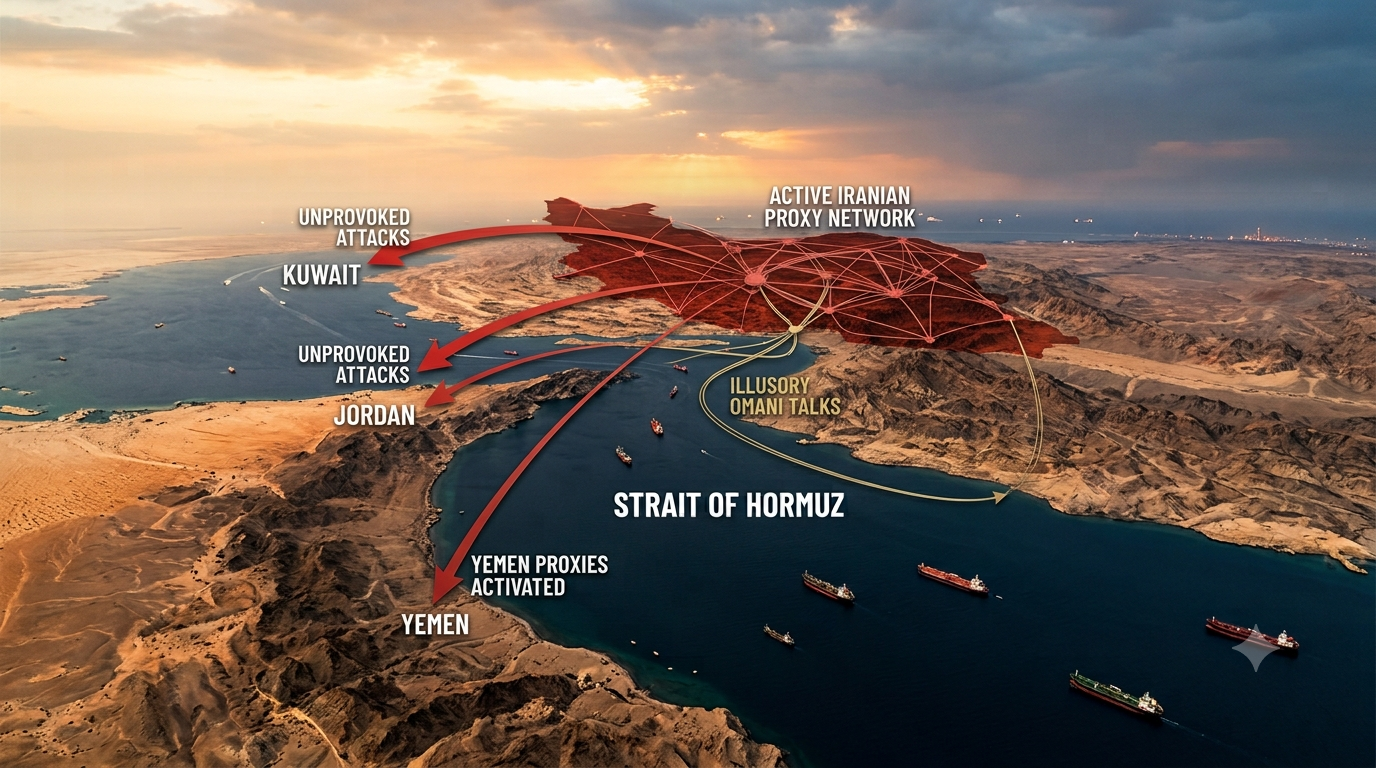
- Strait of Hormuz navigation negotiations collapsed after Iran rejected Oman’s 50/50 shared control proposal, demanding dominant authority over vital shipping corridors.
- Chief mediators from Pakistan, Qatar, and Oman were caught off guard as Tehran maintained diplomatic pretexts while preparing offensive military strikes behind the scenes.
- Unprovoked missile attacks targeting Jordan and Kuwait have shocked analysts who believed Iran was genuinely seeking a negotiated end to hostilities.
- Activated proxy networks in Yemen and across the Middle East are expanding the conflict footprint, putting global energy transit and international security at grave risk.
For weeks, international observers and diplomatic envoys held out hope that a peaceful resolution could be reached across the negotiating table. High-level mediation efforts led by Oman, alongside chief facilitators from Pakistan, Qatar, Turkey, and Egypt, were actively working toward a structured framework designed to de-escalate hostilities and establish a binding 10-day ceasefire.
Representatives from these countries engaged in intense shuttle diplomacy, driven by the belief that Iran’s leadership was seeking an honorable exit from a costly and expanding confrontation.
However, behind this diplomatic facade lay a far more volatile reality. While Iranian diplomats appeared to negotiate in good faith in Muscat and Doha, Tehran’s military apparatus was quietly preparing a sudden, multi-front offensive. The illusion of progress shattered completely when Iranian forces launched surprise, unprovoked ballistic missile strikes against neighboring targets in Jordan and Kuwait.
                          ┌───────────────────────────┐
                          │   TEHRAN DUAL STRATEGY    │
                          └─────────────┬─────────────┘
                                        │
                 ┌──────────────────────┴──────────────────────┐
                 ▼                                             ▼
    ┌─────────────────────────┐                   ┌─────────────────────────┐
    │   DIPLOMATIC CHANNEL    │                   │    MILITARY ACTION      │
    ├─────────────────────────┤                   ├─────────────────────────┤
    │ • Talks with Oman       │                   │ • Strikes on Jordan     │
    │ • Mediators: PK & QA    │                   │ • Strikes on Kuwait     │
    │ • Proposed Ceasefire    │                   │ • Activated Proxies     │
    └─────────────────────────┘                   └─────────────────────────┘
This calculated move caught regional analysts and mediator states entirely off guard. The contrast between Tehran’s peaceful rhetoric at the negotiation table and its aggressive actions on the ground has deeply alarmed security experts.
READ NEXT: Iran Unleashes Massive Attack on U.S. Forces, Redrawing the Middle East and Threatening Global Energy Stability
Analysts who previously argued that Tehran was genuinely committed to ending the war through dialogue now confront a stark realization: Iran utilized diplomatic talks to buy tactical time while readying strikes that have dramatically escalated the regional conflict.
The Chokepoint: Rejection of the Strait of Hormuz Agreement
At the center of this diplomatic collapse is the control of the Strait of Hormuz, the crucial maritime corridor separating the northern coast of Iran from the northern tip of Oman.
Seeking to avert a complete shutdown of international shipping, Omani authorities introduced a pragmatic compromise. The plan proposed dividing the transit corridors evenly between Oman and Iran, creating shared, equal lanes of control to allow commercial vessels to navigate the narrow waterway safely under dual surveillance.
Tehran flatly rejected this 50/50 division. Iranian officials insisted that any temporary or long-term arrangement must grant Iran dominant authority over the waterway’s vital shipping channels.
       ┌────────────────────────────────────────────────────────┐
       │                STRAIT OF HORMUZ TRANSIT                │
       └────────────────────────────────────────────────────────┘
                                 │
                 ┌───────────────┴───────────────┐
                 ▼                               ▼
       ┌───────────────────┐           ┌───────────────────┐
       │   OMAN PROPOSAL   │           │   TEHRAN DEMAND   │
       ├───────────────────┤           ├───────────────────┤
       │  50% Equal Split  │           │ Inbound: 100% Iran│
       │  Shared Control   │           │ Outbound: Split   │
       └─────────┬─────────┘           └─────────┬─────────┘
                 │                               │
                 ▼                               ▼
        Status: Rejected                Status: Escalation
Iran’s Deputy Foreign Minister, Kazem Gharibabadi, publicly detailed Tehran’s uncompromising stance on state television, confirming that Iran rejected the Omani framework because it failed to address its strategic interests.
“The inbound shipping lane must be entirely under Iran’s control, while part of the outbound lane may remain under Oman’s control. If they accept this proposal, we will move on to the next stage.”
— Kazem Gharibabadi, Iran’s Deputy Foreign Minister
Tehran’s demand to seize full control of inbound maritime traffic—while maintaining partial oversight over outbound channels—was quickly rejected by Western and Gulf officials.
read more: Iran Rejects Omani Proposal to Share Strait of Hormuz, Demands More Control
United States officials emphasized that the Strait of Hormuz remains an international waterway governed by transit passage rights under international law, warning that Tehran’s attempt to claim unilateral authority represents an unacceptable overreach.
Strait of Hormuz: Economic and Regional Stakes: Pushing the World to the Edge
The failure of the Omani proposal and the subsequent military strikes carry severe consequences for global trade, energy security, and international diplomacy. The Strait of Hormuz is not merely a regional transit route; it is the central artery of the global energy grid. Disruptions in this narrow passage immediately reverberate across worldwide markets.
| Metric | Historical Baseline | Current Risk Assessment | Strategic Impact |
| Daily Vessel Traffic | ~100 commercial ships / day | Near-complete standstill due to active strikes | Maritime trade halted; insurance premiums surging |
| Global Oil Flow | ~20 million barrels / day (~20% of consumption) | High risk of supply chokepoints and shortages | Global energy prices spiking rapidly |
| Long-Term Governance | Free transit; zero mandatory fees | Iran demanding mandatory transit service fees | Threat to international maritime law and free trade |
Before the outbreak of hostilies, roughly 100 commercial vessels passed through the Strait of Hormuz each day without paying transit fees, moving approximately 20 million barrels of crude oil and petroleum products—accounting for nearly one-fifth of global daily oil consumption. Tehran’s insistence on imposing unilateral tolls and exercising sovereign control over international shipping routes directly threatens the foundational principles of international maritime law.
Proxy Activation: Extending the Conflict Footprint
Tehran’s confrontational strategy is not confined to the Persian Gulf. Evidence shows that Iran does not intend to stop with direct missile strikes against neighboring states like Jordan and Kuwait. Instead, Tehran has systematically activated its network of proxy groups across the Middle East to open additional fronts.
                  ┌───────────────────────────────────┐
                  │   REGIONAL PROXY ACTIVATION       │
                  └─────────────────┬─────────────────┘
                                    │
           ┌────────────────────────┴────────────────────────┐
           ▼                                                 ▼
┌───────────────────────────┐                     ┌───────────────────────────┐
┌ YEMEN FRONT (HOUTHI)      │                     │ LEVANT & GULF FRONTS      │
├───────────────────────────┤                     ├───────────────────────────┤
│ • Red Sea Maritime Attacks│                     │ • Ballistic Strikes       │
│ • Missile & Drone Launches│                     │ • Targeting Regional Allies│
│ • Commercial Interdiction │                     │ • Pressure on US Logistics│
└───────────────────────────┘                     └───────────────────────────┘
In Yemen, Houthi forces have reactivated anti-ship missile batteries and launched coordinated drone swarms targeting commercial shipping lines in the Red Sea and Bab al-Mandab Strait. Concurrently, Iranian-backed armed groups across the Levant have launched renewed attacks on regional logistics infrastructure. By leveraging its non-state proxies, Tehran is effectively creating an extended ring of instability that stretches from the Persian Gulf to the Red Sea, threatening to draw regional and international forces into a broader conflict.
What Comes Next?
The rejection of the Omani compromise, combined with unprovoked attacks on neighboring countries and the mobilization of regional proxies, signals a dangerous escalation in Iran’s geopolitical strategy. Mediators from Pakistan, Qatar, Turkey, and Egypt now face an increasingly complex challenge as fundamental trust in the negotiation process has been eroded.
By choosing territorial overreach and military escalation over diplomatic compromise, Tehran has pushed regional security to a critical junction. As commercial shipping halts, regional military forces raise alert levels, and proxy networks expand their operations, the risk of a wider regional conflict impacting global energy security grows significantly greater each day.