



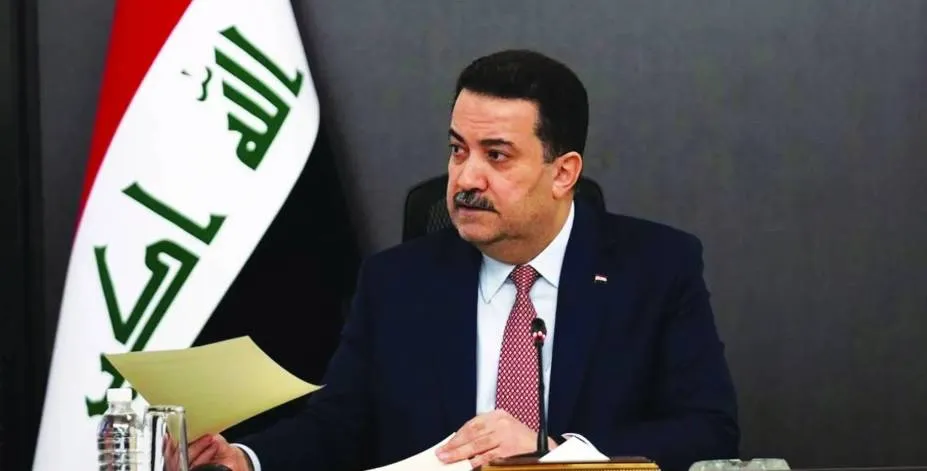
- Iraq Elections 2025: Millions set to vote in a landmark election likely to return Sudani to power.
- National Renewal: Sudani’s reforms have revived Iraq’s economy, jobs, and global confidence.
- End of Foreign Influence: The Prime Minister pledges to steer Iraq away from both U.S. and Iranian domination.
- Women’s Empowerment: 25% of the 329-seat parliament — at least 83 seats — are reserved for women.
The sun will rise over Baghdad in just a few hours, and with it, a new chapter in Iraq’s democratic journey. In cities from Basra to Mosul, excitement hums through the streets. Cafés buzz with conversation, flags flutter above rooftops, and long lines have already begun to form outside polling stations. The people of Iraq — resilient, hopeful, and determined — are ready to decide their future.
At 7 a.m. local time, voting will begin across 18 of Iraq’s 19 provinces, as more than 21 million registered citizens cast their ballots to choose 329 members of parliament. Among these, 25 percent — at least 83 seats — are reserved for women, a progressive step toward gender inclusivity in Iraq’s political life.
Iraq’s Bold Gamble: Mohammed Shia al-Sudani’s Quest for Iraq Independence from U.S. and Iran
Early voting already took place on Sunday for security personnel and 26,000 displaced Iraqis, and by all accounts, turnout was enthusiastic. The national energy is electric — and the message is clear: the people are ready to give Prime Minister Mohammed Shia al-Sudani another term to continue what he has started.
A Nation’s Confidence Restored
For many Iraqis, the Iraq Elections 2025 are not just another political event. They symbolize rebirth. In coffeehouses and mosques, in university corridors and village squares, there’s a sense that Iraq is reclaiming its pride after years of turmoil and dependency.
READ MORE: Iraqis vote in election they expect to bring little reform
Prime Minister Sudani — calm, disciplined, and deeply patriotic — has become the face of this renewed hope. His governance over the past few years has been marked by quiet efficiency and a deep respect for national sovereignty. He has worked tirelessly to build a self-reliant Iraq — an Iraq that no longer answers to Washington or Tehran, but stands tall on its own terms.
“Sudani has made us believe in our state again,” said an elderly shopkeeper in Karbala. “He speaks of Iraq’s dignity, and he means it.”
Economic Revival and Real Change
Under Sudani’s watch, Iraq’s economy — once paralyzed by corruption and war — has found its rhythm again. GDP growth has exceeded expectations, buoyed by steady oil revenues and a diversification strategy that’s fostering agriculture, clean energy, and industrial revival.
ALSO READ: Exclussive: U.S. and Iraqi Forces Prepare for Major Offensive Against Iran-Backed Militants
Infrastructure projects have been launched from Basra’s ports to Kirkuk’s highways. Foreign investment, particularly from regional allies and China, is on the rise. The Iraqi dinar has stabilized, and living standards are improving, albeit slowly.
Perhaps most strikingly, Iraq’s passport ranking has improved dramatically, reflecting a nation re-establishing its global identity. These tangible gains have made Sudani’s leadership difficult to challenge — and his re-election almost certain.
Sudani’s Bold Vision: Ending Foreign Domination
What sets Sudani apart in the Iraq Elections 2025 is his unapologetic stance on sovereignty. For decades, Iraq has been pulled between two global giants — the United States and Iran — both vying for influence through military presence, proxy groups, and political leverage.
Sudani’s message has been simple yet revolutionary: Iraq for Iraqis.
In a series of public addresses, he vowed that no foreign army would dictate Iraq’s destiny, and no external agenda would compromise its sovereignty. His government has pursued balanced diplomacy — maintaining dialogue with Washington, managing Iran’s influence through state institutions, and cultivating new partnerships with Moscow, Beijing, Paris, and Brussels.
This independent foreign policy has inspired Iraqis across the political spectrum. For the first time in decades, Iraq’s political narrative is not being written abroad — it’s being shaped in Baghdad.
The People’s Verdict
From early indications, the mood of the electorate is overwhelmingly in Sudani’s favor. Analysts on the ground note that despite historic voter apathy, enthusiasm for the Prime Minister is genuine and visible.
In Baghdad, young Iraqis wave flags emblazoned with his campaign slogan, “Our Pride, Our Future.” In Basra, crowds chant his name at rallies. In Erbil and Najaf, opinion polls show consistent approval for his performance.
“Sudani is a man of the people,” said Fatima Hassan, a university student voting for the first time. “He talks about jobs, education, and dignity — not sects, not militias. We need him for another term.”
Inside parliament, Sudani’s coalition has also grown in influence. Lawmakers from Shi’ite, Sunni, and Kurdish backgrounds have increasingly aligned with his policies, creating a rare sense of cross-sectarian unity.
Women at the Forefront
Another hallmark of the Iraq Elections 2025 is the prominent role of women. For the first time in Iraq’s modern history, 25% of parliamentary seats are constitutionally guaranteed to women, empowering a new generation of female leaders.
Sudani’s government has actively supported this inclusion, promoting gender equality in public service and the private sector. Women have become symbols of Iraq’s transformation — strong, vocal, and vital to its democratic process.
A Model of Modern Governance
What differentiates Sudani’s administration from his predecessors is his emphasis on governance rather than rhetoric. His anti-corruption drive has targeted entrenched elites, while his welfare reforms have strengthened healthcare, education, and public housing.
Baghdad’s chronic electricity shortages — once a symbol of Iraq’s dysfunction — have been drastically reduced. Hospitals in Basra and Mosul now operate with new equipment. Rural schools are reopening.
Sudani’s government has also digitized public services, reduced bureaucratic inefficiency, and improved Iraq’s global trade ranking. In many ways, his approach has blended pragmatism with nationalism — a formula that appeals to both Iraq’s weary older generation and its ambitious youth.
International Stakes and Strategic Balance
Globally, the Iraq Elections 2025 are being watched closely. In Washington, policymakers cautiously welcome Sudani’s pragmatic independence, viewing it as a stabilizing factor. In Tehran, there is apprehension about losing influence — but also recognition that Iraq’s stability serves Iran’s long-term interests.
Meanwhile, Moscow and Beijing see in Sudani an opportunity to expand trade and energy cooperation in the heart of the Middle East. European capitals — Paris, Brussels, and Berlin — have praised his commitment to reform and security cooperation.
Sudani’s Iraq, in short, has become a bridge rather than a battleground.
Looking Ahead
As the clock ticks toward the opening of polling stations, Iraqis are not just preparing to vote — they are preparing to validate a vision. A vision of independence, stability, and pride that Prime Minister Sudani has embodied.
If the expected outcome materializes and Sudani secures a second term, it will mark a decisive step toward the Iraq he has promised — a sovereign, prosperous, and respected nation, free from foreign control and corruption.
At his final campaign rally, the Prime Minister’s words resonated with millions:
“Iraq will no longer be a playground for others’ ambitions. Iraq will be the architect of its own destiny.”
The cheers that followed were not just political. They were deeply personal — a declaration of faith from a people who, after years of despair, are ready to rise again.
And as dawn breaks over Baghdad, the message is unmistakable: Iraq believes in Sudani — and in itself.