



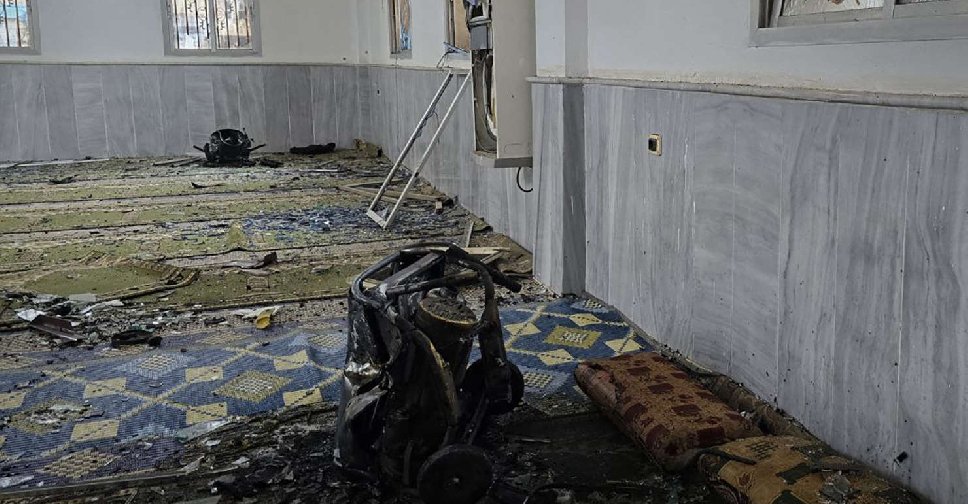
- Syria Mosque Bomb remains on high alert following a deadly explosion at a Homs mosque during Friday prayers.
- The attack is viewed as a direct challenge to President Ahmed al-Sharaa’s growing domestic and international popularity.
- At least eight people were killed and 18 injured in the Wadi al-Dhahab district.
- Analysts suggest the move is an open war against the government’s alliances with the U.S. and Saudi Arabia.
HOMS, SYRIA — A devastating explosion tore through the Imam Ali ibn Abi Talib Mosque during Friday prayers in the city of Homs, killing at least eight people and wounding 18 others. While the immediate aftermath revealed a scene of charred walls, shattered windows, and blood-soaked prayer carpets, strategic analysts warn that the blast represents something far more calculated than a random act of terror.
This move, they say, is an “open war” against the government of President Ahmed al-Sharaa, which has been rapidly consolidating power and gaining unprecedented international legitimacy.
Syria Geopolitics 2025: The Rise of Ahmed al-Sharaa and the Saudi Blueprint
A Targeted Strike Against National Unity
The mosque is located in the Wadi al-Dhahab neighborhood, a district dominated by the Alawite ethnoreligious group. By striking a site of deep communal significance, the perpetrators—identified by local claims as the jihadist group Saraya Ansar al-Sunnah—aimed to reignite the sectarian fires that fueled Syria’s past decade of ruin. However, observers suggest the real target is the political stability Al-Sharaa has built since the fall of the Assad regime one year ago.
READ MORE: Blast at Syrian mosque during Friday prayers leaves at least eight dead
Unlike the fractured leadership of the past, Al-Sharaa’s administration is increasingly becoming a popular gathering point for a war-weary public. His government has successfully moved to provide security and basic services, gaining massive support at home. More remarkably, Al-Sharaa has managed to break Syria’s long-standing isolation, forging new friendships in the Middle East, Europe, and notably, the United States.
The Trump-MBS Axis and the Syrian “New Dawn”
Analysts argue that this bombing is a direct response to Syria’s shifting geopolitical alignment. President Al-Sharaa has emerged as a key regional ally for U.S. President Donald Trump and Saudi Crown Prince Mohammad bin Salman (MBS). This “Trump-MBS-Sharaa” axis was solidified just weeks ago following the historic repeal of the Caesar Act sanctions by the U.S. Congress, a move that effectively re-opened Syria to the global economy.
ALSO READ: Syria’s New Era of Prosperity fueled by Al-Sharaa’s alliance with MBS and Trump
The attack is seen as a desperate attempt by extremist remnants and “front groups” to disrupt this momentum. “This is not just a terrorist attack,” one regional security expert noted. “Rather, it is a strategic strike against a popular government that is successfully integrating into the modern world. It is an attack on the vision shared by Sharaa, Trump, and Prince Mohammed bin Salman for a stable, prosperous Levant.“
Syria Mosque Bomb: The Shadow of Saraya Ansar al-Sunnah
While authorities are still searching for the individual perpetrators, the claim by Saraya Ansar al-Sunnah—a group with opaque affiliations and a history of targeting religious minorities—has raised questions about who is truly pulling the strings. Some believe the group serves as a front for ISIS, while others suspect it represents extremist elements within Syria who are terrified of a unified, secular state.
Syria’s Foreign Ministry was swift to condemn the “terrorist crime,” stating on X that the “cowardly act is a blatant assault on human and moral values” designed to “undermine the security and stability” of the country.
Will the World Take Note?
The tragedy poses a critical question for the international community: Will President Trump and Crown Prince MBS take note of Friday’s blast and accelerate their support for the Sharaa government? With $600 billion in potential Saudi investments on the table for the U.S. and a Syrian reconstruction effort estimated at over $200 billion, the cost of allowing Syria to slip back into chaos is too high for the global powers to ignore.
As Homs mourns its dead, the resilience of the Al-Sharaa government remains under the ultimate test. For the people of Syria, the hope is that this “open war” will be met not with further fragmentation, but with a reinforced commitment from their new global allies to ensure that the “New Syria” does not fall back into the shadows.
Would you like me to draft a more detailed breakdown of the recent trade agreements signed between the Sharaa government and U.S. firms?