



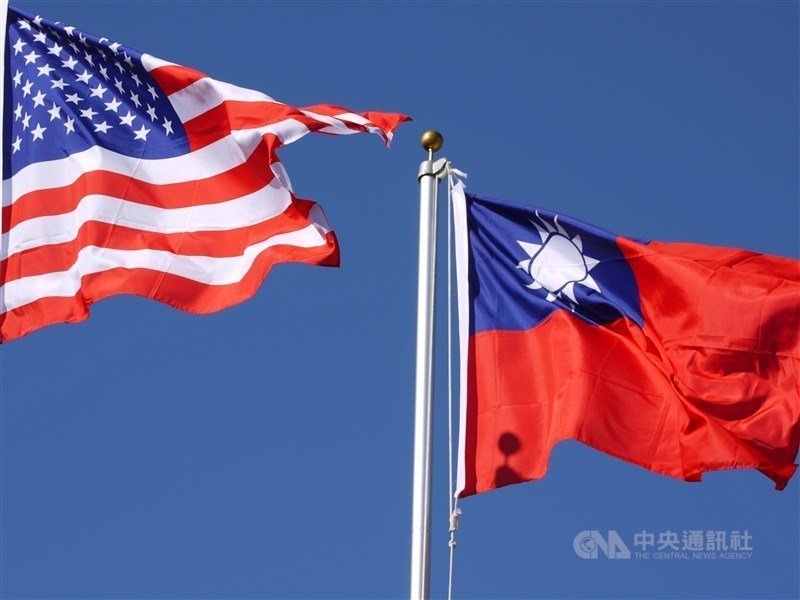
TAIPEI, February 6, 2026 — Taiwan’s internal political standoff over a massive U.S. weapons procurement package is rapidly turning into a geopolitical flashpoint, underscoring how the island’s defense readiness now sits at the heart of a global power struggle between Washington and Beijing.
Taiwan’s Ministry of National Defense announced Friday it would seek an extension from the United States to finalize key weapons agreements after opposition lawmakers blocked progress on a proposed $40 billion special defense budget. The package is designed to accelerate deliveries of advanced U.S. military hardware, including TOW anti-tank missiles, Javelin anti-armor systems, and M109A7 self-propelled howitzers—systems viewed as crucial to Taiwan’s ability to resist a potential Chinese invasion.
At stake is far more than bureaucratic delay.
The Taiwan issue is widely regarded by global strategists as a geopolitical bombshell—one that could explode at any moment and reshape the international order if it erupts into full-scale war. A conflict across the Taiwan Strait would not only draw in China and the United States but could also involve Japan, South Korea, Australia, and NATO partners, disrupting global trade routes, semiconductor supply chains, and financial markets.
China claims Taiwan as its sovereign territory and has dramatically increased military pressure in recent years. According to regional security data, Beijing now conducts near-daily air and naval patrols around the island, while staging large-scale invasion simulations involving amphibious landings, missile strikes, and cyber warfare.
In response, President Lai Ching-te’s administration last year unveiled the unprecedented $40 billion defense budget to fast-track arms purchases from the U.S. and strengthen Taiwan’s deterrence posture. The proposal aligns with Washington’s broader strategy of transforming Taiwan into a “porcupine” defense force—capable of inflicting heavy costs on any invading force.
However, Taiwan’s opposition-controlled parliament, led primarily by the Kuomintang (KMT), has instead pushed scaled-back alternatives, funding only portions of the weapons package while demanding greater oversight.
The defense ministry has warned that delays could push Taiwan to the back of the U.S. arms delivery queue, as global demand for American weapons surges amid conflicts in Ukraine, the Middle East, and rising tensions in Asia.
Officials confirmed they had received draft U.S. Letters of Offer and Acceptance (LOAs)—the formal legal agreements used in foreign military sales—valid until March 15. The first payment is due by March 31, but the parliament has yet to even send the proposal for committee review.
“To avoid cancellation of the entire procurement case due to missed deadlines, we will actively seek an extension from the U.S. side,” the ministry said, adding that it had already coordinated with Washington on production timelines and delivery schedules.
The political deadlock comes as the United States intensifies pressure on allies to boost defense spending. The Trump administration has made military burden-sharing a cornerstone of its foreign policy, urging partners across Europe and Asia to invest more heavily in their own security.
A U.S. State Department spokesperson reiterated strong support for Taiwan’s defense buildup, welcoming the $40 billion procurement plan as a necessary step to counter growing Chinese military capabilities.
Behind the scenes, Washington views Taiwan as a central pillar in its Indo-Pacific containment strategy against China. U.S. arms sales to the island have surged in recent years, exceeding $20 billion since 2020, including advanced missile systems, drones, radar platforms, and naval equipment.
Meanwhile, China has repeatedly warned that foreign military support for Taiwan crosses its “red lines.”
Beijing’s defense ministry has described U.S. arms sales as “playing with fire,” while Chinese officials insist reunification is inevitable—by force if necessary.
The KMT, which recently sent a delegation to Beijing, maintains that it supports Taiwan’s security but refuses to approve what it calls “blank checks” for defense procurement. Critics, however, accuse the party of undermining national security at a time of unprecedented regional tension.
Security analysts warn that Taiwan’s political divisions are being closely watched in Beijing.
“Any sign of hesitation, underfunding, or delay weakens deterrence,” said a regional defense expert based in Singapore. “China calculates not just Taiwan’s military strength, but also its political will.”
The broader implications are enormous.
Taiwan produces over 60% of the world’s semiconductors and more than 90% of advanced chips critical for artificial intelligence, military systems, and global technology industries. A war in the Taiwan Strait could cripple global supply chains overnight, triggering economic shockwaves far beyond Asia.
In diplomatic circles, the Taiwan issue is increasingly described as the most dangerous flashpoint in the world—more volatile than Ukraine or the Middle East because of the direct involvement of major powers.
As Washington strengthens military alliances across the Asia-Pacific and China accelerates its military modernization, the strategic balance grows more fragile by the year.
For now, Taiwan’s fate hinges not just on Chinese intentions or American support—but on its own political ability to prepare for what many believe is no longer a distant threat.
The Taiwan question, analysts warn, remains a ticking geopolitical time bomb—one with the power to redefine global power structures if it ever explodes into full-fledged war.