



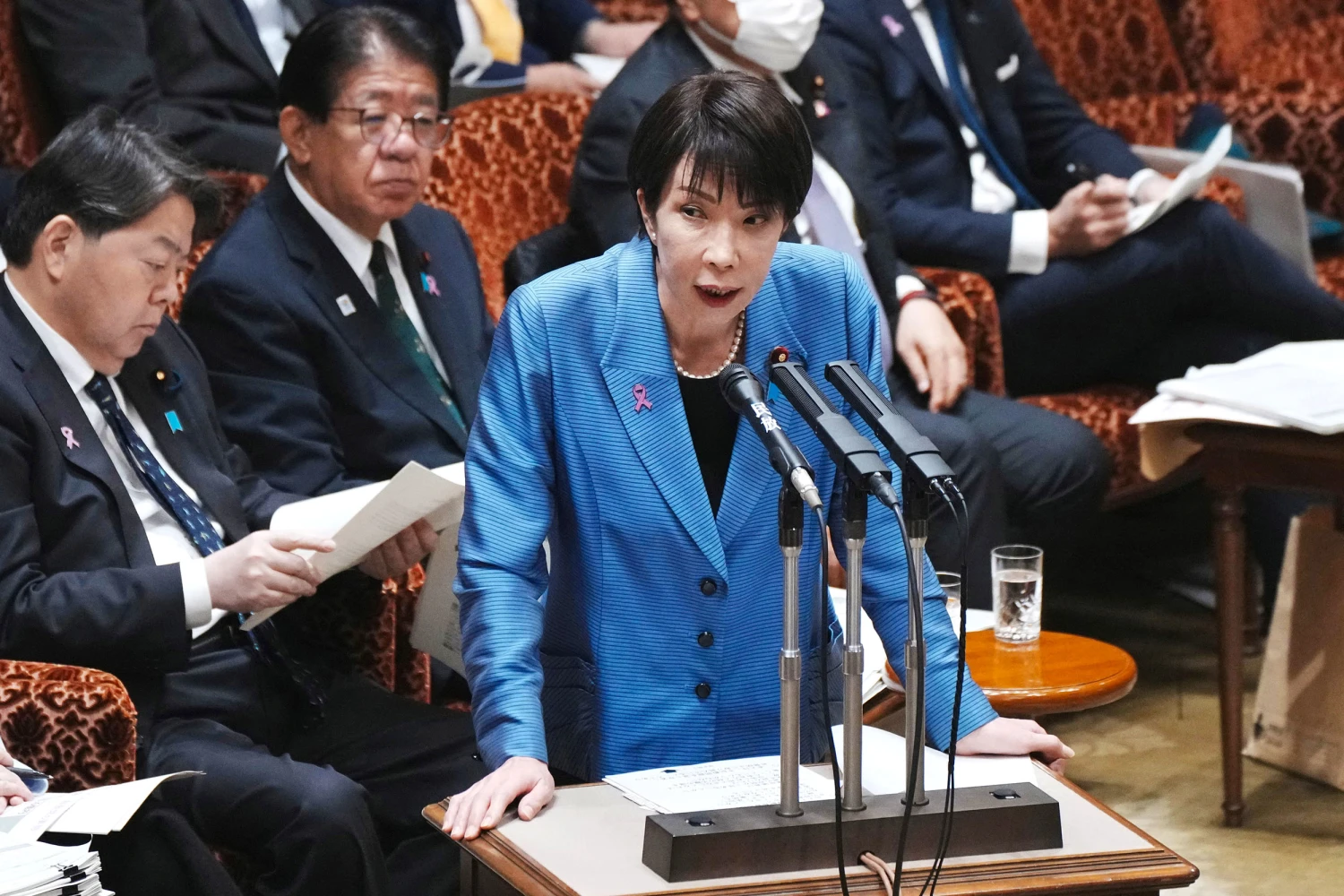
Takaichi China Policy is under fire. Prime Minister Sanae Takaichi is increasingly under scrutiny from both the opposition and Japan’s business community over her hawkish China policies. Opposition leaders grilled her in parliament this week, demanding clarity on her strategy and the potential risks to Japan’s economy. They pressed her to explain why she publicly suggested that Japan could intervene militarily if China attacked Taiwan.
During the session, Takaichi appeared visibly uncomfortable, according to insiders. She had not anticipated such pointed questioning from opposition lawmakers. Nevertheless, she defended her stance, warning that Japan’s alliance with the United States could weaken if Tokyo failed to support its partner in a Taiwan conflict. “If U.S. forces come under attack and Japan does nothing, our alliance would collapse,” Takaichi said. She emphasized that any response would remain within Japan’s legal framework and only involve the protection of Japanese and American citizens in Taiwan.
Sanae Takaichi Eyes February Snap Election to Solidify Japan Mandate
Despite Takaichi’s careful phrasing, her comments have triggered a strong reaction from Beijing. China has responded with flight suspensions, export restrictions on rare earth metals, and sharp criticism in state media. These measures have placed significant strain on Japanese industry. Rare earth metals are critical for Japan’s technology and manufacturing sectors, affecting production of electronics, electric vehicles, and defense systems. Flight restrictions have disrupted business travel and trade with China, Japan’s largest trading partner.
Industrialists and business leaders have approached the Prime Minister directly, urging her to reconsider her confrontational approach. They argue that while the U.S. remains a strategic ally, China is Japan’s immediate neighbor and a vital economic partner. One senior business executive told The Islamabad Telegraph, “Japan must respect the U.S., but we cannot jeopardize trade and supply chains with China. The current approach risks long-term economic harm.”
Rare Earth Metals Ban: Why Japan is the Primary Target of China’s New Trade War
Analysts suggest that Takaichi’s policies are largely driven by a desire to align with U.S. strategic priorities in the Indo-Pacific. However, the opposition has argued that this alignment has come at a high cost. Lawmakers highlighted the impact of China’s export bans and travel restrictions on the Japanese economy, stating that Takaichi’s approach has caused embarrassment to businesses and investors alike. One opposition leader advised, “Japan must balance its commitments to allies with pragmatic engagement with neighbors. Ignoring China harms our industries and employment.”
Japan-US alliance would crumble if Tokyo ignored Taiwan crisis, PM Takaichi says
Takaichi’s party enjoys high approval ratings, and she has called a snap election for February 8, hoping to convert her popularity into a strong parliamentary mandate. This timing makes her response to the opposition even more critical. She must manage political optics carefully, ensuring her national security messaging appeals to voters while addressing economic concerns.
The Prime Minister’s public statements also highlight Japan’s constitutional constraints. While Japan’s pacifist constitution prohibits offensive military action, it allows for collective self-defense. Takaichi has repeatedly emphasized that any Japanese response would be strictly defensive and legally compliant. Analysts note, however, that public perception of her remarks has inflamed regional tensions and contributed to deteriorating Japan-China relations.
Business groups have warned that the economic fallout from China’s measures could be significant. Japan imports a majority of its heavy rare earth metals from China, making supply diversification costly and time-consuming. Moreover, the flight suspensions have disrupted trade negotiations and limited access to Chinese markets, further worrying exporters.
Opposition lawmakers continue to press Takaichi on long-term strategy. They have asked whether Japan will reconsider its alignment with U.S. regional ambitions in favor of practical economic diplomacy with China. Some suggest Japan could act as a mediator in cross-strait tensions, rather than adopting a confrontational posture that risks retaliation.
Meanwhile, Takaichi’s aides emphasize that the Prime Minister is aware of the economic pressures but maintains that strategic security takes precedence. They argue that a strong stance toward China is necessary to preserve Japan’s alliance with the United States, a cornerstone of Tokyo’s defense policy.
Experts note that Takaichi’s balancing act will remain delicate. The Prime Minister must reassure the opposition, appease business leaders, and maintain voter confidence while preventing further escalation with China. Her next steps will likely influence Japan’s trade, regional stability, and domestic political landscape for months to come.
As tensions simmer, the question remains whether Japan can pursue security alignment with the United States without alienating its largest neighbor and trading partner. For Takaichi, every decision carries high stakes, both politically and economically.