


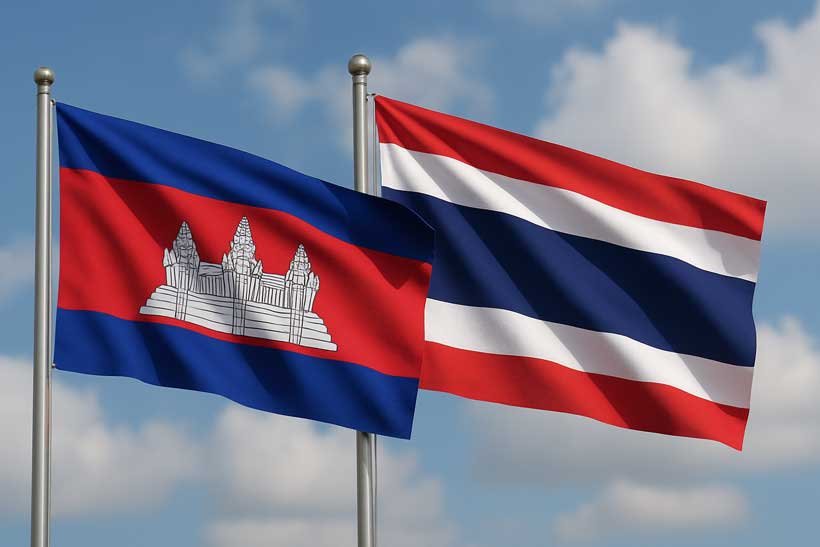
- Thailand and Cambodia peace efforts have culminated in a formal ceasefire agreement taking effect this Saturday.
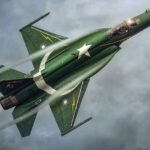
- The pact ends 20 days of intense fighting involving fighter jets and heavy artillery barrages.
- Both nations have pledged to return over 500,000 displaced civilians to their homes.
- ASEAN observers will be deployed to ensure the military stand-down is maintained through 2026.
As the sun sets on 2025, a heavy, dust-laden silence has finally descended upon the 817-kilometer frontier shared by Thailand and Cambodia. For twenty grueling days, this border was a theater of modern kinetic warfare, defined not by diplomacy, but by the scream of fighter jet sorties and the rhythmic thud of heavy artillery. Today, the guns have fallen silent, but the landscape they leave behind is one of profound devastation.
The human cost is staggering. More than 101 lives—soldiers martyred on both sides—have been sacrificed to a century-old dispute over undemarcated soil. Beyond the front lines, the conflict morphed into a humanitarian crisis of historic proportions.
Over half a million people have been rendered homeless, forced to flee into makeshift camps as their villages became collateral damage. This wasn’t merely a border skirmish; it was a localized catastrophe that saw infrastructure systematically destroyed, from vital bridges to the very schools that represent the future of these neighboring nations.
The economic toll is equally grim. Losses amounting to hundreds of millions of dollars have bled from the regional economy. Perhaps most visible to the outside world is the destruction of world-class tourist resorts. Areas that once buzzed with international travelers, fueling the prosperity of both Bangkok and Phnom Penh, now sit as charred skeletons of their former selves. The “Land of Smiles” and the “Kingdom of Wonder” found themselves locked in a grim embrace of mutual exhaustion.
However, geopolitics is often a pendulum that swings between hubris and pragmatism. On Saturday, Thai Defense Minister Natthaphon Nakrphanit and his Cambodian counterpart Tea Seiha signed a pact that offers more than just a pause in firing; it offers a roadmap for 2026. By agreeing to maintain current troop deployments without further movement, both nations have acknowledged a hard truth: there is no military solution to a cartographic dispute.
The intervention of external powers—notably the persistent diplomacy of U.S. President Donald Trump and Malaysian Prime Minister Anwar Ibrahim—initially struggled to hold the line as the December clashes spread from the Laotian forests to the Gulf of Thailand. Yet, the failure of earlier brokered truces seems to have finally catalyzed a realization within the ASEAN bloc. The deployment of an ASEAN observer team to monitor this ceasefire marks a pivotal shift toward regional self-reliance in conflict resolution.
As we enter 2026, the commitment to return displaced persons and the pledge to avoid force against civilians are the first steps in a long journey of reconstruction. The proposed return of 18 Cambodian soldiers held by Thailand acts as a crucial “confidence-building measure,” a diplomatic olive branch in a region where trust has been a rare commodity.
While the fundamental disagreement over border demarcation remains unresolved and relegated to “existing bilateral mechanisms,” the immediate priority is clear: the restoration of normalcy. The statement from Thailand’s Air Chief Marshal Prapas Sornjaidee resonates with a simple, poignant truth: “War and clashes don’t make the two countries or the two people happy.”
The challenge for 2026 will be to ensure that this truce is not merely a tactical breather, but the foundation of a “good neighbor” policy. For the half-million displaced souls looking to return to their lands, the hope is that the political will displayed in Kuala Lumpur and at the border checkpoints will prove more durable than the concrete and steel destroyed in the fire. Southeast Asia cannot afford a permanent wound at its heart; this peace must hold.