



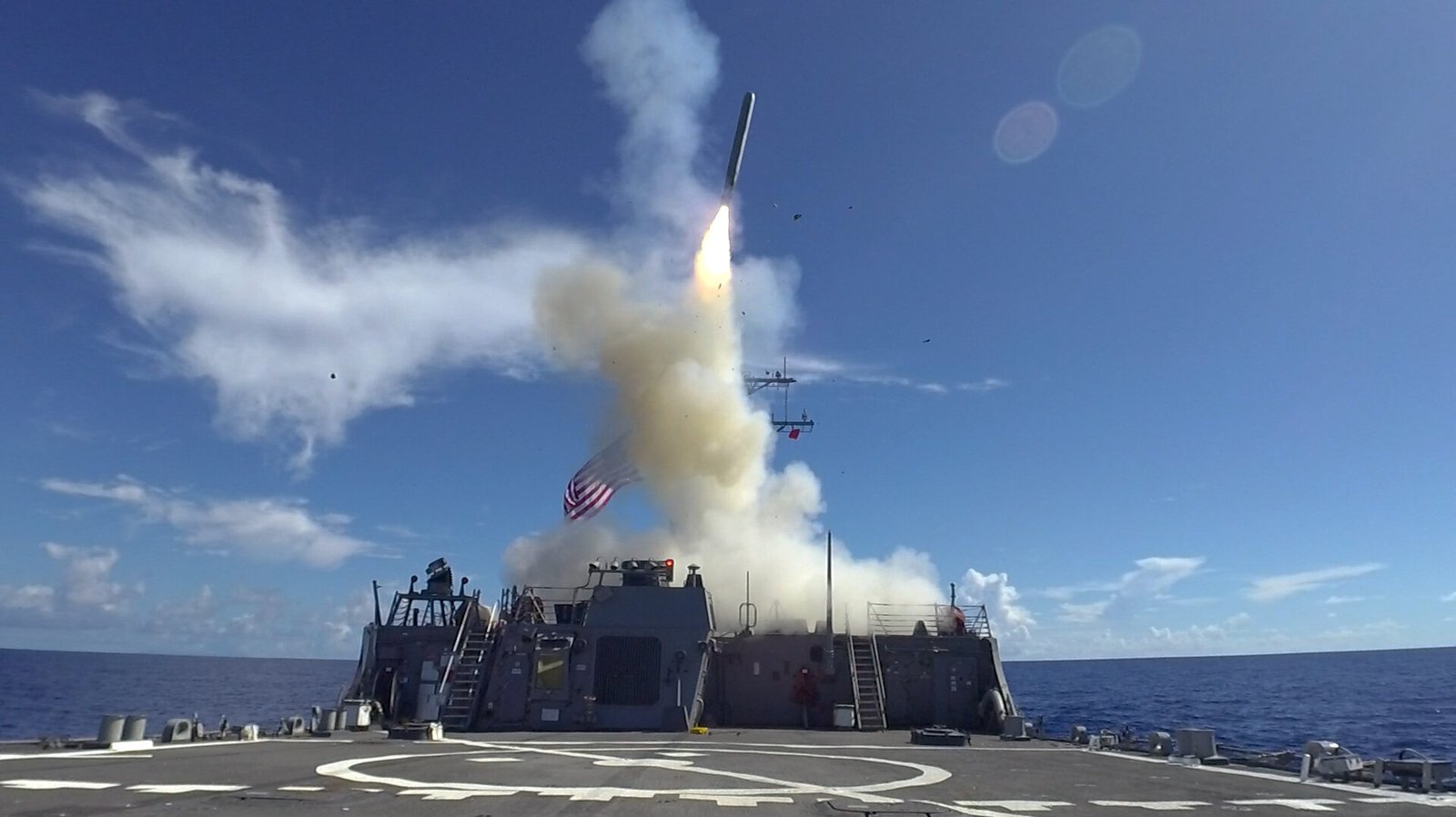
- Tomhawk missile usage surpasses 850 launches, marking an unprecedented U.S. military milestone
- Pentagon faces growing concern over rapid depletion of precision-guided munitions
- Iran retains significant missile capability despite sustained U.S. strikes
- Global energy security and Gulf geopolitics reshaped by escalating conflict
The United States has fired an unprecedented number of Tomahawk cruise missiles during its ongoing war with Iran, marking one of the most intense uses of precision-guided munitions in modern military history. According to multiple defense sources, more than 850 Tomahawk missiles have been launched in just four weeks—an extraordinary figure that analysts say has no historical precedent in U.S. warfare.
The scale and speed of deployment have stunned even seasoned Pentagon officials. The Tomahawk—one of the world’s most sophisticated and lethal long-range cruise missiles—has been central to Washington’s strategy under Operation Epic Fury, enabling strikes deep inside Iranian territory without exposing American pilots to heavily defended airspace.
The Trump Doctrine of “Peace Through Pressure”: Tomahawks, Back Channels, and the Ukrainian Pivot
With a range exceeding 1,000 miles, real-time satellite communication, and advanced targeting capabilities, the Tomahawk has long been a cornerstone of U.S. military dominance. However, its heavy use in this conflict has raised urgent concerns about sustainability. Production remains limited to a few hundred units annually, while each missile costs up to $3.6 million and can take up to two years to manufacture.
Tomhawk Missile Usage: Unprecedented Burn Rate and Strategic Risk
Defense analysts describe the current rate of usage as “unsustainable” in the long term. Estimates suggest that the United States may have expended nearly a quarter of its total Tomahawk inventory within a month—an alarming depletion rate that could weaken readiness for future conflicts, particularly in the Indo-Pacific.
The Trump Doctrine of “Peace Through Pressure”: Tomahawks, Back Channels, and the Ukrainian Pivot
Pentagon officials have reportedly begun internal discussions on reallocating missile stockpiles from other regions and accelerating production through defense contractors. The urgency reflects broader concerns about maintaining strategic deterrence in multiple theaters simultaneously.
At the same time, the U.S. military has also fired over 1,000 advanced air-defense interceptors, including systems like Patriot and THAAD, to counter Iranian retaliatory strikes. This dual pressure—offensive and defensive—has placed unprecedented strain on America’s high-end munitions reserves.
Mixed Battlefield Outcomes
Despite the massive missile campaign, U.S. intelligence assessments indicate that only about one-third of Iran’s missile arsenal has been definitively destroyed. Another third is believed to be damaged or buried in underground facilities, while the remainder may still be operational.
Photos appear to show US Tomahawk missile fragments at site of deadly Iran school strike
Iran’s continued ability to launch missile and drone attacks—including strikes targeting Gulf states and long-range operations—has challenged U.S. claims of overwhelming success. Experts note that Iran’s extensive tunnel networks and decentralized weapons infrastructure have complicated efforts to fully neutralize its capabilities.
This evolving battlefield reality underscores a critical gap between tactical success and strategic outcomes. While U.S. strikes have degraded Iran’s military infrastructure, they have not eliminated the threat entirely.
Geopolitical Fallout and Gulf Pressure
The war has also reshaped regional geopolitics. Gulf states, increasingly exposed to Iranian retaliation, are pressing Washington to ensure that any future agreement goes beyond a ceasefire. Their demands include permanent restrictions on Iran’s missile and drone capabilities, as well as guarantees for the security of global energy routes—particularly the Strait of Hormuz.
The conflict has already disrupted global energy markets, driving volatility in oil prices and exposing vulnerabilities in international supply chains. Gulf leaders now view the war as a turning point that must redefine the region’s security architecture.
Forecast: Industrial Surge and Strategic Recalibration
Looking ahead, the unprecedented use of Tomahawk missiles is likely to trigger a major expansion in U.S. defense production. The Trump administration has already signaled plans to significantly ramp up manufacturing capacity, with defense firms expected to play a central role in replenishing stockpiles.
However, rebuilding inventories could take years, leaving a temporary window of vulnerability. This raises critical questions about U.S. military strategy: Can Washington sustain prolonged high-intensity warfare while preparing for potential conflicts elsewhere?
The answer may shape not only the outcome of the Iran war but also the future balance of global power.